Lyz Bly/DRB, Ph.D.

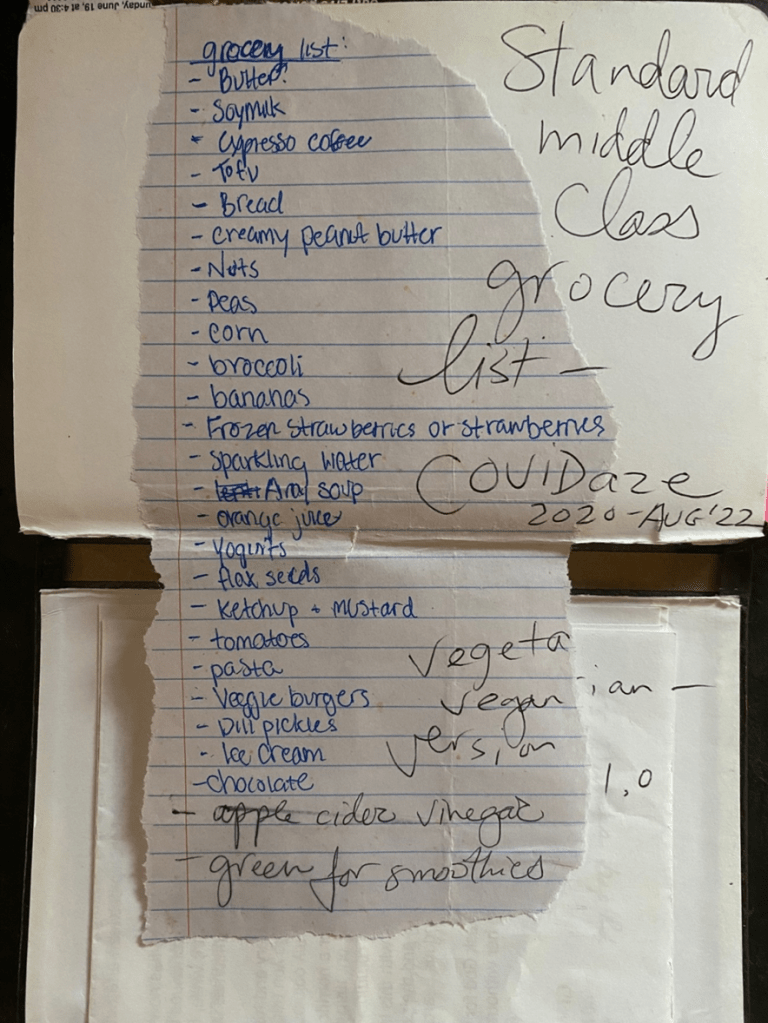
INSIDE FRONT COVER: Bread and Roses, 2020 (PHOTO by the author)
Be nice to budtenders: a marijuana memoir
Lyz Bly
2023©
Thank you
Barbara Erhenreich (1941-2022)
And
Sylvia Federici (1942- )
Contents
Preface—6
Introduction—9
1. Dream Job—12
2. Enter: Production, Industry, and Change-chan-chains—24
3. Bob is Dead (no one cares)—42
4. Piss Factory—49
5. Architectural Digest—61
6. Dude-Bro Cult—75
7. Changes (Turn and face the strange)—88
8. Downtown (Forget all your troubles, forget all your cares)—110
9. A Rose! Reprise—119
Notes—133
Preface
Emma Vignola, Ph.D.
DRB’s account of working in the medical cannabis industry during the COVID-19 pandemic, in Cleveland, Ohio, brings us with vivid detail into a world of possibility curtailed by corporate exploitation. The account takes the form of memoir in parts, grounded firmly in DRB’s positionality as a white, female, gender queer member of Generation X, as a writer and activist with a doctorate in history, as a single person with a young adult daughter living in her home. However, through the lens of her identities and experiences, it is simultaneously a collective story of worker resistance to corporate forces, of workers refusing to accept that company profit should come at the expense of our well-being.
At its core, Be Nice to Budtenders is about the perils of capitalism’s takeover of cannabis, a pressing issue as a growing number of U.S. states have legalized both medical and recreational marijuana. In DRB’s first weeks as a patient care specialist at the dispensary, we read about the non-hierarchical comradery between co-workers, a palpable sense that they were making something new, finding meaning in their work providing customer-patients relief for a range of physical and mental ailments. Unfortunately, as DRB notes, exploitation of the plant for profit includes exploitation of the workers who grow, package, deliver, and sell it. We experience the teamwork that breaks down under the pressure of corporate employment practices, the sense of disunity that sets in.
The work is inherently both physically and emotionally demanding – counting, repacking, and carrying hundreds of pounds of cannabis and cannabis-derived products around the dispensary, interacting with people with a mix of health needs, mixed sometimes with the toxic behavior from customers that workers in public-facing service jobs in America often face. These all bring risks for workers’ mental and physical health. But corporate-driven precarious employment conditions – rooted in unbalanced power between workers and the employer – worsens the harms of these physical and psychosocial work conditions. Low hourly wages, understaffing and one-sided changes in scheduling, encouraging workers to spend less time with each customer, breaking rules and regulations around training with a focus on profit – all of these employment practices that DRB cites create threats to workers’ well-being.
Because of its federal illegal status, research and policy on the health, safety, and well-being risks of work in the cannabis industry is scarce. But lessons can certainly be learned from other precarious jobs in agriculture, logistics, and retail – as well as from this text. As researchers and policymakers call for greater attention to and regulation of the conditions in this industry, Be Nice to Budtenders is a rich qualitative source urgently needed in the conversation. People of color who have been disproportionately harmed by the racist, classist, and ineffective “war on drugs” are now being prioritized for employment in this industry. Because of occupational segregation, workers of color in this country are already more likely to experience workplace hazards and poor employment quality than white workers. This means that the industry’s potential for worsening racial inequities is there – as is the potential for tackling them. All workers in the cannabis industry, but especially workers of color, would benefit from union protections, because there is little reason to believe corporations will voluntarily improve workers’ conditions and self-regulate. Despite strong corporate resistance, cannabis is among the few industries experiencing unionization gains in recent years, as workers are reaching out to unions themselves.
More broadly, through the lens of DRB’s individual experience, we gain insight into a collective story of the pernicious “hustle” at the center of work in America, or the ways we internalize and deal with austerity politics and the myth of personal responsibility. We read about the forces that led DRB into this public-facing, insecure, hourly job during a pandemic in the first place, related to what was (not) made available to people to protect themselves physically and economically during the crisis, and about what it was like to work in a job whose social value is not recognized materially in the form of a living wage, benefits, and health and safety standards. As DRB writes, “I understand the lies of the American dream even better from my time at the dispensary, namely because I mostly liked the work, mostly enjoyed our patients, mostly liked my co-workers, but doing an excellent job, showing up every day no matter what was going on at home or with your own body wasn’t good enough to earn a livable wage.” Be Nice to Budtenders is about refusing to buy this lie, even when quitting is the main form of power at your disposal. Though obstacles to large-scale change remain, we continue to see the effects of the pandemic-driven national reckoning against low-quality jobs and renewed interest in labor organizing. May the struggles of workers in the cannabis and other industries help shift the massive imbalance of power between workers and employers in this country.
Introduction
Sixteen and time to pay off–I got this job in a piss factory inspecting pipe –40 hours, 36 dollars a week—But it’s a paycheck, Jack – Patty Smith, Piss Factory, 1974
ABUSE OF POWER COMES AS NO SURPRISE.–Jenny Holzer, (Truisms) 1990s
Je ne jamais travellier pas.-Situationniste Internationale (Paris graffiti), May 1968
There’s a moment in every worker’s life when they wake up and decide that they are going to tell the truth. We’ve done it in many different ways over the 500-700 years that European and American capitalism have been exploiting the planet and every living being on it.
We strike.
We protest.
We unionize.
We throw bricks.
We break tools.
We drag our feet.
We dash the curry, like we’re not in a hurry.[1]
We state our disillusionment, our anger, our despair in different ways.
A writer, a queer, an activist—words are my weapon.
This book is an account of the medical cannabis industry in the Midwest, in Cleveland, at the center of the city at an auspicious time in history… and at a transformational time in the history of The Plant.
Just as we must change habits wrought from industrial global capitalism to save the Planet, we must save the Plant, cannabis, from patriarchal capitalism because the White Capitalist Man is learning cannabis and that means he’s exploiting it and everything around it, including the workers who labor to grow, package, deliver, and sell it.
A historian, I remind you that this is the same plant that the German Christian elite white men in the Rhine region of Germany stole from us as early as 1342, when the elites in charge went to the Black Forest and destroyed the peasant witch wisdom thriving along the rivers running through the Southwest region of Germany, the place of fairy tales, witch lore, and ghost stories. There, the German Catholic Church men, the Guild men and the militias protecting both, destroyed the female-peasant cultures blooming in those forests.[2]
Then, like now, He was afraid not knowing Truth.
The truth of birth and death and pain and suffering and joys and celebrations, most of which were all tied to the seasons, the earth’s elements, the sun, the Moon, the planets, the universe.
All of these things were stupendous in and of themselves. There was no need for God.
So terrified of the Truths of life, death, sex, illness, healing in those lush forests of trees, mushrooms, plants, berries, and nuts, he rooted them out entirely. The witch hunts began, which meant destroying the knowledge, which meant destroying the people who held it in their bodies, their minds, their hearts… the female peasants, the witches, the midwives. We don’t know exactly how many peasant-healers were killed in the genocide against “witches,” which in Europe began in 1342 in Germany, the same country where the industrial revolution was born.[3]
We have court records of some of the witch trials, but the guild member militia often took peasant dissent into their own hands.
When they took them the peasant people, the midwives, they took their cannabis.
This book, however at times daft it is, is written in their honor. For the witches of weed.
The white man will not take our medicine again without giving us credit… And reparations.
Love, DRB
The queers are now in charge, 4.29.2023 (My last day working at A Rose! Cleveland)
[1]M.I.A., “Dash the Curry-Skit,” Arular (Interscope, 2005).
[2]Sylvia Federici, “The Great Witch Hunt in Europe,” The Caliban and the Witch: Women, the Body, and Primitive Accumulation (AK Press, 2013).
[3]Ibid.

Chapter 1: Dream job
It’s just the right temperature on Mike’s patio, where I’m seated with Karen, Mya, and Laura. Manny leans, dreamily stoned on the patio railing behind Laura, swaying a bit with the smell of ribs wafting from inside the boxy colonial in the eastern suburbs of CLE. This is not an official work gathering, we bring the food, Mike and Alicia, until now, referred to at work as “the wife,” prep the grills–one for the ribs, then a second, to grill tofu steaks and vegetables. Mya grabs the brush from Alicia as we walk up with bags and a big silver pan of marinating plant food; “I got this, sis. I’m Mya.”
“Hi Alicia,” my niceties begin…
It’s warm, but breezy and quiet on Mike and Alicia’s corner house in Richmond Heights. Mikes giving us a tour of his garden, which consists of a few rosemary plants and a fledgling tomato plant in a tiny grow tent, which is in arm’s reach of the back patio. Mya and I look at each other, eyes-wide, for a second to indicate our nonplussed attitudes toward the garden. We are fond of Mike, but he’s a braggart and the way he talked about it at work, you’d think he’d have a crop of tomatoes in a greenhouse.
We pass a blunt–Lemon Slushee, Mya and me, as we walk through Mike’s grassy backyard. It’s a boring, rectangular piece of lawn. Uniform. Green. Mya and I make a game of following Mike in single file, through the last leg of the grass-green, up the steps to the patio where Laura, sunny-faced, blonde, abundance, is seated with Karen, our hippie-new-age suburban mom colleague from a white outer-ring suburb on the Westside. As we settle into the two empty chairs, Mike shuffles behind Laura, “So, there’s soda in the blue cooler. If you have beer or alcohol, put it in the white cooler… food’s inside.”
Laura is the manager and I’m just five months into this side gig at A Rose!, so when Karen extends her live resin Orange 43 vape to me, I look at Laura.
“Is this really ok–with ‘diversion’—I make the air quotes—and all, I mean?”
She looks at me with the brightest, bluest set of eyes I’ve had reflected back at my own, open as they are, blue-green, “We can because we need to make something new. We have the power to change everything. Now it’s our time.”
I shrug and unscrew the lid from my pineapple habanero gummies and put them next to the other offerings, gesturing to Laura because I didn’t know what else to say in response to her broad statement, as much as I agreed with it. Moy would tell me the same thing months later when things were much more dire, but in this moment in the sun on a Sunday afternoon, I wanted to melt into the chair with these people I’d come to know and love in a short span of 150 or so days.
In this work of serving people, of customer service, of Patient Care Specialist, you know and see every aspect of humanity, most of it is humbling and beautiful, some of it is toxic and abusive. It feels like living in an abusive household. The customers, especially the men, could come in at any minute and stand over you with their girth, call you “sweetheart” in the cruelest tone, talk over you with the other bruhs in the room, or straight out threaten you. In our workplace, the medical marijuana “patients” were the unstable, emotionally violent step-parents that came and went with their actions, which were left largely unchecked.
So we bonded like siblings sometimes do, trusted our corporate oppressors like victims of Stockholm Syndrome, and–yet, if anyone spoke out of turn, spoke in terms that didn’t meet gentile middle-class white social norms, they were slapped. I will tell you later how they slapped Ramona and subsequently emotionally thrashed the rest of us. In protest, we quit, almost every one of us, one by one by one…
But we’re at Mike’s by choice on this sunny June evening of 2022 and Manny is striding toward the sliding-glass after Alicia’s call of “RIBBBSSS!”
From the patio we hear him say, “Ah! And 7-layer Mexican dip!!” and then, calls out past us toward the garage: “Ramona, Eli, Mike! FOOOOOOD!!!”
The myrcene that makes medical cannabis patients–and this group of stoners, hungry is kicking in for all of us. It was after 4 p.m., so indicas–which we get patients to remember are restful, or as we said to the new ones–who always laugh, “in-da-couch,” were burning. This meant that it took just one prompt for the concentrate burning garage dwelling dabbers to come to light with the dank, earthy, musky smell of Klutch’s Blue Cheese strain trailing behind them.
“Ramona!” I say louder than I intended to, she’s chill right now, with only ribs on the brain, “I don’t think I realized you were in the garage…”
She chuckles and says, “Yeah, DRB, you know black people are just not comfortable sitting out on display smoking weed…” I laugh with her and then feel the myrcene myself; “I’m going to get some chips, anyone want some?”
Mya, fair-skinned, tall and willowy, buoyant, is halfway to the grill to put our veggie kebabs onto plates for the two of us–everyone else has heaps of animal parts glazed in some kind of sweet-hot BBQ sauce, “Mya,” I say, “Please grab chips and salsa on your way back to the table.”
“Bam! Here you go, Sister,” tofu kabobs and tortilla chips with hot salsa bend the cardboard plate as it drops in the center of the table.
We dive in as Mike scans the table to see if anyone needs anything. He’s a former Marine, trying to live a normal life after the Iraq war and a stint in chaotic Haiti during the revolution of 2004. He’s not the only one with PTSD, it is the diagnosis of many of us working at A Rose!. Often his behavior and comments were triggering to the females and queers working with him. Once I almost had to have a gender studies 101 conversation with him over his comment to me when I mentioned my plans for a date with my friend Rico.
“Ah—Dr. Bly is getting some later!” He attempts a joke with Mya behind reg 2 and no one on the sales floor.
“He wishes,” I say blandly, quietly because I see Mya tense up at his comment.
I’m off at 2 p.m. that day and I ask Mya to come downstairs with me as I want to talk with her about Mike’s comment away from his ears. “Mike, Mya’s coming down with me to put some CBD balm on my back,” I say so he knows he’ll be alone on the floor for a few minutes.
“Ok ladies, enjoy,” he replies.
I sneer toward Mike, “Stop calling me a ‘lady’, please,” following Mya’s scowl at him, as we pass through the doors between dispensary floor and order fulfillment and then between order fulfillment and the back and basement doors, which “SLAM!” behind us.
“Mike keeps talking about our ‘booty calls’, it’s none of his business and the corporate training gave us specific directions on what is/is not appropriate at work,” Mya says, her voice firm, “and I’m 100% that that ain’t right.”
“I’m going to talk to him privately, but I get it if you want to tell Laura,” I reply because I know Mya likes to follow process. She didn’t have to tell Laura, though, because that afternoon our tuned-in manager heard his comment about my evening plans. She spoke with him immediately and that toxic masculine behavior stopped, at least until Brydon arrived to replace her months after the gathering at Mike’s house, where I’m back at my seat across from Laura, flanked by Karen and Mya, where plates are heaping with marinated tofu, zucchini, onions, red peppers, and mushrooms. I feel a sisterhood at work that I hadn’t felt since I worked in the restaurants in high school and college. And like the comradery
At the time of the party on Mike’s patio I was three years with a PTSD diagnosis that came as a culmination of things. Family-related battles over inheritances, trauma from being abused at work by colleagues, superiors, and–ultimately students, among other things, made being at A Rose! amid this crew feel healthy, almost reparative for me. I saw it in Mike, too, who was enthusiastic in his love of cannabis as medicine. He helped most of the veterans get their military discount of 30%, which in our early days at A Rose!, meant a lot as the lack of competition in the city meant the few dispensaries open could charge whatever the market would bear.
He used his own 30% discount to try everything that looked good to him on the menu. He wrote reviews, shared pictures of the purples, oranges, greens, and blues of Ohio-grown cannabis flower. He zoomed-in on the sparkly trichomes, describing the smells and tastes. I learned from him, and I learned from everyone. In these early days of my tenure at A Rose!, our curiosity and unique skills and diagnoses were central to selling medical cannabis to patients, most of whom were already on board with cannabis and had been using it medicinally and recreationally for years before it was legal, mostly to critical relatives and neighbors.
For some of my colleagues, having the medical designation helped to legitimize our jobs. The fact that the Ohio State Board of Pharmacy defined us as essential workers during COVID helped, but by the spring of 2023 when I left my 18 month stint at A Rose!, it was becoming clear that something was changing. The patient care specialists–those of us at the lowest rung of the hierarchy, were coached by management to move patients along more quickly. One new employee was told to limit the number of times a patient asked to see their medicine before purchasing.
“That dude wanted you to be his mother, Shelly,” manager Brydon tells her, “We gotta stop patients from changing up their orders. It’s wasting time.”
With these female people, and with Ramona, who’s inside sampling Mike’s spouse Amanda’s Good Housekeeping inspired spread of sides, it often feels like the communities we all grew up with in the dreams portrayed on Sesame Street, The Electric Company, and the ABC After School Specials.
In the “professional” jobs I’d held since the late 1990s, the ones my advanced degrees granted me access to, the stakes were different. The body was secondary to the mental and emotional output required in the grind of administrative desk work, its aches and pains tweaked back to life with the occasional massage or spa visit–a little “self-care,” if you will. The visits with therapists to undo harm caused by abusive bosses, sexist colleagues, homophobic donors, etc. were at least partially covered by the company’s insurance plan.
In the elite roles I held throughout my career I worked with people, of course, but it was the work of the mind. Before COVID brought us Zoom and even more remote work, being on a team meant sitting together for an hour or two, reporting on what we did or didn’t get done on our task lists, looking at calendars, and projecting into the future on what we thought we could get done and how much time it might take. At A Rose! the team entered and exited the building together at the beginning and end of the day. We carried 500-600 pounds of cannabis and cannabis-derived products up a tall flight of stairs, often with the help of a wheelchair lift, but sometimes–like mules, we dragged 50-60 pound bins up the stairwell from the sewage-smelling basement.
We counted every product together in the morning, we repacked it together at night, and took it back downstairs to a vault. The State mandates that, like all pharmacies, that the medicine be locked in a bank-style vault during nonbusiness hours.
After the cannabis was ready, we logged in to our POS system and the Ohio State Registry for Medical Marijuana, and people showed up to buy their medicine. The physical work was over for the morning, but the emotional labor began. At the time of the party at Mike and Alicia’s, in June 2022 we were a tight team who worked really hard and played really hard, sometimes together. There was trust among us, a sense of possibility in working for A Rose!, and an all-female, mostly nonhierarchical team of managers and pharmacists.
Eleven months later everyone sitting at the table, everyone in the garage except for Manny, and even David, the straightest and the white man among us, is gone. Like me, Mike has other income sources, like me, he needed the money to make ends meet, like me he left without another job to fill the gap. Our health–physical and mental, well-being, and sense of dignity is more important to us than paying the bills on time.
****************
The medical and recreational cannabis industry in the U.S. is in its nascence and in corporate terms, this means that employees must be “adaptable to change,” which means white corporate elites have permission to behave badly, irresponsibly, inconsistently, and, sometimes apprehensively, without consequence. Wage working patient specialists/budtenders, the lowest on the corporate rung, were to make sacrifices, work around broken or antiquated scanners, prescription label printers, and cheap office furniture, to be creatively resilient.
We were privileged to be in their presence, these new agents of The Medical Cannabis Industry in the State of Ohio.
Lucky to make $16.32 an hour while their Amerikkkan dream—their entrepreneurship was rewarded with bags and bags of cash, which were collected by thugs in vans a few times a week.
While I sold cannabis for an hourly wage and was sometimes treated poorly by patients, I was also always am a gender studies professor and a historian, primarily. This meant that demanding accountability was as vital to my work at A Rose! as it was anywhere else in the world.
Across the street from the dispensary, just two-three blocks away, I teach my students to speak up when they are treated badly at work, to hold their abusers accountable, to understand the history that got us to the point where people would consider voting for a person who would openly brag about pussy grabbing and tongue kissing women against their will, and then have a court of law charge him of raping a woman in the 1990s in a Bergdorf-Goodman dressing room.
And just as there are sexist and racist micro aggressions that invade our psyches and tell us that we are less than because we are female or black or queer, there are class micro aggressions in hierarchical wage workplaces. I learned this early on as a student paying my way through graduate school, as a young attractive female, my body was always up for grabs while I was slinging pancakes and sausage-gravy biscuits to hungover college students and cigarette and coffee addicted townies. Then I got angry, went to a therapist, became a feminist.
Now, a queer-feminist elder, when I get angry, when I see injustice, I attempt to make things right. This is one account of the cannabis industry. There will be more, I hope, because those of us who work in the early stages of the white man’s discovery and exploitation of cannabis will continue, but he cannot annihilate the community spirit of healing and joy and relief that it brings people. I saw thousands of people in my year and a half consulting to provide relief for every ailment imaginable. There were people in pain from car accidents, flawed surgeries, surgeries that were successful, but still painful; there were those who were trying to rid their lives of addictions to drugs like oxycodone, heroin, and Xanax.
The most difficult patients were those, like me, suffering from PTSD. My time as a PCS was during the COVID pandemic, so anxieties were high, but people were most grateful that the dispensary–one of four operating in the 20 mile radius of downtown, was open during the pandemic. The pandemic bolstered sales of medical cannabis; there are two common states for people during and after COVID lockdown: the anxiety and boredom of confinement for the newly remote white collar careerists, who missed the distractions of shopping, dining, weekend getting-away, and just having general autonomy from the responsibilities of home with partners, children, pets, dishes, shopping solo and masked for groceries, drinking way to many IPAs in the evening, binging on too much true crime TV on Netflix, and getting even more bloated and sluggish than before March 2020. The second state is the one I would come to know best during the three years of the pandemic: the physical and psychic stress of working with and for people during the pandemic.
A professor, yoga teacher, and budtender at A Rose! during COVID, I not only had to bolster myself every day to make it out the door, somedays leaving at 7:30 for the dispensary, then heading to CSU for office hours or a visit with my friend Stevie, who now not only taught in gender studies, but was director of the women’s center, where I camped out between 2:30-4 p.m. on Mondays and Wednesdays.
Occasionally, one of our more blue-collar worker white men patients would chide the PCSs for our cushy jobs. Gerry, 50-something, buff, blue eyes, waxed mustache that curled, was waiting too long for his Lime Sherbet half ounce, so he decided to tell me about my job at A Rose!
“Well this has to be an easy, fun job,” he tells me. “You talk about weed all day, stand around, listen to music.”
I might’ve been two months in to my work, but I still haven’t mastered dragging 12 large totes to the wheelchair lift we use to cart 100s of pounds of cannabis up and down the stairs to and from the enormous bank vault in the basement where we were required by law to store the cannabis when no one was on site. Nor had I mastered unloading all of the totes onto stainless steel utility shelves from ULINE, which, for no reason that made sense, had to have their doors on and locked while empty, again, when no one was there. The worst of the morning routine, if this doesn’t sound like enough of a physical work out, was the counting.
Imagine four adults, one of them is a superior–a manager, a pharmacist, or a shift supervisor, the other three are Patient Care Specialists (PCSs). Then imagine a 12 x 10’ room with a support beam in the center, the metal shelves, sometimes filled, sometimes empty on two sides, a desk in the corner, across from a row of mail slots with doors that open from the inside. The mail slots connect this little room–called “order fulfillment,” to the sales floor, so that PCSs can grab patients’ orders from a numbered mail slot connected to the register in which they’re working.
Then put the four adults, most of who are already “medicated” for the day ahead–but more directly, for the body pains that would come from lifting wide, awkward black plastic bins, and then stocking the dispensary shelves for the day. Imagine that all of this work, the carrying, the stocking, the counting must be done between 8:00 and 9:00 a.m.
Then consider that the opening pharmacist lives 45 minutes south of the city in one of the most elite ex-burbs that also happens to be in the Snowbelt. Oh, and she has five kids, all of whom are in sports and school.
Imagine yourself–knowing that you need to be a team member and pitch in in this overwhelming task, sitting in your car in January in Cleveland in an empty, trash-laden, urine-smelling parking garage at 8:10 a.m.
The pharmacist messages over Teams, this time, at least, to tell us there’s an accident.
By now, Ramona’s pulled up in her gray 2018 Honda Accord, bumping Jay Rock’s “Win, win, win, win–fuck everything else–win-win-win-win–these [n-words] ain’t shit…” and she rolls down her passenger window and she backs in next to my black 2020 Honda Civic Sport, and we each turn down our music.
“Hey–Mona’s caught in traffic on I-480, we’ve got probably ten more minutes,” I say as Ramona says more to me with her expression than her one word reply:
“Right,” as she looks at me with a combination of irritation and satisfaction at being already clocked in, sitting with the heat, music, and a blunt blaring.
I smile, roll up my tinted window, and blare, likewise.
Ramona has mastered the morning ritual, though. She has no nervousness about messing up with the counting and though she has some health issues that makes the work difficult on bad days, she makes up for it by either bantering with me and anyone else who chimes in about politics, the racist asshole we had to listen to yesterday while he complained about his live resin gummies, or by setting the vibe for the day with a good playlist.
I haven’t mastered any of it and I learn that if you miss-count you will get reprimanded. Once, Mona pulls me back to order fulfillment because we messed up the counts and, “I have to talk to everyone working on that morning.” I don’t cop to it, but on one particularly bad morning I was too overwhelmed by the counting, the packages of disposable vapes in brightly colored plastic, non-recyclable sleeves, required that you look at each bundle of five to make sure that someone didn’t forget to take the rubber band off, the system for knowing that unbranded disposables were supposed to be less than five per band.
Every day this was the routine, every day we were put on opening shift we did this ritual in the tiny space with four people and big totes of cannabis flower, gummies, infused honey and marshmallow cream, the extracts–budder, badder, sugar, shatter, resin, and rosin, packaged in expensively printed cardboard containers that were as much as five time the size of the tiny jar of precious (and costly) concentrated marijuana, the THC-laden drinks, and the thousands of vape cartridges, and disposables. There were as many as 250 products on the menu; imagine a sampling—15-30 of each depending on what was in stock, daily sales—most importantly, still depending on the grow-cycle of the Plants cultivars were “producing.” Imagine packing all of it up again at the end of the day and returning it to in reverse order to the basement vault for secure overnight storage.
This task seems especially enormous for me because, again, I’m not used to dealing with “things” in my work. Privileged, I’ve held careers built on ideas. Using the iPad (a tool for creativity in my life before A Rose!) in connection to counting products was a new skill. I was out of my comfort zone and nervous every time I saw the schedule and I was on the opening crew. Here’s the thing, despite my anxiety over the morning routine, I was always on time. Had I been late more often, they might’ve scheduled me for evenings, which I preferred. I’m not a morning person, I hate the counting, yet my responsibly worked against what was actually in my own best interest.
So when regular patient Gerry, a mansplainer type, was telling me about the ease of my job on a Monday at 9:15 a.m., I could do nothing but stare blankly back at him. In moments like these, when you have to stand on the other side of a counter from someone you don’t know and make conversation while the pharmacist moves their cannabis prescription from the steel shelf, puts the label with their name and the product number on the bag or jar or can and places it in your window for your patient’s approval, you learn to turn and say nothing, which at first is awkward, but later only becomes awkward for them because most people suddenly realize that they are being an asshole.
“Let me check on that order, Gerry,” I say blandly. I start to learn that I can punish patients who are rude by giving them nothing but the basics. They don’t get my occasional, “hon,” or “friend,” nor do they get my real eyes. I give them dead eyes, give them the routine:
“Here’s your Orange 43 2.83 grams of flower,” as I turn the jar upside-down so they can glower over it, or reject it which sometimes happens, then, “It’s $43.”
I lay the $60 in cash out for the camera above, making it easier for the person who has to review the footage if I make a mistake and forget to give change, which happens more than you would imagine. Then enter the amount into the POS system and hit “Done,” which spits out the cash drawer and two receipts–one for the patient, one signed that we keep, but never look at again. Still the State requires a signature, just like at the regular pharmacy and it signals the end of the transaction–well, at least before we staple the bag (another requirement) and send them on their way.
Gerry and I are silent through the end of the sale and he grabs his bag a bit more timidly than usual, he knows he’s crossed a line as the little bit of power I have as a budtender comes through. “Shit,” he may have been thinking, “Now I’m going to get skipped in line,” or “what if they mess up my preorder on purpose next time…” In the first year this bit of power meant just a little bit more in a less saturated medical cannabis market.
During my 18 month stint at A Rose!, the number of dispensaries licenses in the state grew from 58 to 131, and by April of 2022 we began to feel the competition from Ohio-owned and a few other nationally-owned cannabis companies. This is when everything at our location began to shift with the corporation and with the way in which patients began treating those of us serving them. The changes we experienced from the corporation and management were not surprising to anyone, though their obliviousness to our work conditions, which began to erode in June of ‘22, was despicable. most surprising to me was how quickly our patient interactions changed. most of the regulars still wanted to talk about the last strain they purchased, often comparing notes with us on its affects, terpene composition, or THC/CBD ratios, and they still updated us on the latest the problems they were having with their bosses and co-workers, how the family event they were on their way to the last time we saw them went, and the intimate details of their pain and suffering, but there was a new kind of cannabis patient coming through–the bargain shopper, the impatient stoner, the snobbier than normal concentrate connoisseur, the hustlers trying to find the cheapest tenth to mark up and sell on the street for too narrow a profit margin.
Most of the traumatic stories shared here are about those in the latter group, while the beautiful ones come from relationships with the regulars, but also from the desperation of everyone who came through the doors while I was working, because my time at Rise happened at some of the most difficult and traumatic times I’ve ever lived through. It’s terribly paradoxical that while Rise the corporation was making money hand over fist during this period of intense human suffering, the people making them the money, the PCSs, had to conjure every bit of patience and empathy to help [patients find relief with cannabis, earning just $16.32 an hour, while pumping through as many as 50 patients per shift.
At the time of the party in Mike and Alicia’s backyard, in early June 2022, our store’s General Manager Laura felt confident enough in her job to tell us that we could make our cannabis store, our relationships with each one another and our patients magical. We watched her model care and empathy with patients, sometimes counseling a PTSD patient who was triggered in the conference room, always listening to everyone with bright eyes and an open heart. Yet, by the end of the month she would be gone. She would tell us it was to help her parents with the family business in New York, but we knew that would be replaced by someone whose dreams were more centered on money.
By August, Laura’s team started leaving in waves.
Now, of the 18 of us working there on April 20, 2021, only Moy remains. Moy is the only person who’s stayed since the beginning. They are also now the only person of color working there, the only outwardly queer person working there.
So this book is also about how corporations do significant harm to people, particularly the workers. In this way, it is a nod to Barbara Ehrenreich’s 2001 book, Nickel and Dimed: On (not) getting by in America. While much less expansive in its analysis of wage work, this text is an effort to document in memoir what it is like to work in the cannabis industry in Cleveland, Ohio during COVID, the economic decline of the 2020s, and the subsequent fallout that I saw daily from the ordinary cannabis users. Because Ohio is a medical cannabis state, I must protect the identities of patients by law, therefore, the accounts are true, but the names of the people involved and details that would reveal their identities have been changed.
Finally, this is my experience, my story, which is informed by my age, race, gender, and social class. I am white, female, gender queer, and from an elite, land-owning family. I am an elder, a member of Generation X, who was working with Millennials, but serving people of all ages, races, abilities, and sexual/generation identities. I earned a doctorate in History and Gender Studies in 2010 and have been teaching, writing, and traveling since then. I took the job at A Rose! to learn more about cannabis, and also to replace income sources lost during COVID, as my part-time professor and yoga teaching gigs were not paying the bills. As a single person, I’m often overwhelmed by the amount of invisible wage-work-support labor at home. As one of the only parents on staff, I sometimes felt alone in my struggles with my young adult daughter, her boyfriend, and the young adult roommate I needed to keep the lights on and the Mortgage mostly on time.
In the lean months of January and February of both 2022 and 2023 between semesters when the university check skips a month, I found it hard to buy groceries and dog and cat food. During my 18 months at A Rose! I lost 15 pounds, going from a healthy 135 to 120. My skin is so dry that it cracks from the low humidity required for the cannabis to stay fresh and the constant methane gas leaking from the ancient sewers below. Where the uniform t-shirt rubs from the repetitive movements over the POS system and the counting of the rich man’s money, sores form, stress creates back acne sores that won’t heal, and my feet are swollen from standing.
My immunity was at its lowest in February 2022 and I finally caught the COVID. While sicker than I’d been in a very long time, the basement drain was backed up, the fence separating my yard and my animals from my dick of a neighbor fell in a wind storm, and my youngest kid moves back in with her boyfriend, as they also had the virus. In mid-February, I’m one of three sickies, one well roommate, one toilet, no laundry. The dick next door calls the city and within two days of the fence falling I get a letter from the lawn police threatening citation if the fence isn’t fixed. Then the cat dies after a huge vet bill almost saves him.
Things got as low as they could go in the coldest month of the year in Cleveland.
******************
I understand the lies of the American dream even better from my time at A Rose!, namely because I mostly liked the work, mostly enjoyed our patients, mostly liked my co-workers, but doing an excellent job, showing up every day no matter what was going on at home or with your own body wasn’t good enough to earn a livable wage.
This is true even for me, the highly educated white GenXer with a house in Cleveland Heights, the one with two other jobs, with a family who can help if things get too dire. Unlike Ehrenreich, I entered the role of PCS as myself, I went home to my modest, but comfort house with a yard, most of the time there was enough food, my utilities were never shut off, I still have a nice car that I could count on getting me to and from work. I spoke, wrote, and interacted with colleagues, managers, and patients as my full professional self. When something seemed wrong, I went to management and when Laura was gone, that meant to the district manager and above. I used the tools the white man likes best–email and Teams chat, the latter being an important tool for holding “corporate” accountable. As an elder and a teacher/professor, I gave praise to management when something they did worked well. All of these factors made me an asset and a threat to the company.
Some of the psychological harm and pain I felt was based on ignorance around sex/gender, race, and age from managers, colleagues, and patients. A gender studies professor, I often found myself asking: “Is this an instance where I would adamantly tell a student to act–to hold abusers and misogynists accountable?” When the question started coming up on a daily basis, by March of 2023, I knew I had to leave.
I knew that I would not be safe holding them accountable while I was still working there.
In my people’s European histories he eradicated the knowledge by killing the source: the witches, the healers, the midwives… the peasants wanting to live on their own terms in the Black Forest of southeast Germany, for instance, my ancestors. It was genocide. They destroyed bodies. Did harm to themselves, as the earliest instance of the genocide begins in 1342 in those woods, just five years before the Plague hits Europe. The midwives had remedies for vermin, including keeping cats, which kept rats and mice populations under control. The European white man terrorized peasants first by burning their cats, resulting in an increase in rats, and, subsequently the spread of a plague spread by fleas on rats.[1]
Instant karma.
At A Rose! and in the white man’s late capitalist-apocalyptic eleventh-hour plan to make bags and bags of cash on the cannabis plant, our bodies, like all bodies of wage laborers in all of labor history, were blatantly exploited.
Refusing to see the reality of the workers under your care is a form of abuse.
*****************
I’m getting ahead of myself in the narrative of a budtender.
Back to the party, where things are idyllic and the females hold court, even Mike’s spouse, Alicia, who does a shot single malt scotch with us, as we pass Laura’s PuffCoPlus, which is loaded with Durban Poison badder. Finally, Ramona pulls up a chair with a bowl full of some kind of Cool Whip, Jello, and marshmallow concoction. I lean toward her, eyeing the multicolored gelatin; “Ramona,” I whisper, jokingly, “When’s the last time you’ve seen a Jello salad?!”
We laugh; “I know, right?” She says her middle-class and rising Shaker Heights mother was single, too. Through Ramona, I feel a parent-kinship with this woman I’ve never met. Somehow I know that as bare as cupboards got, she wasn’t going to put anything as food-coloring-rich Jello and chemical-laden Cool Whip on her table.
For a moment, we sat around Mike and Alicia’s table like a multicultural salad of people united in our work with and love of the Plant. Laura, Karen, Mya, Ramona, and me—we didn’t know each other really, we were work friends, but the beauty of Laura’s leadership was that she assembled a team of people whose skills overlapped and complemented one another.
The resilience and brilliance of her team would be necessary under Otis and Brydon, and amid the queer-feminist backlash of 2023.
[1]Jason Ward, “Did Pope Gregory IX’s Hatred of Cats Lead to the Black Death,” https://medium.com/illumination-curated/did-pope-gregory-ixs-hatred-of-cats-lead-to-the-black-death-327d163adfb2 (accessed November 24, 2023). The question of whether the cat slaughters contributed to or led to the Black Death likely remain open for academic and pop culture historians, alike, as we have Gregory’s June 1233 papal bull, Vox in Rama that linked cats to Satanism and witchcraft. There are records indicating that throughout most of the medieval period, cats had a horrendous time and were tortured and culled in huge numbers, and that there were even at annual festivals where cats were killed and strung up. The courts and church would not have kept records of the number of felines slaughtered, as they would’ve been inclined to do when they tortured and executed the peasants and witches over the next 500 or so years.
Chapter 2. Enter: Production, Industry, and Change-chan-chains
In almost every job I’ve held since earning my degrees I can usually find strong reasons to stay at a job I’ve chosen, even when I’m miserable because of the office politics or the kind of tasks that I take on or am assigned are less interesting than I’d hoped, or way more work than is possible in the time frame allotted. We all do it, us workers, whether we’re teaching at a university, repairing electrical lines and circuits, or waiting on tables–we find what makes work bearable because looking for new work is also work. Plus, the new job, we all remember, always looks good from outside, but once you get in there, learn the basics of what you are supposed to be doing, you learn that workplaces are a lot of families. It takes time to learn who among your new family gossipers, back-stabbers, pranksters, are or–more importantly, who among them are collaborators, leaders, and innovators.
At A Rose! However, things are different from any other job I’ve held. For me personally, as a thinker, writer, teacher, artist, most of my previous and current work happens in my brain and is transferred onto a computer and disseminated (or not) online or in print, or comes out of my mouth in the classroom. The heavy lifting comes with staying up late to plow through “A Battle or A Conversation: Imagining Africa in its Diaspora in Beyoncé’s ‘Black is King’ and ‘Lemonade’,” in time for the next assignment to up for my online sections of Introduction to Women’s and Gender Studies 151, or in taking a writing assignment that is due on during finals week, when I’ll also need to skim 20 or more paper drafts and field texts from another 20 who “forgot the paper is due Friday.”
It’s stressful work, for certain, and none of it–the writing, the teaching, the consulting makes much money. In my long work life (I began working at 14, babysitting for one week, then occasionally over the next year and a half until I was old enough to hostess in a popular Italian restaurant in the small town I lived in during high school), I’ve learned that the jobs that have cost me the most in emotional and psychic pain and suffering are the ones that paid the highest. There was physical pain, too. The sitting and slumping that happens after hours on a screen, bound to a chair. However, these pains are massaged away, or can be worked out of a three-day weekend, or an extra paid personal day. And when I held these jobs, I was partnered, so even the household chores were shared, the bills distributed across at least two full time paychecks, while the side gigs and consultant work paid for weekend get-a ways and summer vacations.
Before COVID changed our lives in spring 2020, I had just left a toxic full time teaching job that paid $60,000 a year, and was filling a bit of that lost income with a part time job as a personal trainer for a flight security executive and his team. For $75 an hour, twice a week, I spent an hour with Bob, the CEO, and another hour with his team of gossipy, stiff executives and their dedicated assistant, Doreen, who came every session, keeping my job secure even when the execs were “dismissed from yoga this week” by Bob, who would tell me while huffing and blink- eyed after savasana on at the corner of the corporate gym on the dusty carpet next to the mirrored wall, “The girls are dismissed today, but Dorene will be down to be sure that you get paid,” as if his forcing Dorene to take yoga with on her lunch break so the yoga teacher stays loyal to him was supposed to sit right with me.
Usually before he got the words out, Dorene was walking into the gym, cheerily and smelling of dryer sheets. After six months, I knew her wash cycle well–“I remembered to wash my yoga t-shirt this week,” she would say as she changed in the locker room next to the two double lockers Bob secured for us to store the weights and yoga blocks and blankets.
Most of the time Dorene talked about her dying father and abusive brother, or about her cats, which were terrorizing each other—and subsequently, her, in the condo she lived in 30 miles south, in Medina. We did some poses and she started to really like yoga. At the end of the practice I would give her broad, muscular, and extremely tight shoulders a rub with some lavender oil. This little bit of care is really what made Dorene keep coming. This woman carried the weight of this flight security company’s financials on her back, I felt it. Given this, I had the sense that she only came to yoga on her own terms, despite Bob’s “orders.”
So for two years this was my routine: Tuesday and Thursday with Bob and Dorene between 11 a.m. and 1:30 p.m. (counting for travel and set up time), women’s and genders studies courses–one online, one in-person on Mondays and Wednesdays from 4:30-5:45 p.m., yoga at Abide twice a week for total of two and a half hours. There was the desk time–the lesson planning, grading, researching/writing, but my total hours of having to be somewhere, having to be “on-time” were 10 per week, even with three jobs in the mix. This is a very privileged existence, of course, but within the context of the privilege is a drive to learn more, share more, be curious with others, write with purpose, and build community, it’s required a great deal of hard work and diligence.
All of this hustle still didn’t touch the $60-75K I’d earned in previous years, but the lower income with my teenager at home gave us access to Medicaid and $320 a month in food Benefits. With the two additional classes at Abide Yoga, where I’d been teaching since 2015, and the adjunct teaching at Cleveland State, plus $750 in child support, I was still living well in a home I own, with a car in my name in the driveway, plenty of nice furniture, original artwork, and–most importantly, I was traveling, taking four international trips within the span of three years.
But all of that changed in two days, over March 16-18, 2020, when I was in San Francisco for a panel discussion a friend and also former employee of the girls’ school. We organized a session with students and faculty at Marin Academy on grappling with the “n-word” in schools and communities, reflecting on how the word had hurt us both (she a Black female, me, remember, white) when it broke out in our school on several occasions. We talked about how we healed our friendship. This was the work I was embarking on on–literally, the eve of COVID-19 becoming a reality in the U.S.
If the nonstop flight to San Francisco on Monday was strange for the kind of social interactions occurring in the airport and subsequently on the plane, with parents standing between their children and anyone who as much as opened their mouth to yawn, and elders who had just learned that they were especially at risk for this strange virus policing anyone who as much sneezed with looks of fear and loathing, the trip home was something out of a sci-fi movie–I’m thinking here of 12 Monkeys, which, if memory serves me, depicts a failed attempt to contain a deadly virus.
By Wednesday, March 18, 2020, only a few of us were on airplanes. On my cross-country flight from the west coast to Cleveland, there were just 25 of us on a Boeing 737. I was seated toward the back, and had rows and rows between the next person. No one was yet masked except for two separate Asian couples, who filed past me at the last call for boarding. Both pairs were in their 20s, all four looked shaken behind their masks, perhaps more fearful of what their ethnicities–real or projected by outsiders, meant since the pandemic began in Wuhan, China. Their anxieties were real; I watched a man several rows ahead of me lift his airplane blanket over his head as the second couple walked by.
The day after I returned, March 19, Bob the CEO called.
“Lyz, are you coming to the office today? I don’t believe this flu shit and I’m making my employees come in. We’re going to need you more than ever, and Allison,” the yoga-teaching friend I brought on to attend to Bob on Saturdays.
“Bob, have they shut down your building?” I ask because I’ve already received the email from Cleveland State that we are going all virtual next week. Thankfully they’ve given us an extra week of spring break to redesign our in-person courses, learn Zoom, and–most importantly, help students get the technology need to stay in the class.
“No, but they closed the gym, so I thought we could either use it at 6 a.m. before anyone gets here, or you could come to the conference room in our offices.”
“Bob, you–your health, is reason enough for Allison and me to take a break from yoga and weight training,” I say, trying not to sound irritated by his selfishness and entitlement, reminding myself of how fragile he is physically. The man is 85, diabetic, has some kind of heart condition that causes his extremities to swell up now and then, and is a hateful son of a bitch.
“I can’t believe that you believe this bullshit. You and Allison are Ph.D.s–how can you fall for this Fauci garbage!?”
Bob hangs up on me. I call Allison to warn her of what is coming. In truth, I’m a little skeptical of COVID, or what I call “SARS” in the early days, perhaps as a way to make light of this new virus, ironic humor is one of my weapons. The historian in me remembers that SARS stayed mostly contained in China, the global citizen in me knows that it’s a different world, but I will continue with “SARS” at least until the end of March 2020. Allison is a medical anthropologist and this makes her unable to take my more emotionally distant approach.
“As much as I can’t stand him sometimes,” I say, “I will not be the one to kill him.”
“Absolutely,” then, “That man has so much going on health wise a cold might take him down. And his attitude of defiance on this–” Allison growls.
About ten minutes after we hang up she texts: “Bob called, swore at me when I said ‘No’ to yoga, I hung up on *him*-thanks for the warning,” with some laugh emoji, punctuated by the one emoji with the eye roll and the straight line mouth.
We never talked to him again and in less than a week, my already modified budget dropped $1,200 a month. I held my last in-person yoga class at Abide on Saturday, March 21. The $350 a month from there dropped to $100 during COVID.
I’d been looking for work and took a consultant gig for an Akron art nonprofit. It paid $5,000 and kept me busy for five months at the beginning of 2021, but by July of that year I wasn’t making ends meet so I started applying for work–even hourly work to ensure a steadier stream of income than teaching and yoga were providing. If I was going to work for a wage, I decided that I should learn more about one of my hobbies, and growing cannabis and all things was becoming more and more central to my summer budget, which in the COVIDaze, was leaner than ever.
At my homestead in the Heights I raised hens and built soil for growing year-round. The cannabis I grew was potent because my soil was rich and alive. In November 2021 I decided to apply for a job at A Rose!, where I go regularly for my medical cannabis. It’s a diverse crowd of PCSs, including Dante, the handsome and charismatic light-skinned Black man with dreads, who sold the first jar of cannabis legally in downtown Cleveland in early 2019 when the store was finally permitted by the state to open. Moy had been there since the beginning, too, and so I let their gender-queer-POC presence vouch for the place. As a patient I was always happy to see Moy in the security booth.
They always wear a medium-wide brimmed black felt hat, and for a time the hat included a large safety pin, pointed upward, at the back of the brim. On the day I noticed it, after Moy buzzes me into the sewage-smelling utterly utilitarian vestibule, the only thing that isn’t white and dirty is the wooden sign that, now that I’m inside, says, “Closed,” I bashfully ask, “Moy, will you tell me about the pin on your hat?”
They are busy pulling my Ohio medical marijuana account up and have the razor sharp focus of someone who’s too brilliant to be able to focus on such ridiculous matters as the state and its system for keeping track of our “days,” or units of marijuana.
“Uh, you have 43 days and a pre-order–come on back…”
I think Moy ignored me, but they rolled the overstuffed office chair that I would eventually sit on in security to the opened door between “patient waiting” and the booth, and said, “Yeah, the hat, err, the pin… I’m not sure why I did it, but I think it connects me to the sky. You know, the heavens, the universe.”
“Thanks for telling me that, Moy. I believe it,” I say.
Moy smiles a smile that I get to know very well in the months that would come after the conversation about the safety pin on their hat. It’s the kind that is wide and their cheeks turn upward with the corners of their mouth. Their nose is long-ish and points slightly down as they smile. Their eyes, brown and wide, and–on their hardest days because for a while they lived with their partner above a raging homophobe who also prided himself to be a gangster-baller, and he would stomp around, blast music, play football with his kids making sleep for days on end impossible–sometimes circled in charcoal-dark circles, were always kind, usually curious, steadily intense.
I decided to apply at A Rose! because Moy is there. I know that they are queer, I know that they are an artist and a dreamer like me. I also like Dante and have just started to know the elder people that the manager–Laura, remember, recently hired. Karen is, like me, in her 50s. She’s short and wide, a former hairdresser and makeup artist-sales-person at MAC, she chats me up about nail polish while she rings up my order of Orange 43 flower and, she says as she packs me up, “Your Kush Mints for rest. Good choice, I like that one, it helped me heal my uterus.”
These are not the kind of conversations you have at the MAC counter, or at Whole Foods with your perky cashier, nor even with your server at the Thai restaurant where you regularly dine. But in the world of medical cannabis, the plant is the prescription.
“Well, I hope it relaxes the pain in my upper back,” I say, trying to avoid a longer conversation about Karen’s womb, plus, I’m on my way to class and I have to find parking.
“Take care and be safe,” she tells me.
“You, too!” and I’m already through the first big mental door toward the one at the vestibule. Moy is with another patient, but they look up and send a distracted wave my way.
**********
The next time I see Moy I’m confusedly fumbling with my ID in the vestibule, but this time it’s so they can make a copy and give me my visitor’s badge, which I’ll use for the first part of the morning while we wait for my official badge to arrive via FedEx. Moy hands me the visitor’s badge, which is really nothing more than laminated blue cardstock with “Rise Cleveland Visitor, #004” printed on it. I put it on and follow them to the sales floor, which I’ve seen multiple times from the patient side of the counter, but Moy beeps me in and leaves me with Jody, the shift supervisor who’s supposed to train me because Laura, the store manager, was supposed to, but she has COVID.
Mind you, this is the week of December 12, 2021, full-on COVIDaze. The holiday season is in full swing, so the sales floor is decorated in tiny little sweaters that say “Have an Incredible Holiday Season” on them, which references the Arise house brand edibles. I can’t get the image of someone trying to stuff their tiny miniature poodle Fifi into one of them on Christmas morning. Then, like now, everything in this utilitarian medical-retail establishment feels slightly “off” aesthetically. Case in point: hanging these tiny dog sweaters on the Plexiglas divider “protecting” us and the patients from spreading COVID.
The place is understaffed, so Jody waves me over to register 3 where she’s just finishing up with a patient I would get to know well over my 18 months at A Rose! “John, this is Lyz she’s training today–by next week she’ll be taking care of you.”
John is one of the most affable men I’ve ever met. He’s a limo driver–his specialty is getting the pilots to CLE Hopkins on time, which is stressful, but fun for him, it seems. “Welcome–Lyz! I’ll see you tomorrow!”
I was surprised that he would be back tomorrow already, and Jody seemed to read my mind: “Every patient is allowed the equivalent of a 2.83 gram amount of flower, and some patients use that or take advantage of it. John is one,” she tells me.
With no competition nearby and A Rose!’s status as a national corporation, they charge what the market will bear, which, in December 2021 was $38-$45 for 2.83 grams of flower, and most customers purchased cannabis in flower form, each daily allowance packaged in glass or plastic jars, with the occasional BPA-free plastic envelopes. People purchase a lot of edibles, too, even as they cost an exorbitant amount of money in medical-cannabis-only Ohio, while recreational cannabis is available just two hours west, in Michigan. Likewise, vapes are abundant and cheap in Michigan, but the oil used and how it’s processed is what makes vaping cannabis medicinal. Cheap cannabis sludge processed with butane, ethanol, and/or propane into disposable vapes and cartridges gives the body as many harmful toxins as medicinal Benefits. Ohio patients who regularly traveled to Michigan to save money and get potentially higher THC levels in their processed vapes and edibles were some of our most obnoxious and annoying customers.
Even in 2023, as competition from medical dispensaries increased and prices at Arise went down to keep in step with what seemed like a weekly addition to the array of medical dispensaries popping up in the ten mile radius of downtown, outraged Michigan shoppers laughed rudely in our faces. One woman, who enjoyed having her younger, handsome cousin-caregiver at her side as she roasted me for our prices, seemed to shop for the sport of it, taking down the budtenders for the cost, amount, “quality”–which, to most, meant “the best” or highest THC.
She is well dressed, with an authentic Gucci bag, thick, heavy Prada framed glasses, a smart matte lip, a good wig that has her long, wide curls swing from side to side as she saunters up to “reg 1,” where I welcome her: “Hey you two, come on up–I see you are a new patient, Patricia. May I see your photo ID and your Ohio Medical Marijuana card one more time, please?”
Patricia fumbles for both, like everyone does, as the cousin flips his ID my way, as a seasoned caregiver would, “Here you go,” he says as I nod and he puts it away. Patricia is still scrolling through her pictures to find the screenshot of her ID, and her long nails tap nervously next to her driver’s license. “Ah! Ohio,” she starts, “in Michigan I woulda been in and out of here with a half ounce at 40%.”
She lifts the license and simultaneously shoves her greasy phone screen too close to my face. I ignore it, knowing that Moy already checked and double-checked Patricia and caregiver Daryl’s credentials, so even though I can’t see either card I say, “Ok, 40 days of supply available through April 30, how can I help you today?”
“I want an ounce of the best flower you have and I only have $150, what can you do for me?”
It’s been a long day already, with the sales on the cheap brand of house flower selling fast. This brand fits her budget, but I already know she’s going to turn her nose up at the THC of 22.5%. I decide to cut to the chase with Patricia, who’s talking to Daryl between comments to me, about how wonderful it is to be able to smell the bud in jars like they do in Michigan.
“Patricia, the flower that gets closest to your request–based on your need for a high percentage of THC and budget of $150, is this Layer Cake–”
“What’s the THC?”
“This one is at 30.1%,” I tell her, knowing that whatever number I gave it would be met with a scoff.
“Daryl,” she talks to him, telling him what she wants to tell me, but she can pretend she’s not being rude and hurtful to the human being who can’t tell her to go fuck herself, “They want me to pay $150 for a HALF ounce of weed at 30?!”
Daryl laughs uncomfortably, looking at me sympathetically, as if to say, “Don’t take it personally, she’s cruel to everyone, especially me…” I shrug. If I wasn’t tired, if I thought it would change her mind, if I hadn’t already had to defend some state of Ohio bullshit that truly did not make sense–why a typical eighth ounce–or 3.5 grams doesn’t exist. Rather, the State decided that a majority of patients would get the equivalent of 2.83 grams for one day. They, and the few corporations who began selling medical cannabis in greater Cleveland in 2018, decided that this unit of medicine would also cost patients roughly $38-45. A two-day, or 5.66 grams supply is the next size available, and it cost, in those earliest days of the program, anywhere from $85-89.
While most people didn’t use their 2.83 jar in a day–in my case, for instance, that lasted a week if I bought two jars, sativa for day, indica for night, which even then was beyond what my budget could sometimes afford. Rightfully so, patients were often confused and pissed about the State’s control and oversight, but reminding them day-in-day-out and hearing their criticisms and being confronted with their vitriol over it sometimes felt abusive. So when Patricia finished her diatribe over the “Ohio program” by laughing it snidely out of her mouth toward Daryl, I pushed her driver’s license back toward her and said, “I’m sorry then, Patricia, it appears that we cannot help you today.”
This pissed her off even more. “Do you believe this bitch, Daryl? This place?” Patricia huffed loudly and turned on her too high for balance heels, stumbling just enough to drop the driver’s license to the floor. Daryl is looking down, having just retrieved the license and using his downward glance as an excuse to avoid my eyes.
“I should sue!” Patricia is now embarrassed for tripping over herself and that’s also my fault. I give her “dead eyes,” again, a weapon I’ve had to employ at almost every job across my varied career. It’s a wall that I create that is particularly affective because I am normally and/or at first very kind and charming. When the shutdown happens with Patricia and, by proxy Daryl, I watch as she looks away from me, toward the exit door, where he’s holding it open.
Before she exits I catch her profile and I see just a short glimpse of shame. This is common. When you don’t reflect what people put out, when you give them nothing, they are left just with themselves. Patricia also looks a little shook, like the stumble was a correction from her God.
Patricia’s little uppity outburst were common, but these kinds of slights were not the worst we would bear the brunt of. When you live in a city of four seasons you come to expect that people’s personalities shift according to the sun. It’s not as simple as “When the sun shines we are happy,” or “Joe’s pissed because he had to dig himself out of six inches of snow before leaving the house today.” Yes, of course, seasonal depression is real. Of course, people like blue skies better than grey, temperate more than frigid weather. But in CLE, like everything else, the psychology is complicated.
My anecdotal research is that in the CLE, regular folks like sports. They are die-hard fans. I’ve known this my entire life, admit to many afternoons falling asleep as a teenager under the Cleveland Plain Dealer or The Akron Beacon Journal, both of which were delivered to the house on Sundays, with the Cleveland Browns announcers’ voices droning and the faint verbal energy and chatter of excited fans in the background. But when I went to grad school, I left the television and the sports behind, except to critique them using my latest theories gleaned from the top-10 state school two hours south. It was easy to avoid sports as an adult and it wasn’t until I started working three blocks from the baseball field and adjacent basketball arena that I would learn just how much these games made of men chasing balls of different shapes and sizes affect people’s moods.
On Sundays, in the winter and fall, men in sweats would start to arrive for their afternoon cannabis at 11:00 a.m. As I waited with Kevin, one of my favorites of the sports-Sundays crowd, I’m asking my usual of him: “Ok, so who are we rooting for this week?” because he knows that I count on him to give me the pick and a few stats to share with the sports-lovers who come in closer to game-time. They are nervous and uncomfortable with how long it’s taking them to get their cannabis (interestingly, these types rarely change their behavior to make themselves less anxious about missing the kick off, the coin flip, the cup grab and spitting or chalk spreading and cup grabbing that ensues at the beginning of the game, they just get mad at me for not making things go faster).
“I’m picking the Giants, but only because I have money on the game. Otherwise, I don’t care…”
Even he has his mansplaining managing my job moments, though, “Hey–is that my Garlic Cookies?” he points to the clear package of dry bud, which he will complain about but take home every time regardless. I pause, because of course I heard the mail slot that Manny’s placed it in open and shut, but was going to let him finish his sentence.
“Uh, yeah,” I stand firm because these men will push you hard if you don’t play hard with them on occasion, “Anything else I should know about the Giants?” and I turn on my heels to get his package as he rambles on about the center being hurt or some guard having a concussion.
“Yeah, yeah, it’s fine,” he waves his 36% THC garlic cookies away and we both smell the funkiness of it through the sealed bag, “Dry as usual,” he starts to grab the bag before I finish stapling it, per the state’s rule. “Kevvvinnn!”
“Oh right, right–my bad,” he says, but still grabs and runs.
It’s not so much what the anxiety-ridden Sunday sports fans said, it was how they acted. Entitled and like human existence was in the balance if their asses were in their gross man caves, asses in grooves of their reclining faux-leather fart chairs at or by 12:59 p.m., BBQ chicken wing in one hand, stanky garlic cookies blunt in the other.
You are in the way of them getting what they want on their exact time schedule, regardless of what is going on in the world, or with other people who might also need to pick up their cannabis on Sundays at 12:00 noon, and more often, because they have only one hour on Sundays at noon between job 2 and job 3 to pick up their medical marijuana.
Near the end of my time at A Rose!, my Sundays were spent in the security booth, which was fashioned a bit like the vestibule in a methadone clinic, I imagine. It’s in our downtown location where the paradox of medicine/commodity with the state of Ohio’s regulations and what each individual dispensary negotiated with them to open based on location, type of structure, patient/customer demographics, and, in the case of Arise, connected as it is to a major national corporation, whatever it took to open in the Ohio medical market.
Here’s where the Patient Care Specialist, be they waiting on patients on the sales floor, or giving them access to the space in the security booth, takes the heat when the state rules don’t allow for a pleasant and easy retail transaction. Add the truth that corporations suck and in a “novel business market” like cannabis (medical or recreational) they don’t want to spend money on new equipment or better wages or even a reception desk that wasn’t literally falling apart across from waiting patient-customers’ eyes in the waiting area.
So when something like the scanner, which was required to work to let patients in the door, didn’t work properly, we looked like we were incompetent. In all of the dispensaries I’ve visited in the state with the exception of A Rose! patients’ medical marijuana cards are scanned, then there’s a scanner for the state of Ohio driver’s license, which links to the ID number and auto fills in the OARRS Medical Marijuana System.
Not A Rose!
There, through scratched, finger-printed, almost translucent, non-bullet-proof plexi, patients hold their ID so that we can check to make sure it’s still valid, and then, through the plexi barrier, we read their driver’s license or state ID number and type it in to the second available field in OARRS, where we go to determine who many “days” are left in a patient’s prescription. Generally, each medical patient in Ohio gets eight periods of 45 days and one period of 46 days, which essentially adds up to roughly 45.5 ounces of flower over the period of their recommendation (406 days). None of it makes sense, even now after working there almost a year and a half, I don’t think I could explain the rationale for these numbers, and for most patients, these were more than enough days.
But in the days-daze since I left A Rose!, I’ve come to understand that the patients who were aggressive because they ran out of days (meaning they used their entire 45-day supply before the next 45-day supply date reset), were addicts. Not in the sense that they were addicted to cannabis, but in the sense that they had been addicted to something previously and the only thing that kept them from creeping back to their drug of choice, be it cocaine, heroin, or oxy, was the strongest THC in the house, as much as possible, every day, 2.83 grams.
When they called to find out that they were “out of days” they would often swear at you, as if you made the rules, or smoked all of their cannabis behind their backs. Even seasoned patients, those who you saw and laughed with nearly every day could become toxic.
On one of the darkest days of February 2022, amid the snowiest winter the CLE has had in years, I’m on “intake,” a position I fondly refer to as “A Rose! Secretary,” and I make it as ironically GenX fun as possible, sauntering through order fulfillment on my way downstairs to the breakroom, I’d ask the manager or pharmacist: “A Rose! Secretary at your service–does anyone need a coffee?”
The answer–always, “No,” as they believe this to be a trick of the feminist gender studies professor, which it is, but I really would get them coffee. Once, Laura the manager asked, “Are you serious about this, does this mean you like or don’t like the intake role?”
I laugh, the millennials do not get me and I am alone in this, the eldest among us, “I love it!,” I say as I slip through the door to the basement.
On this particular February day, I have just settled back from my first coffee run of the day. I settle into my chair, which I’ve switched from the cushy one on a wheel that hurts my lower back to one of the perfunctory IKEA-white ones that the patients sit on in the waiting room.
The phone rings and I pick it up, this act of communication rarely occurs at A Rose! Now, Moy recently told me.
“Good morning, A Rose! Cleveland, how can I help you?”
“Ah, ah, I’m calling to see if you have that Wingsuit in the half ounce at 34%,” the masculine voice asks, but there’s no question mark at the end of his sentence.
“We do have that in stock today,” I tell the person who seems like a man, then: “If you want to make an order, I need to check your recommendation, what is your name, date of birth, and zip code?” I ask with the proper query-inflection.
The man gives me his information, per HIPAA, everything checks out as far as his date of birth and zip code, but Ohio’s system for tracking Timmy’s days kicks me off before I can check if he has the five days left on his recommendation needed for the half ounce.
Usually people who already know that they are out of days are the most aggressive. Timmy is one such patient.
“Hold on, Timmy,” I say, trying to keep him engaged in the bullshit process in front of me while he waits in line. I log out and in again as is sometimes required in the HIPPA-forward OARRS system.
NO REC; do not dispense. It’s February 15 and Timmy’s days ran out on the 13th. It’s bad news, and I know Timmy is going to take his addiction-disappointment out on me.
“Timmy, it looks like your recommendation does refill until the 20th of this month,” I say blandly. “You’ll have to wait until then to place an your order for–”
His energy is on ten: “That is not right because my card says the recommendation expires on February 28, 2022 and today is only…”
I cut him off, because this happens every day, remember.
“Timmy, I’m sorry, but that is for the registration card, the doctor’s recommendation ends on the 25th of the month, and you’ve used all of your days for this month and for the year…” the news is worse than even I realize and Timmy is pissed and confused.
Imagine if CVS or Duane Reade required you to pay $50 to get your prescription filled, but your prescription runs out before your membership card. So you’ve paid the $50 for the year, but your doctor’s appointment is in early February and your membership ends on February 28. Both the doctor’s appointment (not covered by insurance, unlike what might be the case at the drugstore) and the membership card must be paid and in order, even though they expire at different times. Oh, and the doctor’s appointment is not with your regular provider. It’s with a specialist who charges anywhere from $99 to $250 to “approve” you for the medical cannabis card.
Then imagine that you’ve lived a life of addiction like Timmy, who has made it to 50, but whose body is wracked with pain from ailments and conditions that went unnoticed for decades while he was checked out on drugs. Cannabis is your last hope of dealing with your pain or your trauma (PTSD is the only mental health condition that qualifies for a medical cannabis card in the state) and you need a lot of it with the highest THC allowed (37%) in the medical program, but on this particular day in CLE hell February, you are being told you don’t have any more days left on your prescription.
You’re in trauma, triggered by any number of concerns in this era of collective Mourning and chaos, or you slept wrong and your lower back is spasming but the person at the dispensary, on the other end of the phone, is telling you some bull shit about 45 day fill periods, state registration vs. doctor’s recommendation, and–
“Fuck this state,” Timmy says.
I start to say, “I know, it makes no sense, I’m sorry that we cannot put in an order for you today,” but I’m cut off by at “I.”
“I think you people like telling me I can’t get my weed,” he says with a tone that likely has a sneer attached, but I can only hear it.
When they cut me off on the phone, I learned to return to my A Rose! secretary role:
“Timmy, I wish I made the laws on medical marijuana, because I think they’re difficult to understand, too.”
Then, “We will see you on the 20th.” I hang up.
Once, Devin, a newer patient to me came in and I miss-typed his state ID number into the system. It was raining and there were people standing outside, as they always are because the meth-clinic-like vestibule doesn’t allow us to let more than more than one person in at a time, per HIPPA laws.
“Come on in, Devin,” I say, because–usually–none of our patients are threatening to me and it’s raining.
I open the door between the security booth and the waiting area and ask Devin for his card, which he’s already put away despite my request that he keep it out and come in because, again, “Devin, it’s raining, I want to let these people in, leave that ID out, please.”
I hit the “Inside Door” button and he is settling in as I, again, step out of the booth.
In this security role, which used to have a receptionist or “intake” back up person, you are multitasking. Between Devin’s ID issue and my stepping out to see him, I’ve let two patients in because their OARRS profile pulled up fast.
None of this is anything that I have control of, but when I return the ID to Devin after realizing that I just needed to log out and in and out and in again (upon which time another person was outside in what was now sleet, so I let them in, but make them wait until Devin is good), he grabs the ID from my hand and says–as if I didn’t know what was going on, “I come here a lot, sweetheart, see–my dude already has me,” as Manny had just called him back to the floor to pick up his order.
It wasn’t the word—sweetheart, as we all slung, “hon,” “babe,” “friend,” “sis,” and “fam” around A Rose!, so a nice “sweetheart,” while sexist and queer-clueless, wouldn’t raise my ire. It was Devin’s tone and his squinty-eyed stare as he said it.
The next time he came in the same thing happened with the ID.
“It’s happening again, cuz you ain’t get it right–again,” Devin snarls at me.
“Come on in,” I meet him on the other side with ID in hand: “I didn’t type your ID number in wrong, bruh,” I sneer. Then, to remind him of my little bit of power in the situation, “But I could,” my eyebrows raise to tell him he’d need to drive across town for his crappy $40 ½ ounce of Rise purple punch.
Mostly, though, people are just busy, trying (like the rest of us) to get their errands done, get home, get on with their lives. Their irritation at the scanner not working the first, second, sometimes third, time was understandable. Then you add the meth clinic vestibule and the Cleveland rain, sleet, hail, and snow and you accept that letting people who want cannabis into a state-run retail operation is going to be the shittiest jobs, and you stare blankly at the venomous Devins and remind them that medical cannabis isn’t federally legal. It’s a weapon I would not use on a black man.
“If I break the laws for you we won’t be here for you or anyone else for that matter.”
But this doesn’t matter in the context of capitalist competition, which, despite what the white European elite man will tell you, is anything but rational or reasonable. It follows the dollar like a carrot and no matter how many carrots you have, it’s never enough. The psychotic drive for more, more, more makes you hysterical.
***************************
I started at A Rose! at the beginning of winter, December, and–by April, began to learn a new iteration of “spring fever,” that of the medical marijuana patients in downtown Cleveland, where we’re still masked and shielded from one another by Plexiglas with arches cut in so that we can swap cash for cannabis. Remember, too, that 4/20 is the industry’s unofficial holiday for itself, created–like Sweetest Day was for Hallmark, to make even more handfuls of cash for the white men at the top of the class hierarchy. At A Rose!, a national corporation, there were states where they could give away pre-rolls, t-shirts, and other marketing swag. But in Ohio there were strict rules about putting brand names on merchandise and selling it or giving it away as a dispensary. Selling even as much as one of the coveted black hoodies with A ROSE! in bold Day-Glo green across the chest is a no-no, but giving someone a rolling tray or grinder with the corporate name or logo on it was fine. In celebration of 4/20 we would have a big 30% off everything in the store day of, with a big buildup of sales through the entire month of April.
Enter the cultivator sale days at A Rose!
The Ohio medical program is always at odds with the corporate interest, yet the corporation can point to the “laws’ ‘ or “restrictions” that keep things financially tight in medical markets. However, despite the paradoxical relationship in the medical cannabis program in Ohio, cultivator reps (like pharmaceutical drug reps) came to give swag away on their sale days. The discounts can be deep for “top tier” cannabis companies, and their swag is in demand, particularly by the bros who spend hours at a time comparing terpene composition and THC amounts between grows of their favorite cultivators and favorite strains.
It was one such sale in early April of my first spring at A Rose! when my colleagues and I witnessed a kind of drug induced possession demonic of a patient who lost her mind over a botched preorder of the cultivator’s new hot, high in myrcene (the terpene that lays you on the couch and then makes you eat an entire batch of chocolate chip cookies when you are finally able to pry yourself off of the couch), 36.5% THC strain, Southside Gary.
The waiting room was crawling with anxious patients on the Friday evening of the possession of the 30-something female, who I call with my own patient, an elder Black man who I remember to be a veteran; “Sue, you’ll go to register 3 with Betty, Joseph, I’ll meet you at 1,” I say, exhausted, but as professional and efficient as any other day.
Sue waltzes by in a cocktail dress and awkward shoes that she’s forgotten how to walk in, as she’s wobbling and frail atop four inches of stacked sole. Her lips are a little blue behind the worn down dark purple lip shade she’s nervously licked off in waiting. People in CLE tend to dive into spring too quickly and leave their sweaters at home because in the morning it might be 68 degrees F, but by the time you are wearing the flimsy black dress that you packed for the work happy hour when it felt like it was going to be a warm day, warm enough for bare legs in platforms with an open toe. By 7:00 p.m. it’s 49 degrees with a wind chill blowing off of Erie, making it feel like 35 degrees. So Sue was pissed to begin with, but I have to send her to Betty at register three. Betty is new, and very young, but she’s gone to the cannabis school, so she thinks very highly of herself, even though she’s only been on the sales floor for a week.
“I need to see your ID and your med card one more time, please,” she says as Sue leans into the counter and Betty balances the cards, noticing as she does that, she says without thinking, “We’re out of Southside Gary.”
Sue legitimately had a preorder, made online at around 7 a.m. and she jumps out of hypothermia to say, “WHAAAT???!!! I have a preorder. You are getting in the way of me getting the proper medicine and I’m going to notify the State Board of Pharmacy,” then, as if to underscore her knowledge of the governing body of the medical marijuana program, “I work in the industry.”
Betty tries to ignore the outburst, but can’t stop saying “Sorry,” which is making it worse.
“Sorry. Thanks for those…” she slides the cards back under the plexi-archway. “Yeah, uh, sorry, I messaged the pharmacist and they confirmed that we are out of the Gary, sorry.”
Then into silence, which came with the moment of Sue transformation into something quite otherworldly, Betty gets in one last sentence:
“I can get you the Beckett OG if you’d like to try that one, it looks like there are a few of those in stock; sorry, about the Southside G..”
Sue turns green and her eyes–widen while the pupil opens so much that the color of her irises are swallowed up in blackness and the shape of the pupil-iris combo is oval, snake-like. Then her mouth wideness like that of a rattlesnake about to strike and consume its next prey, her canine teeth spit venom at Betty:
“I work in the industry and you better get me my Southside GARY–not ‘G’, fuckwad, or I will call HIPAA violations on so many things I see going wrong at this dispensary–get a manager while I go to the ATM!”
Sue stagger-stomps toward the ATM in the corner of the room, lifts the trash can next to it where patients randomly throw their receipts–
“This is a HIPPA violation, bitches!” and dumps the heap of uniformly printed receipts to the floor behind my patient Joseph, who isn’t getting any of the sale flower because he’s a veteran and gets 30% off every day anyway. He just came on the wrong day, first the line and the outside wait, now he’s trying to pay for his ½ ounce of Garlic Cookies in the 36% THC and go home to watch Netflix, and Sue–an industry employee?!–is doing a deMoynic ritual with the basket of ATM receipts behind him as I’m laying out $220 dollars’ worth of twenties on the mat that sit below the plexi archway.
“You–” she points to me, “You are behind on shredding.”
Then, she continues: “This is all your fault, I actually like this one–at least she’s trying to help me. The rest of you are ignoring me while she is trying to help.”
At this I meet her back at Betty’s register. I get a notebook and a pen for Sue and tell her to feel free to take notes as a way to divert her for a moment while I walk back to the mail slot wall to call for Jody, the shift supervisor, because I’m feeling triggered by Sue and her eyes and now greenish complexion are terrifying. I am not one to scare easily, either.
Jody comes out and Sue continues to shout about the HIPAA violations, and I say toward Jody, “Just give her the address on where to file a complaint and get her out of here, please.” I’m looking at Joseph in front of me, watching his Friday night weariness and feeling pissed that this Vietnam Vet has to listen to crazy Sue–which any of the patients in the room would have to hear her abuse.
It’s then when I look directly in Sue’s eyes–I’ve learned to use the gaze as seduction and in violence. The look I gave her was ineffective, her devil eyes were big and now red in the center.
“Look, we don’t have your South Side Gary, do you want us to complete the transaction with what is here–the Electric Peanut Butter Cookies, Lilac Diesel, and Solo Burger–” Jody tries to hold it together, but she’s shook.
“Look!? What’s your name?” Sue hisses and I call for backup.
Eli and the pharmacist, a gender queer female named Alina, who had only started on March 22, just two weeks ago, come to the sales floor.
“Look, you gotta go now,” Eli stands on the other side of the plexi, leaning in toward Sue.
“Fuck you n****r,” the Sue Devil snarls, then, to Alina, “What are you gonna do–cunt?”
The violence of the words, the context in which they were said, the historical moment we were in–to have this white devil say these words to us, in the presence of a Black Veteran, an elder, it was utter cruelty and likely the closest I’ve ever come to the Devil.
As is often the case when a white person hurls the most historically-laden racist word in the American vocabulary, the room was silent after Sue said the n-word. As Alina steps forward, the Devil takes advantage of the quiet to hurl the second worst word in the American language at a female person, a supervisor in the industry.
Alina was calm and I don’t know how it was that they got Sue to leave, because as I walked away from the sales floor, I couldn’t finish with Joseph. Looking back it was cowardly on my part to not push through, but no one had prepared me for this kind of brand and product obsession–they had made The Plant a commodity, learned how to grow it fast, make it potent, make it a sought product like a pair of Nike sneakers. And the demons of capitalism found a place of possession. Drugged out Sue, barely standing, teetering outside and inside on frail thin legs, frozen by Erie’s chill, too many cocktails on top of too much coke or psychedelic, angry for all of it then to be denied her right as an “in the know” industry employee–at least one 2.83 gram envelope of Southside Gary.
I remember Eli stepping right in to my spot–he was the first to serve anyone at A Rose! in 2019, he’d seen everything. “I’m used to it, Lyz,” he said to me later: “Those words held no power for me.”
Then: “If I lost my mind every time someone called me a n*gger…” when we talked the next day, he trails off. I listen because it’s not my place to say anything about the word to him, even though I believe in my deepest truth that the word is a weapon that harms everyone present when the word is wielded as such.
What no one sees nor knows about me yet is that my kid is brown, Guatemalan at that, and her boyfriend, who’s lived with us since October of 2020 when his sister was murdered senselessly during an afterhours nightclub shooting, is an 18 year old black man. The n-word has wounded both of them. Maybe they are privileged to hear it used as a weapon so infrequently; Eli’s skin is thicker, he’s 35 years old.
Again, I feel the weight of my own privilege in not having insults spit at me at work on a regular basis, as I am still so shook by the possession of Sue and the way in which her demonic cut immediately to the quickness of words as weapons. I’m also a historian who’s studied language deeply, the ways in which it’s wielded by those in power to keep us in check. The demon entered Sue and the dispensary floor on the Friday evening in early April, when the fever of cannabis as commodity was at its highest pitch with the highest THC and the best strain by the best cultivator.
Sue would be banned from A Rose!, with a full investigation by Scott, our region’s chief of security, the State Board of Pharmacy, and her employer, also a top tier cultivator, the competition of the grower of Southside Gary. Which made things worse for me personally? As a patient, my medicine, Heat Locker, a sativa with properties that kept me calm and productive, was a staple of Sue’s employer.
With this new information, I began to have more empathy for Sue. She was an open vessel for the A Rose! demon that possessed her, both top tier cultivators were like the rest–havens of elite dude-bros with the family capital or connections to grow the best because they had the most resources. I imagined Sue in her role–some sort of office job, we were never told anything more about her after that night because of the HIPPA laws, where the dude with her equivalent job got all of the credit for the PowerPoint she stayed up all night to create for a presentation on the cultivators new-hot strains.
I think about how important it is in this industry to know the strains, be able to talk about them with knowledge and just enough creative flair to celebrate-sell them, though her company’s flower sold itself. At A Rose! Mike was usually the one to try everything first. A veteran, he got the 30% discount, making cannabis more affordable for him long before it started to become more affordable for everyone with more competition in the CLE.
“I tried the Grape Pie from Galenas,” he says the day after the sale (he worked the morning shift so he got full access to the entire stock of high end sale flower and he didn’t witness a deMoynic possession on the sales floor less than 24 hours ago.
“Cherry pie x Grape Stomper!” he exclaims with a fervor that is admirable, if annoying on this particular morning, “It’s like smoking cherry cough syrup and grape jam–fire!”
Only once did I establish the flavor and effects palate for our patients on a new hot strain, one by the maker of what Mya and I refer to as the “best THC in the house,” Garlic Cookies. “Best” refers to the number of patients who come to the counter saying, “I don’t need no names or ‘terpenes’ (the high THC seekers reject new science on the Benefits of terpenes), and I want 0% CBD,” which is usually followed by, “that CBD geeks me out.”
“Pink Elephant is a delightful indica-dominant strain,” I tell Brandon, one of our Saturday morning regulars, as Mikes its glued to the weather map because he’s trying to go salmon fishing in southwest Ohio tomorrow, but perks up when he hears me say “Pink Elephants” and wanders over toward Brandon and me, “I’m taking that home today, I’ll let you know how it is,” he says, crossing a boundary that men in this industry often do to me, but get pissed when I do it to them.
“Oh, I took it home last night for the sale,” I say, ready to burst Mike’s man bubble. “It tastes like berry-flavored cotton candy and the effects for me were circus-like–bright, fun, but calming. Like a restful carnival in my own mind.”
“I’ll take two 2.83s,” Brandon says.
Mikes a little wounded and doesn’t acknowledge what I’ve said, per usual.
“Well, I’ll let you know, dude,” he says to Brandon, who’s already looking at his phone while I’m laying out his $89 dollars for just 5.66 grams of carnival weed.
Mike was just conditioned to be the best from his time as a Marine. He thinks he’s the best at everything, which he isn’t. He prefers men over women, yet he’s the only male in his family of four. At work, there’s a handful of men, none of them with any supervisory role, except for big Joe, who’s frankly the token white man on the leadership team.
I cut him more breaks than he deserves. But I also know he’s seen things none of us have seen, maybe killed humans with U.S. weapons. I believe him when he says, “Trust me, you don’t want to have earned this 30% discount.” I also know that this is medicine, I have PTSD, too, and I know that cannabis helps me forget and be in the moment enough to function at very high levels. In April of 2022 at least, Mike’s ignorant sexism was–at the time, anyway, the worst of it, and he was an equal, a budtender like me. I wonder what kind of sexist garbage Sue was dealing with at Galenas. Her mania to get the Southside Gary flower, and the subsequent possession of her, the snake eyes, the venom of her canine teeth, feels like a terrifying apt occurrence in that moment on the frigid April evening, when the holiday spirit to BUY-BUY-BUY converged in the 160 year old triangle shaped building, formerly a bar frequented by mafia in the 1970s and 80s, landing on the most vulnerable person in the room…
Drugged up, frozen, frail Sue.

Chapter 3. Bob is Dead (no one cares)
God is dead and no one cares
If there is a hell,
I’ll see you there.
–Nine Inch Nails (NIN), Pretty Hate Machine (1990)
You might think I’m joking about Sue’s demonic capitalist possession, but I’m not. The building had an anxious feeling about it, giving a pervasive sense of fear to its bones. It had been a used electronics store in the 1960s and in the 1970s, and in the 80s it was an exclusive club for Mobsters, thugs, and corrupt politicians and cops. In the 1970s and through my childhood into the 1980s, Prospect Avenue was the site of pawn shops, sex workers, and shading dealings, in general. The building is an island unto itself.
A triangle with a 45 degree angle at its apex, which is created by the dramatic island at the intersection of Prospect and Belvoir. The two-story building is west of a theatre district and blocks east of the basketball arena/baseball field. Tourists and gamer-goers from the far-away, whitest of suburbs zoom through the neighborhood, sometimes on the drop-and-go scooters that pepper the sidewalks. They are usually near the rentable bicycles, but on three-day weekends we watch adults on holiday set their plumper-than –the-scooter’s-narrow-platform-should-allow children free on them, as if the scooters are a ride at Disney, and downtown CLE is Disney, which it is not. On my break, I walk to the Heinen’s to pick up a 6-pack of craft beer for later. A boy no older than 11 flies past, wobbling, right into the city street, where a (for once) conscientious driver slams on their brakes, then horn—as they were simultaneously shook and pissed. He’s fine, but crying, because he’s a child, so I help him up, tell him to leave the scooter, and walk him the extra block to his hotel, where he tells me his parents gave him their credit card while they have a drink at the bar to calm themselves down from the drive up from Holmes County.
This is why Clevelanders don’t like being called “Ohioans;” true Ohioans, the simple farming people who innocently visit the city for sports events or the occasional visit to the Rock and Roll Hall of Fame, just north of us, identified themselves by County because their towns were so small as to be unknown by outsiders. These earnest folks, I suppose, assume that the sidewalks are safe for riding, only to set themselves free with no knowledge of city traffic, crosswalks, and pedestrians.
As I drop him off with the luggage porter, a 20-something black man in an elegant black with red piping uniform and horn rim sunglasses and I have a moment over the scooters. “This one took a tumble onto East 9th,” I say, rolling my eyes slightly, to indicate my disgust at rich white people’s irresponsible foolishness. “Young man, go inside and see Ms. Keisha at the desk, she will escort you to the bar,” he says. As the boy walks away he looks at me and waves sheepishly. He’s not crying anymore and I’m betting that he won’t tell his parents that he took a spill on the scooter because he’s ready to get right back on one. The 20-year-old lowers his glasses to make eye contact and says quietly, “Just last week a five-year-old busted her leg falling off one of them things–” he shakes his head, “Her aunties was in the bar, they left the eight year old in charge…”
I laugh and shake my head and say “Have a good one,” because we only get a half hour break and I’m ten minutes in with this act of citizenship taking up an extra four minutes of time I could be looking at IPAs. Turning on my heels I head the two blocks back to the high-end grocery to find an exotic IPA to have with my 9 p.m. dinner, which I usually can’t eat because I’m too wound up from the day. “At least beer has carbs,” I tell myself about this growing habit of now smoking cannabis from morning to night, and consuming one or two high-end IPAs to help me sleep after a long shift ending at 8:30 p.m.
The downtown location was ideal for what A Rose! Corporate was trying to achieve in a medical marijuana market, per the state rules, dispensaries had to be a certain distance away from schools. Apparently the very idea that school children see people walking out a mostly unmarked (the size of the sign mattered in the eyes of the state, too) building with unmarked brown paper bags, stapled at the top–per regulation, might make them somehow delinquent. There needed to be some kind of adjacent parking, which, in any city center is costly, if available at all. It didn’t occur to me that the state might also want the children far from dispensaries, because the teens (children but usually in larger bodies) might also want to grab a bag from an unsuspecting patient and run.
Sadly, this happened once, as a group of teens, unidentified even in the fine detail of the A Rose! security system in the COVIDaze of masks, winter hoods, and hats. The three boys, tall and strong looking, but, on camera, their gestures indicating that they were early teens-maybe 13 or 14, stood in an unused doorway one afternoon, craftily finding the place where they evaded the cameras. They were still just about 10 feet away from security guard Joe’s car, but he’s taken a long walk around the building (it’s part of his job, but he gets his two cigarette quota in, so he strolls). The three boys spy a slight framed white man, sadly, a PTSD suffering veteran with his non-innocuous brown paper bag for his RSO tablets, 50 mg raspberry dream indica gummies, and–the ever popular 2.83 of Garlic Cookies flower, run up on him, grab the bag (which they easily snatched from his unsuspecting hand), and then push him to the ground, where each teen gives him a kick before they run. It’s the last detail that they still pushed him to the ground and kicked him even though they got their prize–the bag of weed.
The utter cruelty of people young and old comes out in capitalism and in that neighborhood and the ghostly building that A Rose! is housed in.
I wasn’t working that day, but I saw the camera footage of the teens (in case we saw them lurking, we were to message Moy in security so that they could radio Joe or Steve or Jose). They looked ordinary and unidentified, other than their coats, which were red–maybe school colors, I considered. They would never be caught nor be held accountable for stealing from the veteran with PTSD who was just trying to get through his fucked up life with a little cannabis. I don’t know who the patient was–HIPPA, again, didn’t permit those of us not there on the day of the theft to learn details, but I know that Laura, the manager, replaced his products, and the Security Guard Joe escorted him to his car. The patient came back to A Rose! despite what happened, which I saw as a sign of his well-being and resilience, but who knows how much that attack set his mental health spinning.
Later, Joe would be reprimanded for taking too long to conduct his hourly building safety assessment, though he would never admit to “dropping the ball on this one,” he tells me later, exhaling L&M cigarette smoke through gray-yellow stained teeth, “I’ve never had an incident on my watch,” as if he could erase what happened to the veteran with PTSD and rewrite a story that had him dutifully “following orders,” as it was, he reminds me, “The top of the hour–that’s when we are to walk the building and take photo of the front door–closed. Safe. Secure,” he underscores.
“Right, Bob,” I respond, ironically, and walk away as he tells me the story in his head–his truth. This is just one of hundreds of examples I gathered of cisgender men not only denying accountability, but rewriting their roles in failed situations to make themselves able to sleep at night. Once I decided I was writing a book on my experience, I decided to let them talk as much as possible, then say little or nothing in response.
I can tell you about Bob because within three months of the robbery he missed, he would be dead. Maybe he was telling himself lies because he knew the end was near. One cold day, he met me in the parking lot connected to our triangular building, where the guards were to wait as we walked from the lot across the street where we parked at the company’s expense. Bob’s got no hat, not gloves, always the cigarette in mouth, thinning blonde-ish grey hair slicked back and thinning, he’s small, thin, and wiry, and I don’t take him to be unwell in any way, except for the graying teeth, which match his pallid-yellow skin tones. But a lot of smokers’ skin looks this way.
It’s a Tuesday morning, and Bob normally works Thursdays and Fridays, which is one way the security firm A Rose! hired to secure its three Cleveland-area locations kept guards on the $15 hour wage they were to give them a consistent schedule. “We appreciate it,” Bob told me. “Gives me time to plan my week,” he says, adding, “It’s sure as hell ain’t the pay and the Benefits.”
But today after the morning niceties, he reveals, “Yeah, well I’ve got colon surgery on Wednesday, so I needed Thursday off. I’ll be back Friday,” he tells me and I’m thinking that that’s a lot to recover from in one day, but then I remember that the security guards mainly just sit in their cars and watch their phones, only looking up occasionally when they catch movement to their right, which is normally where patients come in from since the adjacent lot is a the wider, western end of the triangle building.
“Ok, Bob, I wish you well,” I say as he wanders back to his car, looking grayer at having told me about his gut being cut into in 24 hours.
I couldn’t believe that Bob was back on Friday when I came in at 2 p.m. for the evening shift, the busiest of the week and one that I always got stuck working because I was an excellent worker, giving patients the attention they required, while moving them through their order fast enough so that the next patient in line didn’t have to wait too long.
“How you feeling, Bob?” I ask flatly.
“Ah, I’m good,” he says, as if he wished he hadn’t told me about the surgery. “It was just a test, really,” he reveals, which makes sense that he’s standing here and not in bed with a colostomy bag, which is what I was imagining.
“Glad to hear it,” I say, giving the perfunctory wellness greetings that are socially expected in the workplace.
That was that last time I saw Bob, but I didn’t notice for a few weeks because there was another spate of COVID and the security guard schedule was off. When Estevez showed up the second week in a row on Bob’s day, we all just assumed that Mitch, the lead officer, was sick, or that Bob was covering for another guard’s vacation. But then by week three, Estevez, who’s worked with the company alongside his dad, Jose for more than five years, breaks the news.
“You know Bob–the Thursday-Friday guard?” he asks me early one morning as he walks me to the door.
I like to tease Estevez, so I say, “Duh–of course!” Then, “Sometimes I think dudes believe the world doesn’t exist when they’re not around, he walks us to the door, too..” I give him a quick gender critique before he says:
“He’s dead.”
“Oh.” Then, “Estevez, I’m sorry.” I say it like I mean it because I do. While Bob was not an entirely likable guy, I know that he’s Estevez’s co-worker and he legitimately seems a little shook by Bob’s sudden death.
“Was it the cancer?” I ask, assuming that he knows about the colon test of a few weeks ago.
“A heart attack,” he tells me soberly. “They found him lying flat on his back on the couch, TV still on, burned out cigarette in his hand still–I don’t know how he didn’t burn the house down…” Estevez continues but my Orange 43 luster vape hit, the one I take almost every morning because it takes away the pain in my body from the carrying, loading and unloading, then counting of all of the store’s stock within the span of an hour or–more often than not, 45 minutes, to wonder how an insurance company might categorize a house burned down by corpse, assuming as Estevez is, that the cigarette went out after Bob was dead. I’m good at multitasking–thinking and listening, so I say, “How’s your dad doing with this?” which brings us back to reality by the time we are standing at the front door waiting for Moy to buzz us into the smelly vestibule.
“We’re both tired because we’ve been covering all of Bob’s shifts at all of the A Rose! locations.” he says. This is still early in the labor shortage crisis wrought by COVID, so for those of us who are working these public-facing jobs, the reality is that death and illness mean longer shifts or skeleton crews, where you work twice as hard for the same wage because, where there should be four of you taking care of the same number of patients, there are only two because two people either tested positive for COVID, or had symptoms and stayed home.
While no one working at A Rose! died of COVID, those who got sick, many them without health insurance or the sick time (which the company started to give employees when federal COVID Monies were flowing), which meant people came back to work still coughing and exhausted. This, too, meant those of us who stayed well had to cover for those who were at work but still sick. Mind you, I was grateful to have stayed well throughout almost the entire pandemic, working not only at A Rose!, but also teaching at least one class in person and outdoor yoga long before there was a vaccine and before I chose to take it. We all understood that it was better to be a little unwell with a roof over your head, than fully recovered, but homeless.
Though I understood Estevez’s angst because we were all feeling it. And this is important to consider as we heal from the last three to five years; even as we lost people we knew, worked with, loved to or during COVID, there was no time to grieve. Estevez didn’t know Bob well, he told me, but, “He wasn’t a bad guy and no one knew he was dead until my dad called the police because Bob didn’t show up for work for two days,” he tells me and I see a glimpse of grief come over him, “He died and no one noticed.”
Estevez, who rarely swears, looks down, the grief more than he can share with his eyes. “Alone. That’s fucked up.”
“Well, you and your dad noticed, so he wasn’t alone.” During the COVIDaze I can sometimes find comforting words, but it doesn’t matter if these are useful or not, because Estevez’s already turned in the direction of his car, head down.
As soul-crushing as this work is, as all wage labor, desk jobs, and administrative positions are, I can now attest to this–the thing that keeps us stable, that we can count on, is work. We workers know that today we must get up, put on whatever costume the job requires, be it a suit and tie or a thick blue hoodie with the lie “A Rose! A place for wellbeing,” or a thong and stacked heels, and we make money to pay the bills.
At my counter–usually register 1, I liked that it was closest to the doors, right in front of the mail slot wall where the pharmacist placed patients’ filled orders, and it made you the first person all patients saw when entering the sales floor–people told me their woes. Like a bartender, I would listen as they talked about their body pain, surgeries (previous and upcoming), their ex-wife’s ex-drug habit and how she lost custody of the kids, and they would share tips on where to shop, pick up boxes from the food bank, and which days Wendy’s, Burger King, and KFC gave discounts on their various combo meals.
I had my own tips–for produce, shop at Tink Holl market in Asia Town, I told Tanya, 50-something, wiry, usually buoyant Black woman who was a regular and, like me, vegetarian, “The produce is locally grown by people in the community, so it’s fresh and delicious, and cheap.”
When it was busy, which was most days I worked, the only people we had time to talk to were our patients and in many ways we knew them as well as we knew each other. With patients, we complained about gas prices, and trying to raise kids “at this moment in history” and confided in one another over not making our bills easily–if at all, in the COVID economy, even with multiple jobs and/or dual or multiple incomes in one household.
One Monday morning, Jose is at the door at 8:58 a.m., ready to be the first patient in for the day because he’s supposed to be at the office at 9 a.m. but he hasn’t been able to get his medicine all weekend and his anxiety and back pain are unbearable. His eyes are bloodshot and I can’t tell if it’s from tears or exhaustion. Turns out it’s both.
After we get his order in for Orange 43 and Ice Cream Cake, two strains–one sativa for day, the latter indica for rest, into the pharmacist, I watch him steady himself with both hands, head down at the counter. I busy myself as we wait. Normally he’s buoyant and chatty, but there’s a gloom emanating that is palpable.
I hear the window close behind me, signaling that Eric, the substitute pharmacist, has put the two jars of cannabis Jose ordered in the “register 1” window slot. When I turn around, ready to get Jose on the way to his Orange 43 experience, he’s wiping a tear from his left eye. There’s no else on the sales floor and I pretend not to notice, but he looks me straight in the eye and says:
“My baby girl died yesterday.”
“SIDS.”
“My wife–”
He sobs, as I listen, look at his eyes. I’ve managed to hold back the gasp that made its way up to my throat. Just last week, Jose was showing me pictures of little Lola in a bright red onesie with a polka dot bow the size of her head attached to a tiny strand of black baby hair.
“Jose, what do you need at this moment?” I ask because I don’t know what else to say. In COVID, we learn that words don’t cut it–don’t come close to expressing the sadness, the utter heavy darkness of moments like this one.
He can’t say anything else. He just points to cannabis under the plexi arch that separates us, and pushes five $20s toward me. I nod, tears welling up, package his jars of premium cannabis, and then carry the bag out to the sales floor, taking the extra step of holding the heavy door between the waiting area and the sales floor, Jose hunched over. He stops for a second and turns toward me, looking still, sad, but with a cast of gratitude for the gesture.
“That’s the first time I said the words,” he says. I nod and say, “I’m utterly sorry, Jose.”
He turns and leaves through the vestibule, his feet so heavy, he almost shuffles to the door into the security vestibule, where Moy, oblivious to any of it because there’s a patient on the phone yelling at them because they can’t use their passport as ID anymore, waves heartily from behind the Plexiglas. Jose is a regular, he comes back a few times a week, we never discuss his baby dying, but he tells me about a month after that Monday morning when he told me that she was gone and that he only missed one day of work.
“That day I saw you. That was the only day I missed work. I went in after I was here and they sent me home. The owner paid me for that day, but I have three–two I mean, kids to feed,” Jose tells me as I’m trying not to tear up, to be a strong presence for him, but he barely notices.
His eyes hallow, he turns on his heals toward the door to the waiting room; “Work can’t stop.”
Chapter 4. Piss Factory
But me well I wasn’t sayin’ too much neither
I was moral school girl hard-working asshole
I figured I was speedo Motorcycle
I had to earn my dough, had to earn my dough
But no you gotta, you gotta [relate, babe,]
You gotta find the rhythm within – Patti Smith
“What is that smell?!?” Jacqueline, a tall, glamorous Black woman patient, a regular, says, shaking her be-jeweled ¾ inch-long nails painted in blue and silver as she enters the A Rose! waiting room.
It’s early March of 2023, after a mild winter that left the downtown and suburban sewers constantly pumping with the region’s sewage, the runoff from the melting snow and rain, and the sulfur that comes with precipitation in this industrial city. The city’s ceramic underground drainage system was built in 1898 as a combined run-off system, meaning, according to the Northeast Ohio Regional Sewer District (NEORSD), that sewage from business and homes would dump into the same underground pipeline, where, before treatment, the “technology” of the combined run-off system held the mix of human waste, in 1898, animal waste, by 1900 toxic waste, today, petroleum and lawn chemical waste, for a period before it was released into Erie or the adjoining Cuyahoga River. In 1970, NEORSD reports, there were 500 releases of sewage directly into the lake in 1970, whereas in 2021 there were just five and, and, after 1920, such releases went through a filtration system. Good news for the water, for Erie, but I wonder what it means for those of us working downtown, because after a particularly heavy March snow-rain mix, it smells like we–our patients and, even worse, us, because we’re there for six, eight, or 12 hour stretches, are sitting in a sewage sauna.[1]
In security, the wretched little vestibule with it’s innocuous “metal detector” ever present but never on, and past the second high security-grade steel door into the waiting area, the smell was constant on most days between thawed-to-frozen March and early August, when it might get hot enough to dry everything out. Even the backed up sewage and road-drain from the streets above might dry to a toxic, smelling dust below in the combined sewage system that the 19th century sewer technology brought us.
My skin began to get cracked and red during the COVID masking period, which at A Rose!, anyway, was March 2022. At Cleveland State, we still masked, so just as the irritations and sores that arose as I breathed my own polluted breath, likely rife with methane gas from the flooding sewers below, as well as the usual pollutants in the air from city living. The yoga teacher in me knew that masking was just bad for breathing–we all did, but I hadn’t really imagined how bad it could be for my elder skin, which hadn’t given me much trouble until masking made my face drier, hairier, and more prone to acne.
I suspect my skin’s inability to heal itself is not only related to the final stages of menopause. In part the cannabis required that the dispensary environment be no more than 70% humidity. “Fine,” I thought when I started, “My basement dehumidifier is usually set at 50%,” as if 50% in a basement is the same on the second floor,” which it’s not. The corporation had put a lot of money into “climate control” for the cannabis, but the air filtration system, connected as it was to two separate HVAC units on the roof, while updated for regular use in the 1990s, was not useful in clearing the air in the building and every window and door was sealed from the view, so whatever stench from the toxins below–be they methane or something else (in an industrial city like the CLE one could only guess), lingered in our building.
One day when I was splitting my shift between intake and security, I tried to assess the smells, temperatures, and sensations in my body in each area to find out if one was worse than the other. I determine that it is likely better in security, especially if you leave the archway between the vestibule and the security booth open. Moy fashioned a triangular cardboard plug to place there when it’s cold, as usually patients can just show us their cards for scanning, and when it’s 5 degrees outside, the wind coming through that little half circle opening can make it coat-cold if you get a string of patients coming through, as the length of time it takes for automatic security door to shut is 20 awkward seconds.
So when it’s freezing outside, warmth takes precedence over smell, and if the sewage and runoff below is frozen, the booth is toasty and methane-gas-free. The same goes for working intake. The desk is to your left as you enter the second locked door from the street, and the street door has to close before the inside one can open, so you get some clean air if any lingers between doors. Otherwise, like security, the intake person is sitting right above the stench below.
Lynn, an indigent patient (meaning she gets 20% off her order for being not fully employable due to disability status or a few other “qualifying situations”), was the first person to complain about the smell, which wasn’t entirely apparent for me until my first March at A Rose!, when a short thaw occurred. It was then that Linda walked in, and then out, so was so affronted by, what she muttered on her way back out the door through security, “shit smell,” Moy and I concurred–eye rolling over Moy’s sentiment: “Well, we’ll never see that one again,” then, “they have to do something about this smell!”
Lynn returns the next day with an N95 mask on.
“You can’t smell that?” She asks like my nose is broken, but I’ve gotten used to it on that day because I’m on the sales floor and the stench doesn’t usually make it to the back. If it does, my brain conflates it with a really pungent strain of cannabis and I’m not lying when I say to Lynn, “I thought it was the Skunky Jack–you want it, it’s at 34%, $30 for a 2.83 gram jar today,” I say.
“Sure,” she says, and then I get her out so fast that she doesn’t say anything more about the smell, but–she’s right, it becomes more and more pervasive and offensive as the spring thaw continues.
It’s just about the time that I realize with the rest of my co-workers, that the smell will be constant, that the triangular island of a building is built above spring-summer methane sauna. My COVID-mask-wrought skin starts to clear up with the use of Este Lauder’s “pure night therapy” that my generational cohort, Karen, gives me to try. “You gotta use the expensive stuff,” and “use this every day–consistency is key,” she always talks to me as if I’m a teenager when it comes to beauty and fashion–and considering the state of my dry, cracked, acne-ridden checks, I took her advice without critique. After this vital runs out, I have to give up that regime to buy gas or groceries. “At least,” I figure, “with my good vegetarian, clean diet my skin will do what it always does in the spring–rebound.”
It was the combination of stress, the dryness, and–I surmise, the methane gas I’m breathing in with the air that’s dehumidified optimally for the plant. Appropriately, as the shit smell gets worse, we learn that Laura is being asked to resign. Otis, the district manager, would blame a series of broken state rules entirely on her, as they do. You can always see the writing on the wall in these situations. In the medical dispensary arena, where state law governs, it meant having a cadre of management people, state board of pharmacy agents, and Scott, the region’s head of security, come through on Laura’s days off, or–in the end, and in the case of Ohio, you while she was there.
“I’m agent Connor from the Ohio Board of Pharmacy,” says a tall white man with broad shoulders and a military attitude, “I need to see Laura Smithton.” I hear him in the vestibule talking to Ramona, who is in security most, after Moy, who only ever works the booth.
“Ok. Let me get you signed in and badged,” Ramona is trying to do everything by book–like she always does.
“I don’t need anyone here’s authorization,” he scoffs, Ramona tells me later, explaining why she was so shook after he leaves.
He shows up on the other side of the door and doesn’t look down and leaves at me where I’m sitting behind the intake desk’s computer, but gruffly says, “I need Laura,” even I heard Ramona call for her via walkie talkie.
“She’s on her way,” Ramona says through the door separating the booth from the waiting area. Laura is taking a minute and it’s awkward that this agent of social control is standing before me and amid our patients, who surmise he’s some kind of official and ignore him along with me.
Laura finally opens the door and he doesn’t shake her hand, just says, “I need to see your vault.” They go downstairs and I’m happy that my shift is over and I can leave this stressful madhouse. I beep myself through the four doors between me and the basement, where I can grab my leftover lunch and fill my water bottle, as my bag and jacket are already hanging in waiting. On the way, I pass Laura and the pharmacist Mona seated at their computers, the doors to the oversized stainless steel shelf-cages that are normally open so that they can efficiently select and label products are padlocked.
“What is going on,” I ask.
“The doors and the padlocks are supposed to be on at all times, but we take them off because our stock is on just two large shelves, which means opening them every time we fill an order,” Mona knows that this isn’t the way it is at a CVS or Duane Reade Pharmacy, where stock is extensive and locked depending on the schedule of the drug. “At a regular pharmacy, it’s different because you not going back to the same two cages every time.”
“Oh,” I say, but it feels ominous to have the cannabis flower, vapes, concentrates, edibles, and topicals–all two to three thousand items we haul up and down the stairs every day as carefully as possible, behind bars at 2:10 in the afternoon, at the end of the lunch hour rush. This is the moment when everything started to feel that way–unpredictable, at times even foreboding. Laura didn’t turn around during this exchange between Mona and me. She is intensely typing and I hear a sniff or two between keyboard clicks.
I shrug at Mona, who’s back has been to me before she tells me about “regular pharmacy” protocol. Mona isn’t a horrible person, but until spring-summer of 2022, the A Rose! the way of business was to have a licensed pharmacist on staff to dispense medical cannabis. It’s not a bad model, as it inspires trust from the patients and legitimacy in the eyes of the State Board of Pharmacy. However, pharmacists are science-math-chemistry people, they are often high on people skills, and their Ph.D. programs are not heavy on business management, human resources, and customer service.
In the nascent years of the medical cannabis program in Ohio the pharmacist was a hot commodity and those hired at that time commanded $60-75 an hour, compared with the starting wage for a budtender, $16.32, meaning Alice, the pharmacist I liked best because she stood up to the Sue demon and was queer and sarcastically funny, made at $65 an hour, or 75% more than me for putting labels on products and counting them every day. In the darkest days of COVID everyone did this work, we all did the same work, except the PCSs had the hardest job–working with the public.
Here’s where my Ph.D. and where it led me career-wise was, in some ways, more useful to the corporation than Alice’s. I learned to become “Dr. Bly ” a few times a week.
I openly shared the skills I developed over a lifetime of teaching, mentoring, conflict resolving, and communicating with an intersection of people around the world and in the classroom while at A Rose! True, I wasn’t always willing or able to don the “Dr. Bly” persona in my low-wage life, like when Sue turned into a racist and gender slurring demon over the botched Southside Gary preorder, but most of the time the empathetic, calm, listening human being showed up. This is part of eldership, becoming what you’ve practiced over a lifetime.
Once, during a Klutch 30% off sale, a peaked white man in his 30s, dressed in innocuous business casual, it’s Friday, after all, has a temper tantrum at register 1. When it’s payday, and the top tier weed is on sale, it’s de rigueur for the line outside to get checked in my Moy in security, which will creep down the building, on the other side of our white-shaded windows. While it’s still light out we can see their shadows all afternoon, like ghosts, and–after the traumatic incident with Sue, perhaps demons, of our future. It’s 6:45 p.m. and we close at 7 p.m. It’s not like Old Navy, where if customers show up at 6:59 p.m. you have to let them pay if they stay five minutes past closing. But with medical marijuana, the State says you can’t sell cannabis legally after the time of closing. All to say, there’s tension among us budtenders when there’s still a line and people are asking questions, changing their orders–or, in the worst case–pissed because they made a pre-order at 7:00 a.m. for a half ounce of Lemon Slushee, showed up trusting that it would be ready, then waited in line for 30 minutes only to find that the coveted medicine is sold out.
I would be angry, too, given that what the dude, “Bob” because I don’t remember his name and we never saw him again, was spending his precious Friday night free time waiting for the premium Lemon Slushee, which retails normally for $180, exchanging his time for $60 in savings–a half ounce for $120 before tax, on payday.
I’m on register two because Mike got in before me and snagged reg one. I forgot to tell you he is also the reason I try to snag register one, in general–his military authority, masculinity, and whiteness, I think to myself, are not the image we want to project. Except for the demographic on a Klutch sale is mostly white-man-elite, and he is the poster-boy for the brand, selling it like he owns shares in the company, which is impossible because it’s a private, Ohio-based.
“Come on over chief,” Mike says, as the budtender men sometimes say. (I never ask if it’s a cultural reference, or what the man-code is in using “chief” as a term of respect, at least among white people.) Bob pulls out his IDs after some hand slapping of each jacket pocket, right, then left, then all four pockets on his banal navy Dockers, like every other patient we wait on does, then finds it–
“Oh, sorry, sorry, I put it in the back pockets when I washed my hands in your bathroom, which smells like shit, by the way,” he says, watching Mike for confirmation that his IDs up-to-date–for the second time in the space of 50 feet from entrance, through the waiting area, to the register one, which is just on the other side of the doors in and out of the floor.
“Ok, buddy, looks like you’ve got a pre-order….” The way Mike phrases his response tells me that there’s a problem. Usually preorders are waiting in the mail slot-windows by the time the patient gets to the sales floor, unless it’s a particularly big order, as we don’t put the Rx labels on the products until the patient shows up.
“Hold on one second,” Mike avoids eye contact with Bob or me and heads to the back.
I’m watching this because my patient, Vann, a regular, has just released a rap record, got a call from L.A. and–again, at 15 minutes to close, “I’ll be fast! He’s on pacific time…” The state mandates that patients can’t be on the phone on the sales floor, so I’ve sent Vann to the consultation room to take the call while I lean on the counter admiring his Heat Locker 2.83, which is “my” medicine, and I have three jars waiting to be paid for, too. I’m seeing these two men, Bob and Vann, as impediments to me getting my order at all tonight, which means no discount and if I buy tomorrow I’ll have to put one jar back because my budget is under $100, and two jars with no discount will be $129.00 with tax.
Mike comes out of the order fulfillment area, looking a little grey. He cares less about getting his order for the discount, remember, he gets 30% every day for his veteran status. For him, it’s about accessing the Klutch product first, and there’s a new one, Violet Fog, in his bag. Plus, he has very bad news to deliver.
“Bud, look, don’t kill the messenger,” but we don’t have your order for Lemon Slushee, only the Ice Cream Cake 2.83 came through on our system…”
Bob was the color of marshmallows when he walked to the sales floor. Within a second of his news, his complexion goes red-hot–pink faced with violet cheeks, he starts in on David, who is truly nothing more than the messenger, making just $16.32 for this kind of “trauma counseling” and general abuse, such as he was about to take.
“I KNOW EVERY STRAIN OF KLUTCH FLOWER INTIMATELY,” a weird, and note-worthy thing to say. I even note in my journal later when I’m at my kitchen table with an IPA, leftover Thai food, and–my three jars of Heat Locker. As I looked down at my gassy-smelling calming-while-motivating steel blue flower, I felt protective of it, thinking, “What did Bob do to know this flower intimately?!,” I laugh to myself, but am half serious.
“Dude, every person in here loves Klutch, I get it, and I’m sorry, it’s something that happened on the back-end of the web site–”
“I WANT TO SEE THE MANAGER.” Bob is now mostly purple and if he wasn’t being such a dick I might’ve offered him water to literally cool him down, lest he die of a heart attack on the dispensary floor, which has not happened yet to my knowledge.
Mike disappears again and I see Vann swaying a bit from side to side through the consultant room window. It’s now 10 minutes to close, so I decide to walk to the door and ask him to wrap it up, because he’s likely lost track of time while getting the details right in his head over the marketing plan. This means abandoning Bob, which I’m fine with. After Sue’s possession I decided that I was handling zero drama, but he wrangles me into his trauma du jour.
“I diligently research every strain, who is carrying it, and who has the best deal.” He goes on, “I stayed up ‘till 3:00 a.m. finding the best deal on Lemon Slushee and you are not giving it to me, you are impeding my ability to be well!”
This is a big accusation, but I let it go and use the same communication tools I learned as a professor and a parent–when someone is acting like a child, you simply acknowledge their feelings and factually respond with as much information as you have at hand. “Bob, that’s very disappointing, it happens sometimes and it’s frustrating for us because it’s not our mistake, and we have to handle it, nonetheless,” just as Laura comes out.
Bob doesn’t pause, he shares his “expert” persona with all of us, “Look, I’m calling the Board of Pharmacy if you don’t get me my Lemon Slushee right now,” he’s back to pinkish-red. Laura isn’t a pharmacist, so she’s good with people, especially her employees, who she shelters from “corporate,” and her patients, some of whom have her cell number.
“Bob, I’m sorry, but the strange thing is, we never had the Lemon Slushee in the half ounce in stock today.”
My ears perk up at this and I’m remembering the patient from earlier who told me that they were going to one of the Lakewood stores for the ½ ounces–clearly, Bob was not the only person who shopped around, like he claimed. “Excuse me for a second, Vann,” I step away from register 2 as Vann is counting out $5 bills to pay for his sale flower. “Laura,” I say, before she gets a word in, “let’s have him check his phone to see from where the confirmation text was sent.”
“Oh, right! Mike didn’t ask that-?”
“No,” then I look at Bob who’s now huffing and looking at his phone, and it now three minutes to close, and add, “He’s probably exhausted, he is now on hour 11 of what will be a 12 hour day.”
Laura nods and Bob shoves his phone at her under the plexi archway separating us from him.
“Oh, this is a confirmation text from the store on west side, in Rocky River,” she says. “I don’t know what happened, if you put in the order at the wrong place, or if it’s a glitch on our end–one that I will need to investigate with the people who run the website–”
“FUCK YOU ALL!!!!!!!!” Laura is just setting his phone back down, with a perfunctory “Sorry,” but he’s screaming over her, all of us, enough for Vann to say, “Bro, it ain’t their fault,” to which he grabs his backpack, IDS, and phone, and yells a rant we’re used to, which usually includes something about the state of Ohio sucking, A Rose! workers being incompetent, and downtown parking being ridiculous. On Monday we would find out that Bob actually placed the order at the Lakewood location, maybe accidentally. We would never get the satisfaction of telling him because he never came back. What did happen after he left is that, without affect, Laura clears Bob’s profile from the screen and pulls up mine, as I thank Vann for sticking up for us, and grab my wallet, which contains my medical marijuana card, driver’s license, and the five $20 bills to cover my three 2.83 gram jars of Heat Locker. I leave all of these items on the counter on the other side of the plexi archway, predicting what Laura needs, which is to go to order fulfillment to grab Mike’s order, call him out to the floor, and ring him up–all of this must happen in the next three minutes.
“I’ll do yours first because of the discount, Lyz,” Laura, un-phased, too, by the Bob ordeal, was figuring out how to get the employees their cannabis while he was yelling at her.
Mike meets me in order of fulfillment, he’s already labeled his Orange 43 and Violent Fog, his wallet open and ready, too. Unlike at Old Navy, there are no returns on most products, unless a battery on a vape is defective or there’s a recall on flower, so hitting the “PAY” button is serious business. We also have to check the product number of everything someone buys, matching it with the name and same product number on the patient’s label. After this step, you show them their purchase, ask if they have any changes. When they say, “no,” and thankfully, most do, you lay out their cash (A Rose! is cash only) for the cameras above to witness, put it in the drawer, have them sign a receipt, lay out their change, it there’s any, for the cameras, check the products again against the receipt as we pack up their cannabis products in a brown paper bag, which we then staple.
The board of pharmacy dictates the staple, and most patients know this, but occasionally, they will be too impatient, choosing, as I’m counting their change out to them, to grab their products and self-pack, or pushing my hand away as I attempt to put the required staple at the center, right under the handles. “The staple makes it official–per the state,” I joke and most people soften, but some grab the bag and scoff about “Ohio rules,” again, as if I created them.
I craft what I take to be the perfect response to moments like these: “Well, if we don’t follow the state’s rules, they will shut us down and then we won’t be here for your next refill.” I also learn to use the weapon that I tried on Sue, but that never, aside from when used on demons, fails, the dead eyes, or–even worse, what my grandmother, June, my dad’s mother, called the “evil eye.” Then I shrug, hoping to give the impression that my job and our access to marijuana could be lost if not for the staple on the bag. If they remained aloof, I added, “Everything we do in this building is on camera, they can look at what I’m doing at any time,” because this usually inspires sympathy at the constant surveillance at work part of my job, or a little uneasiness.
These are the skills that I’ve further culled at this more glamorous than most wage labor jobs. I’m already good at code-switching due to the reality of my job–I must be able to communicate with students from all over the world and from CLE’s suburbs and inner-city, but in the dispensary, the kind of result we want is not what I want in the classroom. At A Rose! discussion is mostly casual, always professional (we mostly share knowledge about the plant, the terpenes, the THC/CBD combo, etc.), and it should be quick, with the climax of the experience being when the patient looks at their product with me. So the very words I use are carefully chosen, when I give and withhold information differently, depending on who’s in front of me, based on my emotional and bodily needs at the moment, and–A Rose! I would hope to maximize the number of patients I see. For the corporation, volume was preferred, but in my earliest days as a budtender, our expertise was needed, like the pharmacists, to legitimize the nascent medical marijuana industry in the state, and–in A Rose!’s case, in new markets opening up across the country, as they were not local, having already established the company as the Walmart of the American market. They began in Illinois, a state that became recreational, and spread across the U.S. as markets–be they rec or medical, opened up.
I believe that my entrance into the medical market, particularly a national corporation, could’ve only happened with a culmination of forces, the greatest of which was not the COVID-19 pandemic. The biggest force was Laura, who told me at our interview in 2021 that she minored in Women’s and Gender Studies, was a feminist, and thought it would be cool to have a professor on the team, so that’s why she chose my resume–or, if I’m honest, five-page CV, and wanted to at least talk to me about being a Patient Care Specialist.
There’s also the hiring process, which involves background checks, fingerprinting, training per state requirements, and no felonies or violent misdemeanors on your record, and–unsurprisingly, a state approval system that could take as long as six months to complete. As a former teacher, it must’ve also been obvious to Laura and the HR folks’ setting of the Indeed.com algorithm that I would be a good match. I was, my application was approved overnight, between Thanksgiving, when, on a full stomach, I filled out all of the appropriate paperwork, scanned my driver’s license, and checked all of the buttons giving over my entire life of traffic tickets for the state of Ohio examination.
I wonder how many of us there are, the over-qualified, educated elites who applied for wage labor jobs after losing income as I had after losing Bob the yoga client’s $75 an hour wage, lived low-wage lives during and COVID. I felt it to be a phenomenon among myself and our patients, about 50% of whom drove for Lyft, Door Dash, or Ubereats, to earn spending money for their medicine and other budget line items that now seemed out of reach–like carry-out dinners and hemp cannabis wraps, again–not to mention the cannabis needed to wrap.
Ramona, who, at 35-years-old–I don’t know, maybe it was her business degree that helped, always seemed to have enough money for weed, plus Ramona used the recording studio for her own music with Fresh Produce, the main female-only hip hop entity in the CLE, and still had enough for a half ounce of BR’s Super Sour Orange, a potent sativa with high THC, and high Limonene. She, too, reveals one afternoon, it’s a Firelands Scientific sale, and this is before the corporation tells us that the state has “approved” employee discounts, though they ploy us with 20% off everything, 30% off of in-house brands, which we don’t entirely trust yet. Nor should we. A Rose! just started growing flower in the Ohio market. The THC and terpene levels are still low. When you’re DoorDashing, like Ramona tells me she is to buy cannabis and pay for her gym membership, you can’t waste dollars of any denomination on what is untried and maybe untrue.
So I was at A Rose!, learning as much as my advanced degree and elder status provided. Early on, this was respected. This is when Laura was still there, before every infraction that the downtown location earned was her fault, before tall military men with real weapons, unlike the “rent-a-cop” security guards hired to protect us, those hired by the State of Ohio to protect “law and order” in the medical cannabis industry could rudely bust in at the end of the lunch hour rush and push through Ramona like she was security-guarding a balsa wood door. I was there a few months before The New York Times started writing about me and workers like me. We were, they trepidatiously warned, starting unions, demanding better wages and working conditions on our own. In cannabis, our squeaky-clean records and outstanding work ethics (they don’t give Ph.D.s away… yet, anyway), the parts of us that made us quick hires, easy trainees, perfectionists in every part of our lives, were now incompatible with the collective truth that we might spew. The skills that were so coveted in early 2022–the ability to communicate, think fast, absorb information quickly, were now being used as we learned just how poorly wage workers were being treated.
My very dissertation research is on “multiculturalism” and the rise post-structuralism and post-Modernism, two academic theories that trickle into the American school child’s educational and pop cultural discourses, which means I understand on multiple deep-deep intellectual levels how we got to these moments in history. Between French theorist Jean Baudrillard’s notion of simulacra–that we will “live” more through the imagined and manufactured images created with popular and political cultures, than in and through bodily experiences, and Derrida’s claim that the multitude of voices in a world rejecting the “grand narratives” of literature and–in the case of Lyotard, history, would result in multiple, perhaps, inscrutable, personal truths and experiences.[2]
Except now I’m living it. The French theorists, most of them white elites, Parisian academic avant garde stars, were isolated fortune tellers of 21st century culture, but the dis-unity this creates in reality. The same disjointed reality predicted in theory culminated in truth on the dispensary floor at A Rose! Google your American history, if you don’t know the dead white men’s stories. Nat Turner’s Rebellion and the Stono Rebellion are just two uprisings that showed the man in power how to quell unity amid a new kind of diversity–one that involves enslaved Africans, working poor Europeans, and Native Americans. In order to oppress all, make them compliant in your plan of stealing the land and its resources for your wealthy, elite self, you must sow the seeds of discord across race and ethnicity. The earliest of the lies our teachers told us involved the shift away from class consciousness toward racial diversity, then division.
Among co-workers, this got worse when they made Laura quit. She left in June, a planned departure, which I was surprised was allowed, but the tension and competition around who would get which role in the leadership hierarchy would dominate, making us–even me, the gender studies professor, Ph.D.ed Historian, distrustful of one another.
The piss-shit factory came unglued when she left, Mona was in charge by de facto, and Otis, the inept 27-year-old pharmacist-district manager was supposedly responsible for day-to-day operations, “going forward,” as the email we all received stated.
In the month leading up to her leaving A Rose!, Laura complained about severe stomach cramps, vomiting, and diarrhea. “I’m fine–not nervous at all about what’s happening here–hell, Steven and I have more money than ever, I don’t even have to work, then I come in and I can’t get out of the bathroom,” she admits on one of her last shifts. “I need to go for health reasons.. It’s something about this building. I can’t hold it back anymore.”
Her last day is a Friday and we’re supposed to take her out for drinks after, but she’s too sick. She tells Karen, “I’m sorry your disappointed, Karen, I just need to be home having predictable food with my family.” I accept this without problem, as do Ramona and Joan. Joan, in an effort to relieve Laura’s guilt at skipping out, chimes in with, “Great, I’ll be able to get into my Super Lemon Dog concentrate sooner!” and we laugh in support, and someone mumbles, “It has been a long day.”
But Karen, the other 50-something budtender, yelps behind Laura, in ear shot: “Well, fuck corporate, then!”
“Karen!” I scold, thinking she must’ve taken a gummy in the bathroom or is delirious from the latest water cleanse she’s on, “Shut up! She’s tired.”
“Yeah, let’s blow off some steam.”
“Uh, no, Karen.” I’ve lost my mood and am not in the mood for this one’s testiness, especially in the kind of settings we might find ourselves in downtown, 8:30 p.m., half time for the CAVS just two blocks away. Nina was mad at me over this for two weeks.
Everyone was generally grumpier, even Moy, who scolded me one day on the intake desk for not answering the phone.
“What–is your phone broken up there?!?” they admonish me on Teams, the Microsoft product we message one another with.
“MOY!” I irritatedly yell between the door that separates us, then, when they poked half of their head out because they were checking in another patient, “I’m doing the best I can up here–geez!” Which quells their critique, but this is a side of them that I hadn’t seen.
Jody, the sole-surviving shift supervisor since they fired Big Jo for clocking in on Sling from home, before he left every day for the 12 minute drive to the parking lot, is in charge now, and has been promised the assistant manager role, which has already been vacant for months, is especially edgy, and understandably, gets more angry and angst-ridden each day she is paid just $18 an hour instead of the $50,000 or she should be earning for the responsibility she’s undertaken. It takes about 182 days for her to earn the wage, and work a more regular 40-hour a week schedule, which she does for about 10 days, before quitting when the HR manager chides her for taking too much time off.
“Jody, you’re already over your 12-point allotment by four,” Kellie, Chicago-based director of HR for our region tells her over the phone. Jody tells Moy this on a Saturday morning while I’m at the intake desk.
They open the door and roll out on their black, cushy desk chair. “Jody just dropped off her badge and the keys, she quit.”
We are stunned mostly because she finally got the raise and did all those months of work for what seemed in that moment like nothing. We would all later learn that Jody spoke up for Ramona, who had too skillfully and aptly reprimanded Otis after he once again dropped the ball on some training we were all supposed to do on the new POS system. The whole debacle, something I hope I never relive in person or in writing, made waiting times for patients as long as 40 minutes during–surprise, the high tier cultivator Galenas sale Friday.
Apparently, Jody told Otis that Ramona was right in her critique of the process–or lack of one, for the training, and that she wouldn’t write her up for insubordination. That smite of defiance at Otis, the outright truth of his utter failure–again, the man was a pharmacist with less than stellar people skills, was the last straw for district manager Otis and corporate Kellie from Chicago, hence the retaliation–as in, “Enjoy your time off and will talk about how we might fire you for having more than 12 attendance points when you get back.”
Jody, who had been running things for months after Laura was forced out. Now they did it to Jody. Then Mona left and they stopped calling Aiden, the floating, part-time pharmacist, who was often late for his shifts because he was a third shift pharmacist at a hospital, so he would leave there at 8 a.m. and drive directly to the dispensary with no sleep. The leadership team dwindled and we continued working, pushing through every day in hopes that we would get news of a new store manager.
[1] Northeast Ohio Sewer District (NEORSD), “Our Heritage and History, 1972-2016,” chrome-extension://efaidnbmnnnibpcajpcglclefindmkaj/https://www.neorsd.org/wordpress/wp-content/uploads/2017/03/CCR_HistoryBook_2017-02_HistoryBook_Web.pdf (accessed December 4, 2023).
[2]See Jean Baudrillard, “The Precession of the Simulacra,” Simulacra and Simulation. (Originally published in French by Editions Galilee, 1981), 1-21; Jean-Francois Lyotard, The Condition of Postmodernity, (University Of Minnesota Press; First Edition, June 21, 1984).

Chapter 5. Architectural digest
The sewage below us is not the only darkness pervading A Rose! As people begin quitting, my hours get longer. This is a phenomenon I call “non-censual full time,” and it’s one I’ve been watching my co-workers manage for months. I have two other jobs, which normally means that there are four weekday evenings that I can’t work. But when Spring 2023 comes, staff has dwindled to seven people running the entire operation, the labor shortage has been going on for months, but this at bad as it’s ever been at A Rose! It was a big mistake to reveal that my two sections of the introductory women’s and gender studies classes I’m teaching this spring at Cleveland State are both online.
There’s new management, I’ll call him Brydon, and when he arrives we learn that he’s just waited out a year in the industry because he signed a non-compete contract stipulating that he couldn’t run another dispensary in the state for 365 days after resigning or being dismissed from his previous dispensary. Medical cannabis as a career had not been kind to Brydon; when the small one-location dispensary closed during COVID, they held him to the contract, lest he shared the secrets of a failed corporate model with the competition.
So desperate was Otis to on-board Brydon that he rushed him in before his badge was fully secure. This became common practice under Otis and, under Brydon’s reign, became standard ordinary procedure. He would simply sign new employees in as guests, let them answer the phones, help new patients, clean the patient bathroom, collate the patient intake packets, etc. without being badged by the State of Ohio Board of Pharmacy. This was tenuous ground, as one cannot legally work on the sales dispensary floor, sell cannabis. Of course, this is what you’re doing when you answer the phone, aside from the occasional, “I’m in town from New York, can I come in and buy…” calls we get, in which the answer is a curt, but polite, “No, have a great day, thank you for calling A Rose!”
I can’t fault Otis and Brydon for their creative use of the space, and I’m an ethical rule Bender myself, but it felt so counter to the training I took just over a year ago in order to legally dispense medical cannabis. It was a week of eight hour days in front of the laptop, deciphering laws like HIPPA. “Is it a HIPPA violation to talk about a medical cannabis patient with a colleague at lunch in a public place?” “Is it illegal to say patients’ last names out loud in the waiting room?” were the kinds of prompts I had to consider, and don’t get me started on the flashcards I had to create to remember the effects of all of The Plants’ various terpenes and cannabinoids. All of the tests, Modules, PowerPoints, and videos had to be complete before I could be scheduled for my first of three trainings on the sales floor with Jody. Training for more independent intake role at A Rose! happened after six months.
This also doesn’t jive with the process for training on intake which meant shadowing Ramona, who, before Laura was forced out, shared her business acumen, creating processes for every scenario that might come up with new patients at the desk.
I see Otis and Brydon’s approach to training with Bethany, the first and only new hire we’ve seen in four months. Young, white, and queer, she went to cannabis school, worked in cultivation at Klutch, and has the chill-checked-out vibe of someone who’s already seen too much at 24-years-old.
I like Bethany, but when I learn that after two months her badge still hasn’t come in–she’s using Ramona’s old card to beep in and out of the doors in our building, and that she’s done none of the required training, I’m starting to look at how many rules and regulations are being broken, and wondering if I’m complicit.
Nonconsensual complicit, that is.
When I’m hired, Laura and I have one full day of Zoom training before she comes down with COVID. She emails me on the second day with the entire curriculum cut and pasted into it, with links to various units on the state laws, drug classifications, and–”when you need something a little lighter,” she writes, “the A Rose! Corporate training.” Then,
“You’re a professor, you’ve got this!”
I’m manic about the entire thing, staying up late (beyond the hours I’m being paid even) to finish, passing every stupid quiz–it was a very rough week. But I am grateful to have it behind me before I go to the sales floor and work with a team and the public for the first time in decades–at least in this kind of service. The terror of it was eating my gut alive and I wanted to get day one over with.
I’ve always been a radical politically, but one who works on the inside. As such, I am also a rule follower in these situations. I’m not even annoyed by the cameras that watch everything we do except when we’re in the bathroom. I’ve also been told very clearly of the legal troubles that might ensue in a medical marijuana dispensary when it’s legal at the state, but not yet at the federal, level.
It’s Laura who rightfully explains this to me over Zoom, day one:
“The first thing I tell all new Patient Care Specialists is that what we are doing is not federally legal. This means that if we do not comply with the State of Ohio Board of Pharmacy regulations, we are at greater risk of being federally raided. Of course, if you are following all rules, the corporate lawyers will support you.”
Then, even earnest Laura says ironically, with a shrug: “Everything we do is on camera.”
I’m not necessarily surprised by this, but I take note. In my life as an activist I’ve witnessed enough abuse of power to take any and all cops and/or raids very seriously. And their tools–particularly cameras even more so.
But Brydon is an affable white man, and I’m not sure how much of his own training he needs to complete. I’m starting to think that cannabis is about to become recreational in Ohio–maybe next week–given how lax everyone is on the rules. He’s from Akron, like our only remaining pharmacist, Alice, and they hit it off even before knowing that they live just a mile away from each other. Before he gets fully badged, Otis makes an office for him at the big table in the conference room off of the waiting area, he spreads out, of course, a chunky big laptop at the center of the table, iPad to the left, iPhone to the right, and a stack of binders, each labeled “Management Training 1,” “…2,” and so on. It was early March when he perched in his temporary office and he smelled the sewage stench, too.
“Lyz, what is going on with the bathroom?” He is not asking me to do anything about it, necessarily, it’s more a question of “is a toilet broken, or backed up?” “This is something everyone asks, but appears to have no real answer, nor solution,” I tell him. This is before I quit and I’ve decided for my emotional well-being I would rather not know how bad the combined drainage system below is; furthermore, I refrain from Googling, “Long term effects of methane gas exposure,” because I’d rather believe that my crack-nce, which is what I’m starting to call my dry scabby acne, is from masking during menopause, not caused by fumes from the glut of shit, street run off, and sulfur-laden water I’ve been “vaping” for stretches at a time over the last 16 months.
Brydon makes his mouth into a quizzical frown, a look I immediately attach to a matching emoji, and then does a drawn out, “In-ter-esting,” before closing the door between us. I would later learn that he may have had the nose for shit-stank, but not the head for HIPAA compliance, because he calls our patients back to the waiting room using last names.
At first I let it go, thinking that maybe he’s nervous, but no, after I hear him do it twice more, to the point where our regulars even gasp a little under their breath: “Brydon–HIPAA law says you can’t say last names.”
“Oh! I had no idea, we did it all of the time at my old place down in southern Ohio,” he says, immediately correcting himself; “Jacqueline!,” he calls after opening the sales floor door.
It’s good he’s not in earshot, because cannabis can be a truth serum and I’m just back from break, so I say out loud, “Well, that might be why their business failed.” But censor the second part of the thought, which is: “…and, southern Ohio…”
I was starting to look into the lore of the triangular building at the matching triangular intersection of Prospect and Belvoir, as elderly patients, most often Black men, would say, almost secretly, “Well, I’m a little older, you see. I came here before, when it was a club.”
Once Kirk tells me his also been in the building before it was a dispensary. He’s a regular, a veteran, now in his late sixties. And is one of my favorite patients due to his kind demeanor, quiet, but deep voice, and empathetic eyes.
“What was it like?” I’d asked the few dozen men who shared that they came to the spot when it was a bar or nightclub of some sort. more often, it’s described as a nightclub, or a club, so I imagine music, at least a hip jukebox that plays loudly and that there’s dancing, maybe there’s occasional live music. Like the rest of my informal interviewees on the matter of the building and its history as a nightclub, Kirk’s words are similar, “Uh, no place you would want to go,” but his light brown eyes tell a different story, one that starts with fear, peaks at sadness, and ends in shame. I change the subject, turning Kirk’s attention to the Pink Grapes badder he’s picking up for the weekend.
“This will put you down to rest, Kirk,” I muse, “I took the same thing home and I’ve had the gram for a full month! It puts me to sleep with one hit on my PaxPlus.”
“Ok, good!” Kirk perks up, his expression now like a little kid, all smiles because we’re bonding over cannabis concentrate and he is about to pay 30% less than me with his veteran’s discount, and then spend the weekend on the couch while the granddaughter he’s raising goes to her weekend Ala-Non retreat in Alabama.
I cash him out and he smiles, but does give me a tidbit that further piqued my curiosity before he turns around and walks out the first of three metal security doors between us and the street. “I had to get over some of what happened here before coming to buy my marijuana, and you’re one of the reasons I feel comfortable here,” he grins and I thank him. “Rest up, Kirk. You deserve it.” Before I pull up my next patient of the POS system and the medical marijuana system, I make a note to visit the Encyclopedia of Cleveland History and do a photo search of our historic building.
Later I learn little about the name of the club, the years it was open, whether it was just one night club, or changed ownership, but I found a black and white photograph of the building from 1965 when it was a used electronics store. Hardly anything has changed architecturally about the building, but the electronics store sign is perched at the triangular sharp 45 degree angle at the side. It’s big and painted, with not a shred of neon, it looks to be a pretty depressing place, and it gives me a marker for starting. If Kirk was born in the 1950s, he wouldn’t be old enough to enter a bar or nightclub until the 1970s. I suspect that Prospect Avenue’s status as the center of the sex worker district for most of the 20th century means that the “prostitutes,” as they were called even as recently as 2002 in the city’s newspaper reporting, must have been in the mix. But sex doesn’t normally inspire fear in men, and if the night club was a hot, wild spot, there wasn’t likely to be a lot of shame in engaging with sex workers.
My sense among these men, now in their sixties, seventies, and eighties, was of being complicit in something dangerous and/or violent in the building. The sense of dis-ease my body felt while I was working in the space was palatable. Sure, the way we had to stand hunched over our computers didn’t help, nor did the layers I had to wear in the winter, which caused my standard issue A Rose! t-shirts to rub in the exact same spots on my shoulders and mid back, resulting in back-nce that hurt so much after three consecutive days of work I would have to pin gauze to the inside of my t-shirts.
Then there were the stomach problems–the same flu like symptoms Laura described, with a constant ache below my belly button. My body was telling me to get out of the building, to get out of the job, but I wasn’t listening, entirely, anyway. It was time to leave; I told myself before I took the job, “You can do anything for one year,” and I achieved that goal, but I knew that I was going to need a real break when I got out of there. The skin problems, the achy back, the right hand that started to get tight and arthritic from counting so much of the white man’s money, not to mention the emotional traumas of the place, were not going to go away without rest. Besides, all of the people I worked with, the ones at the summer party at Mike’s house, were gone. Moy was still there, but only temporarily, they vowed.
Even aside from the few boring people mostly working there, the work, which used to have a steady, friendly pace, and patients who were happy to see us when they came in, became unbearable. Still, I waited until April 10 to give notice, as my final paycheck, continued monies from professing and yoga teaching, small tax return, and the little 401K savings I’d accumulated over my first six months at A Rose! might actually get me through to July 15 when I get the next big chunk of change for summer teaching.
Not to mention, I had been gathering so much data from working there,, I wanted to write about it and writing requires at least two months of solitude. I told my body the news that we had to stay a little longer back in early February, which, remember, is the first and only time I had COVID. It takes until March to feel back to normal, first from the virus, then from the death of Max, the family’s eldest cat, and finally, through “spring ahead,” which I find exhausting, even when I’m not working in what is about to be the holiday season of the cannabis industry.
After I tell Otis I’m quitting in the empty waiting room on a rainy, stinky Wednesday, his favorite day to visit our downtown location, I feel lighter about being able to escape the understaffed dispensary. Yet, there’s still something very heavy around me when I’m in the building, particularly at the top of the tall, treacherous stairwell to the basement. When I stand at the top and wait for Brydon or Alice to send an order up via the cheap pulley system Otis crafted from a kit purchased from Jeff Bezos, I often feel an utter sense of terror. For a long time, I thought it was me being anxious about getting the order correct and to the patient efficiently, not to mention the overall anxiety in the air at all times, which has to do with patients having to wait and proceed according to standards created by bureaucrats, and I know that this is part of the feeling. But as I get better and better at the job, as I care less about being perfect, because I made it a year and I can leave, just like I promised myself, the feeling I get in the building doesn’t go away.
There’s an enormous amount of square footage in the basement, some of it, the parts on the outer edges, are under the street and the sidewalk, so you can hear people walking above you when you’re in the break room. The offices are downstairs, as is the copy machine, and, in the last six months or so, the manager, shift supervisors, and pharmacist now fill orders from there, after we revolted over having to carry more and more bins up steps as sales, and subsequently, inventory increased. The staff bathrooms are there, two of them, both still labeled “Women” and “Men,” even though only the men follow directions and use “their” bathroom. There’s reason to use the men’s, as the worst of the stench from the sewer comes from a floor drain in the women’s room. Alice creates a system to help alleviate the smell: a plastic cup with Sharpie ink scrawled on it: “POUR IN DRAIN TO REDUCE SMELL.”
There are areas that long-time staff members refer to as “the forbidden rooms,” which are where the old patient files are kept. There are no walls, just empty, concrete, brick, and exposed pipe with sealed boxes of records. There are also many brick columns throughout the open space. I know Otis goes to the forbidden areas to make extra private calls with Corporate.
Once, Otis was taking bids for a contractor on a Wednesday, he’s got a group of hard-hatted men with clipboards and tape measures in the forbidden area to look at the foundation. Lest you think it’s to fix the stench, it’s not. Instead, water from the street is leaking through to the basement, through the cracks in the streets and sidewalks above, so he’s waiting while the men do their assessment. Last week during a particularly prolific rainstorm, Brydon discovered his down coat soaked to the core in street rain water that had been filtered through the building ceiling, running down from the roof with the pipes of the HVAC system.
I’m A Rose! Secretary, and Otis is unreachable, so I walk the stairs, meander all the way to the back of the basement and open the door tentatively, it’s my first time in the forbidden area, and hear Otis on his phone, speaking in quiet, but audible tones.
“Look Kellie, I can’t tell them that the manager candidate didn’t get the clearance needed by the state to be a key-holding employee…” then, after a five second pause, he says, “Ok, but you gotta understand these people are working beyond capacity… even I had to budtend…” Kellie must’ve cut him off, because just as I was about to, he ends the call and sighs. I startled him a bit. “Otis, the next group of contractors is here…,” and he doesn’t answer me, but yells to the “guys” still measuring to “wrap it up.” I felt no particular feelings then, but my attention and energy were focused on spying on Otis’s call, and the entire interaction took maybe 15 seconds.
Yet, whenever I kneel on the other side of the door to the forbidden area to perform the A Rose! Secretary duty of filing new patient files at the end of the day, I get a consistent short film image in my head, which repeats every time, unfolding the same way. If I’m honest, I don’t think about it too much, even when the white man with the long reddish-blonde hair, wearing a red and black plaid shirt continues to appear to me. In the vision, he is using his strength and tall-broad shoulders to pummel a short stocky man’s head into the first square brick column you see when you open the door. There’s no sound, but he pauses the carnage to the man’s skull to turn in my direction and look right at me with a wry, one-sided grin. Strangely, I always shake the shiver of witnessing the faceless man’s demise by the time I’m back upstairs, distracted by the patients and co-workers around me and the Heat Locker flower I use in the morning, which works well in my PTSD-ravaged brain, as it makes you leave the traumas somewhere else inside so that you can function and go to work, grade student work, write books, do the dishes, and mow the lawn.
There were ghosts upstairs, but no visions. At least once every couple of weeks the door between the waiting area and the sales floor would open faster. We are able to open it with our badges, as it takes a second and a “click” before you can actually move the door. The thick steel doors were not supposed to open without a badge, yet on these occasions, they would, then close randomly. Corporate sent the company’s door repair man to “fix” the problem, but nothing was ever wrong.
I imagine the ghost of the doorman from the night club days opening it at random, as if to say, “There are too many barriers to the sales floor,” because it is the most lively place in the building on a normal day, when things are running smoothly, people coming, going, chatting, and a laughing. Or maybe the doorman’s spirit is just trying to get away from the smell.
The building’s energy is a mess, no doubt, but I believe that the final haunting came when A Rose!’s CEO from Chicago, Bim Kevlar, first decided to seize the historic downtown building that was formerly a nightclub and an electronics resale shop, for his own capitalist utopian fantasy of following in his forefather-patriarchs’ footsteps in the prohibition game. A child of the wealthy family that brought us legal whiskey after the prohibition of alcohol ended in 1933, Bim likely saw himself and A Rose! as pioneers in the cannabis industry, as well. And with endless wealth, why wouldn’t you be a pioneer? Moreover, if you were to find an odd, rectangular shaped historic building in the very center of the smaller Midwestern city to your east, you would jump on it. The very fact that it was a bar, situated as it was in a former red light district decades before, added intrigue and lore to the company and Bim himself.
The triangle at Prospect and Belvoir was too good to be true, as it embodied Bim’s family legacy and his own status as a risk-taking-renegade capitalist. His company, one of the two largest cannabis corporations in the nation, was the Jack Daniels of cannabis. But the reality of Bim’s story for us is that drugs, sex, and alcohol always come with cash, which means danger and, in Cleveland, mafia connections.
Sometimes when Otis had a corporate visitor, or the “guys” of a contracting company in, he would give them the tour, complete with, “This was quite the seedy neighborhood back in the day,” and “Bim Kevlar’s family legacy is represented in this very spot–it was a very hot and trendy nightclub,” and “this is the neighborhood where Irish Mobster Danny Greene’s Mob-boss partner, John Nardi, was murdered,” and so on. I didn’t put all of these pieces together until around the 10th of April, after I’d given notice.
It was the eve of 4/20 and the sales were starting. There were still only seven of us, but now Brydon was badged, but his presence on the sales floor made my bubbly coworker and friend Abby quit, putting us up one person for about ten days, as Abby told them her last day would be 4/19, as she was going to Cali for the holiday. “The trips been long booked, anyways, Lyz,” she reports the day she tell me that she’s given notice, “if they would let me go, I might stay, but they’re going to give me two points if I miss and that will put me waaaay over 12 points.” Abby purses her lips and lifts her right shoulder toward cocked head. It’s a snotty look we do together, as the remaining bad ass bitches of the place.
In the pre-4/20 holiday rush, the volume of cannabis being delivered was only beaten by the relentless line of people showing up to get the cheapest 2.83 gram package of flower they could find. Because A Rose! is part of a national corporation, there’s the support needed to grow now, too, and when they do, they learn to grow and sell cheap, unloading jars made of thin plastic partially filled with third-tier flower for as low as $10. All while downtown’s Walmart of weed is operating with just seven staff members, under the leadership of the incompetent Otis, and–now with Brydon. For all of us, this means nonconsensual full time, it means that on the few days leading up to 4/20 it would be only Brydon and me ringing patients out amid a soul-crushing mix of classic rock on a Sonos channel–with commercials.
“Smoke on the water–” the banging speaker plays as I bite my lip over the banality of the music, mostly because pace never slows.
On 4/20 Brydon and I show up to work alone for the first two hours of the holiday. This situation is problematic alone–the state mandates that we are not to open without at least four badged staff on duty. Estevez, the security guard who, along with his father, is the biggest stickler for rules among us, brings this up to Brydon just as we realize that we can’t get into the safe. Clueless because only leadership gets to take their badges home–Brydon says, “Oh well, we can have Moy figure it out, looks like the battery is dead and I don’t know the combination,” I say, like I’m talking to a younger sibling who is irritating me: “Brydon, my badge is in the safe.”
Then, Estevez repeats, “And, there’s only two of you? When Laura was here we needed four of you here to open.”
Brydon puts up his finger–one minute, to me, and looks blankly at Estevez, pausing cluelessly for a moment. Then:
“Well, Laura’s not here anymore,” to which Estevez shrugs and I squint my eyes at in a “what the fuck did you just say, white man?” kind of way.
But our attention must turn to my badge, so I say nothing about the gross sentence that just came out of his mouth that sounds like a banal line from a movie, because, without my badge I was as unhelpful and confined as he was just two weeks ago prior in the conference room. It meant being stuck for some amount of time in the waiting room, where there was a bathroom, but the water was stale tasting and unfiltered from an ancient drinking fountain. There was no access to the employee kitchen and bathrooms, no access to the security booth, nor was there access to the other side of the sometimes ghost-controlled door, which was needed in the event that I had to shred a document or commiserate with my co-workers on the sales floor.
So, I prop said door open, because it’s still an hour before Alice gets in and heads sequestered to order fulfillment in the basement, and two hours before Moy arrives.
I’m revealing these loathsome details in order to say, the building, when we most need it to, rarely cooperates. True, the safe was not a part of the building, but without the required key to move around, I felt like a prisoner to the entire nightmare–that it’s just Brydon and me again, that finding the exact right moment to pee in the patient bathroom is difficult enough on a regular day, not to mention on 4/20, plus, the basement, as creepy, stinky, and soggy as it was, was the only place you could get away from the throngs of stoned 4/20 shoppers.
I felt more disposable that day than I ever had before, as Brydon gaslights me about the entire situation; “We just have to make the best of it, that’s all. Soon we’ll have staff–they’ve hired four people, though it will take them a while to be badged.” He just arrived here, he’s still in the honeymoon phase, though he’d married a very ravaged bride of a company. How did he think we got to this point, anyway? He hadn’t lived through Sue turning into a demon, he hadn’t smelled the feces fester Beneath this building in late July, when the last of it is evaporating in the heat, nor had he worked here when the team was stellar, giving the right amount of attention to patients hungry not just for a high, but for knowledge about The Plant. He didn’t get to listen to Ramona’s playlists, which we’d put on the Sonos speaker on Sundays just in time for the first patient to stroll in 30 minutes after we’ve been open, nor did he get to play my youngest kid’s early 2000s electronic version of Catchphrase on snowy Sundays when no patients showed up for 30-45 minutes stretches at a time.
On 4/20 I felt like I do on Christmas. Cynical. Only at least on the Christian holiday I still get money from my parents and exchange gifts with my kids. And we rest, eat, drink, and at least fane to be merry.
On Bim Kevlar’s biggest money making day, I’m spent.
But I promised myself I would do my best work until the end, and that includes 4/20, despite the fact that I’m confined due to supervisor incompetence, and the level of disarray and chaos that comes with having so much to do all the time and just seven people to do it.
I am in hell and the balloons are being delivered at 9:00.
When Moy does arrive two hours early, per their own initiative (thank the universe!), the only thing they can say to me is, “Lyz, these doors can’t be propped open,” and, as they look up at me from the bottom of the ladder, “Why are you hanging balloons?”
“Moy–we couldn’t get into the safe, there were just two of us opening…” then, “Brydon…balloons… I’ll tell you later…” I’m barely forming sentences at this point, perched atop the ladder trying to hang a rainbow of green balloons in an arch without blocking either–or both, of the two security cameras also hanging above the door.
Just as Brydon comes back from finding some better tools for hanging the 4/20 arch, Moy smiles slyly up at me. “This is why I take my badge home every day, but we’re not out of the woods entirely,” Moy continues, “I don’t know where the key to the safe is. For all I know, it might be in the safe.”
Brydon and I secure the useless balloon arch, which I estimate, must’ve cost the company at least $200, “In COVIDaze, at least $200!” I further qualify in my head, and Moy comes back with Alice’s badge for me to use until they can get the safe figured out, “Great plan,” I snatch it from them, happy to have access to the coffee and to be able to put More doors between myself and the madhouse of patients who were about to stand in line for an hour or More for deep discounts on all of their favorites, which were sure to run out, making them even crankier.
As we make the final adjustments, the first patients start to show up, they are later than normal for 4/20, a blessing given the debacles of the Morning. It also means that I have fewer peoples’ energy to defend against or navigate, as I leave at 2:00. There was a hunger that came out in people on these sale days, on the Christmas of cannabis. The energy around this year’s holiday was greed and they planned a Hallmark holiday right into their business model, but mostly broke or more financially burdened patients came with the need to stretch their dollars. On that day, we started treating them like Walmart shoppers.
The bottom line of the A Rose! corporate model was greed. That’s capitalism, I knew this in theory and I lived it, finally, in those 18 months as a wage worker. Just as Sue crossed the line into demonic in April of the previous year, and just as the men who acknowledged to the smallest degree their complicity in whatever secrets the night club phase of the building holds, there are levels to greed.
The triangular building housing A Rose! was too aligned with Kevlar’s patriarchal, privileged notions of lineage and legacy. The very apex of greed, violence, and worker oppression came forth in that triangular building. Like the crusaders of alcohol, connected as it was to crime, sex, and drugs, Kevlar’s new empire would find its spot at an auspicious corner where, by the 1970s, the Mob reigned. Entertainment in Cleveland is historically run by the mafia, More recently, Russians, who have a hand in any and every business in the city where cash–and I mean dollars, is involved. No doubt dollars flowed in previous businesses that rented there, like the mysterious nightclub, but also in Surplus Electronics, where, one imagines people coming to buy and sell their used televisions and radios for cash to get a drink at one of the bars in the neighborhood, or to pay a utility bill. I imagine other customers coming in looking for bargains, like we do today at thrift stores and pawn shops, paying cash.
Businesses like pawn shops and resale electronics stores were a staple of the neighborhood, with some of them still in existence in the 1990s–30 years ago I pawned my wedding band for a hefty $350 to cover my eldest, Gabriel’s health insurance. And, before a trip to Europe in the early 2000s the ex and I stopped at Goldfish Army-Navy Resale on Prospect near Ontario Street to get standard issue backpacks for the journey, so Surplus Electronics would’ve fit right in, even with just these two resale establishments.
Again, though, all of these businesses operated as “cash only,” even when I shopped or did business there. You go there for cash, and–depending on your needs, you may take that cash to pay a late bill, perhaps in an effort to keep the lights on, or, you might have the bills paid, but no Money for fun. If you need a good night out, with sex, booze, music, dancing, you’re already in the neighborhood where it’s all happening.
Just like now, 21st century style, but, in place of the pawns shops and surplus stores where a food or sex hungry person might grab a little cash for either, there were ATMs with high fees, or banks just a two-block walk away, that spit out $20 bills, that would Move from machine, to wallet, to me and my budtenders hands, to a cash counting machine that, thankfully, I never had to operate because it was always jamming, leaving Nicholas and Manny, the shift supervisors in charge, counting stacks of bills in order to get the cash count right.
“The fucking thing is haunted,” Manny says, “it keeps telling me the wrong amounts, as if you were thousands of dollars off, Lyz!”
“Ha!” I scoff, “the ghosts here hate me!” Then, grateful to have not applied for the shift supervisor role because, for just $1.62 more an hour I would be seated on the floor next to them, in what might look to an outsider to be a holy ceremony honoring the white man’s Money. They will be there for 45 more minutes than us, Bethany and I, who are observing their spectacle from the time clock, only slightly shaking our heads at the absurdity of it.
I’m standing at the clock waiting for Bethany because I think she’s enchanted by this display of dirty Money worship, and she perks up, realizing we can leave. “Lyz, go ahead, remember I can’t use the time clock because I’m not badged yet.”
I clock out without speaking, my jaw is clenched.
I would also wonder if the constant jaw tightening done in order to keep my mouth shut was contributing to my crack-ne on my face, as if having my cheeks frozen into either 1) compliant neutral, 2) complacent and calm, or 3) docile and friendly. All three work faces changed ever so slightly in Mouth/jaw position, so perhaps my skin was getting too bound to the cheek muscles, causing my skin to freeze and die slowly, already rotting from a year of masking in the sewage sauna, and now, in these last Months at A Rose!, my expressions, worn like masks to survive the chaos emotionally, are cracking from the outside in.
Bethany and I plod up the steps from the timeclock, through four doors to get to security, where she drops off Ramona’s old badge, and then out first of two front doors. We wait in the vestibule for the first door to close as I dangle my badge in front of her–
“After what happened on 4/20 with the safe, this is coming home with me every night until my last day,” I say.
“True that,” Bethany says.
We have little control of anything once inside that dramatic triangle building, so even as I promised myself that I would not check out at work–at least to the detriment of the patients, I was going to break whatever rule I needed to get through my last days there, which meant being able to Move around the space easily, to have privacy, access to a restroom, and clean, drinkable water, and to be able to exit from all sides. This building was haunted and becoming more so every day.
Bim Kevlar didn’t have to understand these intricacies of the 125 year old triangle, he just profited off of its location, lore, and the–in the end, seven of us who showed up to run it.
He didn’t have to concern himself with visions of violence, nor real instances of violence at the triangle on Prospect, where sex workers, their pimps, and customers hung out just a few decades ago, looking for everything on Maslow’s hierarchy of needs–food, bodily release in the way of sex and dancing, intimacy, maybe a little sense of security in selling your ex’s 19th century family heirloom for a tenth of what it was worth to make sure your kid can go to the hospital if they need to without bankrupting you before you’ve even had a chance to earn a real living.
The desperation of the place, the corporation–scrapping as it was for the last cold hard dollars as competition set in from all around, the patients, playing the cannabis sale numbers like gambling chips, even came and went, sometimes for months at a time. We were all in the same position, trying to eke out enough to pay the bills like we had before COVID, when there was money left for cannabis, groceries, and gas.
The amount of suffering capitalism causes resonates at A Rose! and the same sense pervades the building. I need to leave for so many personal reasons, but the energetic ones, the reasons connected to how much harm we cause in the world and for what purposes, how complicit we are in the abuses of capitalism, are to me not only political. They are Moral and ethical.
As for the building and its ghosts, as for the big blondish-red-haired man in the black and red plaid shirt I saw killing the someone in the forbidden area, I came to acknowledge and release the traumas lingering in the building a day or two after 4/20. Sharon, a patient we all knew, started the weekend after, and I could see her being the next body that feels the terror in the spirits still lingering here. Maybe they left me because I arrive at 8:45 a.m. the Monday after the cannabis holiday, following Moy, who’s let me in to the building, iPad in hand, chipper–they are helping Alice do product inventory counts in the basement, and they skip ahead as I drop my bag, journal, water bottle, and coffee mug at register one.
I pass through the locked door between sales and order fulfillment, through the door between order fulfillment, the back door to a garage space we call the “sally port,” and “GASP!” stop in my tracks at the top of the stairs.
I’m feeling the fear for the forbidden rooms where victims unable to pay debts, or messing with a pimps’ sex workers or territory, or maybe the mafia used the basement, the strange, inaccessible bowels of this building, with its corners under the sidewalk and street, out of earshot of everything else happening above. Maybe the cash is stashed or counted there, so the fear is about the lender heading downstairs with not enough to meet the week’s payment.
It was bodily fear. It was pain but at that moment only in my gut, most of the back and neck pain left my body after 4/20, as Brydon stuck me in security, where I graded student work, and conducted a cursory job search for my next part time, “supposed-to-be-fun,” gig (a.k.a. Job #3), and did as much chair yoga as I wanted to melt the holiday stress away.
In a split second that morning, just 10 seconds after Moy hopped down the steps before me, I began to shake and weep without warning.
I’ve learned to trust Moy, and there are no males in the building, just Alice, who’s printing pre-order labels. Moy hears the un-muffled sob or two from behind and swings around–
“What’s wrong!?” And they wrap their arms around me.
“Moy, a lot of people were–exhaaallle-gasp–”
“What–say it.”
“Harmed badly down here, beaten, some of them died,” my voice is steady and clear after “died” leaves my throat. My belly softens and the pain is gone.
“I know, I thought you already knew that, that’s why we call it the forbidden areas–Eli used to refuse to go in there alone,” Moy replies, like it’s fact, and I know what they’re saying to be true. “That’s what was wrong with Laura.”
I nod, wiping the tears away and stepping back from Moy. I don’t even have to tell them about the vision of the man in the red and black plaid shirt bashing in the cubby man’s head; they believe me.
“I guess I always knew that, especially when mine started to hurt constantly, too. I thought it was the methane fumes, but I don’t want to Google it until I’m out of here, I’m too much of a hypochondriac.”
Moy laughs and says, “Well, don’t tell me anything until I’m out of here, too,” and “We good?”
I nod and they go back to the iPad, turning toward the first big silver cage, the one with the flower, which we all like to count because you can look at each one, admiring the purple and white indica flower bud, the greenish-blue gassy sativas like my Heat Locker for day, and the pungent and earthy hybrid and indica buds, which were sometimes so skunky you could smell them through their jars.
I hear Alice say: “What is going on–what were you two talking about?”
“Everything’s ok, Alice,” Moy knows Alice’s science brain won’t understand. I don’t hear if Alice responds or not.
I log in at security, watch the cameras, check IDs and med cards, create new patient profiles, clean the bathroom for the last time, and watch Netflix on my phone for two hours near the end of my shift because the lunch rush ends early. Everyone stocked up on 4/20 and my last few days feel calmer with the ghosts out of me, a lull in sales, and the knowledge that in just a few days I can rest.
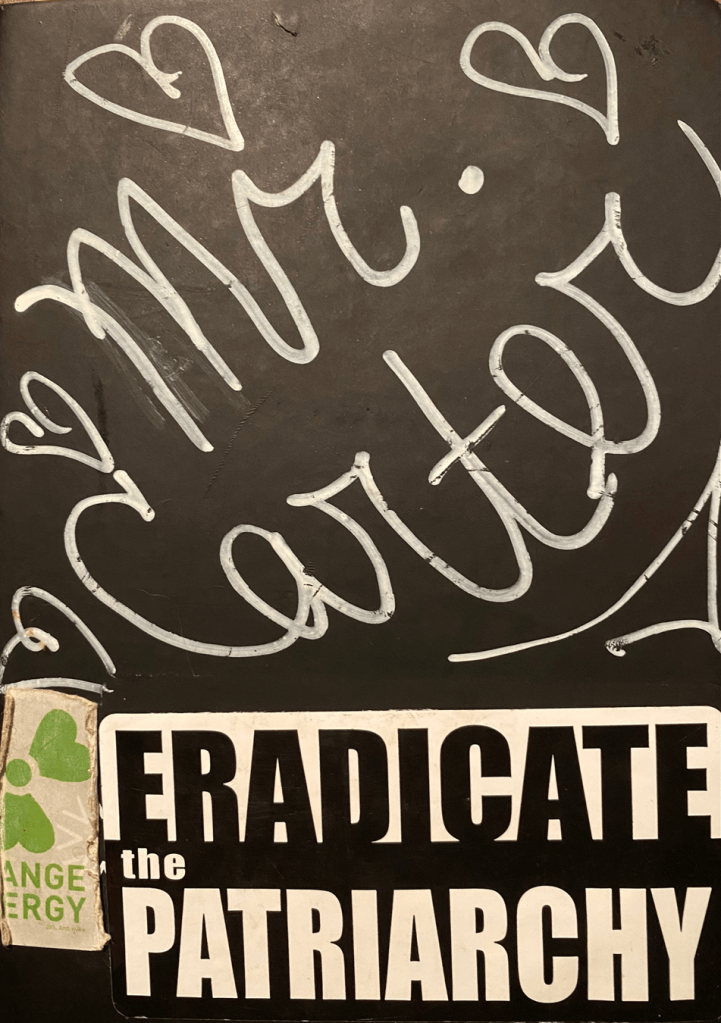
Chapter 6. Dude-Bro Cult
And my brother’s back at home with his Beatles and his Stones
We never got it off on that revolution stuff
What a drag
Too many snags
Now I’ve drunk a lot of wine, and I’m feeling fine
Got to race some cat to bed
Oh, is there concrete all around or is it in my head?
Yeah, I’m a dude, dad
All the young dudes (hey, dudes!)
Carry the news (where are you?)
Boogaloo dudes (stand up!)
Carry the news
David Bowie/Mott the Hoople, All the Young Dudes,1970
It’s been more than 25 years since I’ve had to work closely with male people, to be regularly accountable to them, deferent to them. There was the Dean at the liberal arts college where I was gallery director, but Dennis was more like my radical Jewish uncle, who I’d call or email when I needed approval to spend a greater than usual chunk of the family (department) money on something for the gallery I ran. “Uncle Dennis” would also be the one to tell me that the painting of the naked gay men entwined on the southwest gallery wall was upsetting students in the classroom to the east of the offending subject, painted unapologetically in Day-Glo-neon.
But his tone was always apologetic: “Lyz, I’m not asking you to change it–it’s not even a class from our department [art/theatre/dance], I ran into Stan, whose teaching Intro Biology in there, and he said it’s distracting,” he pauses… “I’m guessing to him!”
We laugh and together decide that we’re not going to change anything, but I’ve agreed to go to Stan’s class for five minutes and talk about the exhibition, titled “Embodied,” or the painting, if that will help provide social-political context. Stan is too busy with the diagrams of bodies in the textbook and on his PowerPoints to take me up on the offer. Dennis and I knew he would be.
There was also my dissertation advisor, Jonathan, also Jewish and brilliant, who served as the theory/philosophy expert on my doctoral committees. Again, there was mutual admiration between us, both of us with heads for post-structuralist theory, post-colonialism, and the politics of central Africa, he felt Mostly like a brother or comrade in the global struggle for freedom and historical accuracy.
In my teaching work as a gender studies professor and a yoga instructor, there are men involved, but they are ancillary to what I do. At Abide Yoga, there just one male teacher and I do get a handful of men in my classes, but they are there as students, they admire my strength and calm, they’re choosing to be there.
Even at the all girls’ school, where I was Dean for a time, the men were the minority in the building among students, of course, but also as faculty. Their opinions were taken into account, but the final decisions were in the hands of females. This made for a particularly toxic environment at times because the men had to deal with the kinds of feelings the rest of us–females, POC, queers, the poor, etc., have to navigate all of the time–being the minority and/or “second-class” citizens in the rich white man’s world. .
My time at that school was good training for the cultural moments we’re living now with the white supremacists pillaging public government buildings, murdering people at church and school, running people over at peaceful protests. All of it–from the sexism of men unwilling to collaborate with women in an all-girls’ school, to those slinging racist and sexist insults at family dinner, emboldened as they were by trump, to the physical violence and guns we are all victims of, is a cultural temper tantrum about “not feeling heard or seen” by management, about “someone else taking my job,” about, at A Rose!, an unwillingness to see male, class, race, and cis-heterosexual privilege.
The toxic position at the all-girls’ school ended five years ago, so I can explain the alienated male phenomenon with some emotional distance, however, it was triggered a bit when, after Laura’s position went unfilled for more than six Months, Jody quit, and two of the three shift supervisors–one POC woman, Joie, who began at A Rose! two Months before me, and Nico, began working at A Rose! just six Months before his promotion to the downtown supervisory role, quit shortly after Jody. This left just Brydon and Manny, both men, both white-passing, overseeing a staff of five–eventually six with Sharon in the mix, all of whom were white, and, except for Moy, our sole non-passing POC, who also embodied gender fluidity.
None of this is lost on any of us, and I pointed it out on the Teams feed one day, connecting what I referred to as a “trend,” so it wouldn’t seem like a critique of just our dispensary. Indeed, A Rose! even sold a brand in which “all profits” go to communities directly impacted by incarceration due to possessing or selling cannabis illegally, which, of course, are disportionately Black. I included some links, good ones with discussion by industry people, data from reputable cannabis advocacy groups, and reports on the disparity of women in the cannabis industry, particularly, at high levels of management and/or ownership and entrepreneurship.
I do this because we’re already talking about it and I want Otis to know that we’re watching his next hires. I even send a thoughtful email to Kellie, our HR report in Chicago, sending a request for more information on A Rose!’s Diversity, Equity, and Inclusion efforts, as I write truthfully, “DEI is listed as a pillar of the company, but you told me recently that no one in management ever received any training” and… “How can I be helpful?”
Laura took me up on these offers to provide context on matters of DEI, but–reflecting back to what Brydon told Estevez about the number of staff needed to open, it’s clear under the white man’s reign, under Otis’ reign, that “Laura doesn’t work here anymore,” as I get a few thumb’s ups from colleagues, and a Sunday post solely to me from Brydon on his day off. It’s a picture of he and his partner, Biff, selfie-end up somewhere in what looks to be sunny Colorado. Their sky blue eyes match the sky, their skin the puffy white clouds. “I know I’m basically a white dude, but here’s my husband of three years–a honeymoon picture.” I’m not sure how to take the reply, so I type: “Beautiful! Thanks for sharing!”
Kellie writes back on Monday Morning. Mind you, I’m conducting this research in the security booth on Easter because no one is coming in and it’s boring and I am in the Mood to “poke the bear” that is this corporation. I haven’t given notice yet and I’m giving Kellie from Corporate one more chance to show an interest in my vast talents.
I’m so pissed when I read her response, which, in sum, says, “Thanks for your efforts. Do this research on your own time. Why aren’t you working?” And… “I can’t see the Teams chat, can you send me a screen shot?” that I only reply with the following:
Kellie,
I’ll stay in my lane from now on.
I was in security on Easter Sunday, a holiday. In security you can’t leave the booth. I’ll go back to watching Netflix on my phone when there’s nothing to do.
Lyz/Dr. Bly
She writes back that if I witness people stealing time by watching Netflix at work that should be addressed by management and she’s sorry she offended me and so and so in HR and so and so in Brand Development are the DEI experts and it’s woven into everything we do at A Rose! And, it’s just that Morale at our store is really low right now and I just want positive posts about the industry or the company.
I write her two more times, this response being the second to last:
Your response to my thoughtful email and willingness to share expertise with my colleagues hurt me and I’m done communicating with you about it. There’s nothing more for you to say.
Best,
Lyz/Dr. Bly
She wrote back, of course, but I never opened the email.
“Fuck her,” I say out loud after opening the inbox to find her reply.
I forget that Brydon is at Register 4, fooling around with the cubbies he bought from Bezos to help us keep our things organized. “You don’t realize how much all of this clutter messes with your head, distracts you,” he says, almost desperately, perhaps about me specifically, I’m not sure. I can’t believe he would be because I only ever put my bag and water bottles under the register on the shelf that’s already there.
“What’s up,” then, “How can I help?”
I blurted out a summary of Kellie’s and my email exchange and he says, “I’m sorry about that, I think you will like me as a manager; I like to just cut out the bullshit–that’s her, but you can be you here at our location.”
“Sorry, Brydon, I’m going to quit,” I’ll send the official email before I leave. I need to look at my money, but that’s secondary to my mental health–and, I decide right there, my skin.
“Well, I’m not accepting it without your email, just cool off first,” he’s got panic in his eyes, “And, please stay through the holiday.”
“I will,” I sing-song like a five year old being told what to do and knows there’s no choice in the matter. I was certain I’d have to stay until the end of April in order to pay the Mortgage. “Well, I support you, Lyz, whatever you decide I get it, I’ve been there myself.”
I chuckle cynically at his response. No doubt he had traumas at work, capitalism thrives on oppression, everyone gets destroyed by it at some point or other in their careers, but I doubted that no one grabbed his ass while he was just trying to earn a summer’s worth of wages to pay for the first semester of graduate school, nor, his leg under the table at the annual overnight summer retreat after he earned the degree, trying to keep the good paying foundation job for long enough to get some experience and get on to somewhere less sexist. These were the traumas the sisterhood brought with us to work.
I call it sisterhood, but it is really about being queer, because those of us who don’t perform sex or gender in ways that are deemed to be “normal,” also get beat up at work. At the jobs I just mentioned, for instance, as a waitress, the cooks, some of them teenagers, gave us nicknames based on our best physical features. Jack, a handsome and normally shy 16-year-old deemed my 25-year-old-thighs to be the highlight of my fit, albeit anorexic frame. “Lamb chop-Lyz!” the 35-year-old manager declares, and so it was.
Whenever I wore shorts, especially, which was all summer, because no matter how high we cranked the A/C, it never cooled down in the waitress area, which was on the other side of the kitchen, with its gaping window on full view of everyone at the counter between it and the dining room, and much of the dining room. The place felt like the kitchen was the stage, the cooks the stars, and the servers were the ushers, rushing hungry people, then food, to and fro. It was hard work but it was fun at times. I didn’t necessarily take offense at the nickname, but when the customers started using it, it felt like a breach between stage and audience, the irony of my character lost on the townies who just took it as an opportunity to further sexualize me.
Ten years later, with a Master’s degree and a bit of nonprofit arts experience under my belt, I’m working at the second largest and oldest community foundation in the country. There I learned the very definition of “boy’s club,” as the men in charge were known for making decisions in the men’s room, often while holding their cocks. Affairs were common between staff and it was commonly known that a senior program officer not only took a different “mistress” for the overnight staff retreat, but that my predecessor and he were “very close” during her stint in the Communications Department.
My elder female white boss Linda once reminded me of my second-class status in the looks department, more than once weaponizing another woman’s body or attractiveness against me, as if I’d baited her into the beauty pageant in her own conditioned mind. She would never know that I was his target in 2000, at the last of the retreats for me, as his behavior made me exit in August of that year, just two months after the summer retreat. I was witness to his hunt for a bedmate on day one of the two-night, two-day retreat at the Mohican Lodge, 90 minutes south of the city.
The foundation billed these events as one of the Benefits of our jobs–listed with the “Additional Benefits” section of the “Welcome!” packet was: “Twice annual–staff retreats! An opportunity to bond with colleagues outside of the office, to strengthen relationships, give you a chance to recharge with plenty of free time scheduled!”
“Scheduled free time is oxymoronic,” I remember thinking when I sat awkwardly alone in my office reading a stack of materials on the history of the foundation and the privilege of getting to start a year with “us,” blah, blah, blah.” Near the end of my “career” there, in June of 2000, I’m alone at the pool, before the scheduled happy hour (another oxymoron), trying to read, but Mostly hiding behind the book to people watch. Thankfully my ability to spy on people from behind a book is still spot-on because I see Brad before he sees me. He’s in business casual, hands in pockets, as if to further push the “casual nature” of the retreat, but I’m also wondering if this is his first stop in the beauty pageant portion of his search for an overnight boo–the bathing suit competition.
Then I see it, I watch him watch me. His search is over. “It’s going to be me,” I think, disgusted at the proposition that I’ve got to be at the Mohican Lodge, 90 miles south of civilization, at all, much less in this predicament. I was right, I had to push his hand off my knee and move to the other side of the table to which I was assigned before he would leave me alone. I have to wonder if my rejection hurt my career in the long run, or if my decision to stay in the room that night instead of going to the karaoke event was a missed opportunity to connect with my colleagues, as I never told anyone about Brad’s hand on my thigh. I made the move to the empty chair next to Beth, my cohort, to look at everyone else like a necessary one, so that we could talk about the Y-Haven grant that she, Goldy, the program officer for social services, and I were working on.
In fact, Brydon would never be on the other end of his own sexism, like time he made the following dictate to Bethany, Sharon, and the more recent new-hire, Carol, on the busy Thursday night before 4/20:
“Ladies, I think our patients would approve of a more “PG-13,” he uses air quotes, “playlist,” as he walked to find his phone and locate the classic rock channel on Sonos. When I came in the next day, Bethany pulls me aside, “Lyz, I swear to goddess, you are the angel in the place. Last night Brydon told us to turn the rap music off. That our patients were offended–OUR PATIENTS, who are mostly Black and who sing along with us when Wutang Clan’s ‘Can we kick it?–yes we can?’ comes on!”
Sigh. Silly me, I thought that when Brydon started the day on Tuesday morning with AC/DC he was being ironic, and I even played along, putting a gender-queer spin on “Cum on feel the noise, girls rock your boys,” singing and air drumming as I got ready for the day at 8:50 a.m.
Then, I remembered an interaction with a patient, the Sonos station blaring like it used to, but with the wrong music. I must say, working in a low wage world, there are days where you get too busy to even remember the sexist slights that people wield at you, so the discomfort the Black man of about my age and I felt as Rod Stewart’s banal, but objectifying 1970s hit, “Hot Legs,” blares from the speaker:
“Hot legs–
You’re wearing me out–
Won’t you scream and shout?
I love ya honey-
Are you still in school?”
I can’t remember the man aside from his expression of discomfort and shame, as if it was his fault–he was just whistling the song in the way one does when you’re waiting and there’s nothing else to do, with me singing along. We realize it together, which makes it worse for both of us–the “are you still in school?” comes out of Rod’s recorded mouth, but we both remember it’s coming and stop together. It’s the kind of moment we laugh our asses about when we’re with friends, but not with strangers, at least not at this particular moment/interaction.
Thankfully, his order is ready, so I turn around, but I’m wearing black leggings and a t-shirt. I’m wondering how my own legs enter here. Behind the window–this time to back stage of the dispensary, no one was calling “Lamb Chop Lyz, your order’s ready,” but that more than three decades ago in that hot, stinky restaurant I worked at to cover the expenses and tuition of my first year as a graduate student at The Ohio State University.
My patient and I made it through the awkwardness, like people with a good bit of life experience between them tend to do. But it stung to have that memory triggered by Rod Stewart’s 1980s lyrics, written at a time when most people didn’t question sexism in music, unless, of course, it was music by Black people, if it was rap.
So here I was again, with this white man from Akron thinking he could come to the CLE and to my dispensary, to the place where for 18 months (after Moy, I’d been there the longest by April 2023) I got to know some of the most beautiful people I’ve ever met, had some of the most transformative experiences–some involving music, and tell me or anyone else who had shed blood, sweat, and tears there, what kind of music the patients wanted.
As my co-workers and I rehashed 4/20 and it’s debacles, humorous moments, and beautiful ones, I could reflect on that interaction, I could think about why Brydon would call my white, female co-workers, “Ladies,” the fact that he said our customers would be uncomfortable is that A Rose! Corporate had changed the business plan without telling us low-level PCSs. They didn’t want our current demographic anymore. They were trying to capture white people’s interest – ?
Or maybe it was simply his own distaste for rap?
I can’t know for certain, but what I’ve seen many times over my career in this town is a common pattern. In Cleveland business, when something really goes to shit (in this case, literally, as if the sewage fuses weren’t sign enough!), you bring Akron up to whiten things up and to provide a vapid solution in the form of a compliant, ignorant of his class, gender/sex, and white privilege token manager.
The Akronite provides the following Benefits for his more sophisticated “big brother” CLE employer:
1) He is flattered to be called from the more provincial city due south of Cleveland, and he will likely ask for a lower salary, after all, the cost of living is lower “down there.”
2) Because Akron has such a deep history of racism that very of its young residents know about, so there’s a normativity to whitey being in charge.
3) Some of the weirdest people on the planet are from Akron, Ohio, and it’s likely that the bland conformity around gender/sex and family contribute to this. After all, repression and complacency created a place for white to be weird (consider DEVO, the 80s New Wave band, out of which came Mark Mothersbaugh, whose sounds and theme music are still ubiquitous in just about every offbeat film released).
My own family, elite, but hard-working whites, chose to live outside of the rapidly integrated suburbs of Cleveland and Akron, to the more rural ex-burbs of Aurora, Streetsboro, and Hudson. My grandfather, a school teacher, left teaching for a high paying hourly job at Alcoa steel in Cleveland, just off Fleet Avenue and East 55th Street. His commute from Aurora on the two-lane State Route 43, meant that his family and most of his children’s children would live among trees, gardens, space, and land. This was central to my paternal grandparents’ decision, but not as important as my grandfather’s wish to keep his kids segregated in white schools. And like my grandparents, their six children, chose to move or stay in very white spaces.
This is what I wanted to escape from as early as age eight. I remember standing in the long driveway to the road from our newly-built split-level house on five acres (most of it wooded)–privileged, but critical of normativity, even then, saying out loud: “There has to be more to life than this.” As soon as I was able to drive a car, I was taking it to Akron, which was closer to the more populated, banal, and equally white suburb my mother’s second husband moved us to: Stow.
There were New Wave clubs on Main Street where Devo played, along with other avant garde acts like The Waitresses, The Pretenders, and The Dead Boys. My friends, who–of course, packed the car with me were too young to get into The Bank to see the performances, but it didn’t stop us from parking the car, putting packs of cigarettes and cans of beer in our bags, and sharing them with the New Wave and punks fans smoking outside before the shows. If the doorman didn’t shoo us away, we would sit outside and smoke until 20 minutes before our curfews, rushing back to the boring empty streets of Stow to make it home myself, just 10 minutes late.
My approach to cities hasn’t changed–you go with curiosity, with a desire to see people who live differently than you, you see new ways of dressing, you hear new languages spoken. I craved this exchange, I still do.
Not Brydon. He brought his Akron to Cleveland and expected us to conform. The fact that he was a gay man only meant to him that he was able to get married, live a nice quiet life with his husband Brandon and their cat, FiFi, which he posted pictures of every week on the Teams chat.
Brydon didn’t have a critical race theory bone in his body and I could tell he hadn’t been around a lot of people of color. Nor was he very curious. As for the music, it was so central to us and we shared so much really good music, that for Brydon to tell the “ladies,” even though they were newer and didn’t have the history with Ramona and me sharing songs on slow Sundays–or, of Manny and Elliott and me talking about how hard it was to make it through the breath-taking, but emotionally gut-wrenching Kendrick Lamar release, Mr. Morale & The Big Steppers, but they didn’t need it to know that our patients came, in part because we set a great vibe, always pulling up our own Spotify accounts to share playlists.
His sexism was out of ignorance, and disinterest. “Ladies, turn down the rap…” to him just sounded “nice.” As in: “I called them ‘ladies’, after all.” I believe he was clueless; he was a perfect subject for a manager. He didn’t have any diversity, equity, and inclusion awareness at all… it would just be absent now from the workplace under him.
I know that Bethany wanted me to talk to Brydon, maybe even “school” him a bit on his ignorance–not just for the use of “ladies,” but because he was missing the mark on the music. I didn’t do so because, unlike Bethany, I’d been in similar positions at work and with family, or anywhere men’s power and privilege was left unchecked, and when I spoke up, it usually worked against me. Selfishly, and perhaps rightfully so, I was exhausted from being the “angel of A Rose!” as she referred to me. And Brydon scheduled me in security for my last shifts, where I could listen to whatever I wanted to for the entire shift, no matter how raunchy, and that I would turn it up for the patients I would sing with when Wu-Tang was bumping, or Nina Simone was getting us ready for a long, snowy Sunday.
What I know about Akron, what I’ve seen with my own eyes, held witness to in work involving sexism, racism, homophobia, and classism at work tells me that the latter scenario is the case–he loves classic rock, and that that is the very reason he was hired.
On Brydon’s first day I was scheduled to start at 2 p.m., but was running late because I found an injured Cardinal in my backyard and brought it in to nurse it let it recover, so I send a message on Teams, including a picture of the bird, bright red, down to its plastic-looking beak, which is the deepest red I’ve ever seen.
“Thanks for the head’s up–I would do the same!” he replies.
I get in at 2:15, just eight minutes late if your account for the seven minute-grace time we’re given before we get a point against our records. Brydon is standing outside, tall, awkward, lanky, young, smoking.
“Lyz, you are not going to believe this.”
I was surprised at his enthusiasm; we’d met a few times already and this seemed out of character, so I stopped and turned to him, even though I’m late. “What is it?’
“Just now, as I was standing here, a giant hawk flew from up there [he points to the 20-story building across from us, as midway there’s a perch where the birds hand out] and swooped down in front of me to take this pigeon who was eating something on the ground.”
He punctuates: “What the fuck.”
I’ve had my share of encounters with hawks, usually in my backyard, twice eating–or attempting to eat, one of my chickens, and I understand their symbolism in cultures that honor animals; when a hawk shows up, you are to take a broader perspective, to see things as they are and take quick, forceful action.
I want to say, “That’s too powerful a charge for you, Brydon,” but I don’t because that would be mean on his first day, plus I would have to explain the animal medicine card deck I have at home, the hawk symbolism–instead I say:
“Whoa,” because it is profound, then, to placate him: “Well, it’s a sign about leadership, welcome to A Rose!” I strut off, considering the overt symbolism of the birds. I’m late for “saving” the Ohio State bird, The Cardinal, I arrive and this white man, smoking like an anxious fiend over what he’s gotten himself into at the downtown A Rose!, witnesses a hawk swoop down and takes a pigeon who’s grubbing for the crumbs of pedestrians right in front of him.
In his first weeks at A Rose!, I watched Brydon try to embody a kind of hawk that watches what everyone’s doing. This is easy at A Rose!, remember, because there are cameras everywhere, every six feet or so on the sales floor, every six feet or so outside the building. He can have one of his screens focused on what we are doing, down to counting back dollar bills.
We had a system: “Lay every bill out on the mat under the plexi arch, that way we can see if you make a mistake,” which worked well. This kind of oversight didn’t rile me because the State of Ohio could come in at any point and question our cash handling. If I forgot to give a patient their $1.00 in change and my drawer was over, Moy had to look for my mistake on camera and figure out who was owed the $1.
But I suspect that Brydon used the cameras as a way to “get to know us,” to “check up on them,” etc. He was going to be the hawk that caught the low-live pigeon-PCSs making mistakes, or spending too much time with a patient, or–maybe, stealing company time or office supplies. There was fear of the union, as well. A Rose! workers in other parts of the country unionized and appropriately held a strike with the Teamsters on 4/20. Executives had to go to Illinois locations to work as PCSs. Hawk-Brydon was going to sweep in like a capitalist superhero and Right the Wrongs (human and otherwise) of the past matriarchal role.
Ramona was the first among us to take the hit in Brydon’s Hawk Phase. Otis pulled one of the oldest and most egregious tricks in the sexist-racist-patriarchal Boy’s Club Playbook. He made Brydon his overseer, Otis seeing himself as a kind of plantation owner, perhaps. In the history of the old south, the overseers did all of the dirty work for the plantation owner and his family; in our building in the north, there was a history of underground economies. Remember that Prospect Avenue is for most of the 20th century a place where sex workers congregated looking for work. Bars and pawn shops lined the streets. Cash flowed. There was violence and rape and laughing and dancing.
With underground economies, with cash economies comes risk and crime.
The building is more than 150 years old. Cash was still flowing.
Otis needed to keep us in line, he needed no interruptions for accountability within the skeleton crew his ineptness created. Brydon, in the first three or so weeks as Store Manager at A Rose! took the symbolism of the hawk on the street and then his frail white body succumbed to the thuggery of the past.
He wrote Ramona up with “last warning,” at Otis’s request.
Like the ghosts in my vision, the ones whose fear still flows at the top of the steps heading down to the basement, once a wide open space with areas so far removed from the upstairs, that you could pummel someone for talking to the wrong person’s “lady,” for engaging a sex worker and not being able to pay for her services, for stealing diamonds from the pawn shop.
Ghosts can take over the weak or even a strong person if they’re sick or in trauma. I don’t doubt that Brydon was traumatized. While training for his job downtown with the manager at the A Rose! west location, he witnessed two children locked in a car with the interior on fire. It was Jorge the security guard who smashed the window with his forearm to get them out. But Brydon arrived outside to see the tiny burned bodies. One didn’t survive.
Jorge suffered a broken arm and burns that required skin grafts. The company gave him two weeks off but he returned in ten days. While he was a hero, the employees who witnessed this horror were sent back to work. “One more hour until close, finish your shift.”
Brydon, new to A Rose!, city life, and the role of manager, was stunned and anguished over what he saw. In my own experiences with PTSD, I sometimes became bigger than life, embodying a kind of social justice-gender studies professor superhero, so I grant that Brydon could’ve been infected by this phenomenon, plus, his overseer, wanted Ramona to be small, and to leave. Otis made Brydon a part of his slap down of the opinionated “ladies’ ‘ of the old matriarchal regime.
Men in the workplace find powerful women, females, and queers troublesome, especially in 2023. At home, the white man is being held accountable by his spouse or sister for horrible, in my family, illegal choices, and also for the doing the dishes and the laundry, as ciswomen have been doing a bulk of this work for the entirety of the history of American capitalism, and we’re not doing it alone or inevitably anymore. So when he comes to work, he wants to have things his way. After all, in Brydon’s case, He’s the boss.
Because I know his kind well, his quiet, passive aggressive demeanor, the way in which people get the sense that they must tiptoe around him when he’s in a bad mood–he is my brother, a baby man, I decide to mostly ignore him unless he speaks to me. This strategy works well, as in week two of his reign as manager, I show up to 20 people in the waiting room, a line out the door, and Nico at Zach–who after six months, admittedly, “Still doesn’t know computers very well,” and we’ve had a bomb dropped on us overnight–they launched a new POS system, cleverly named “Dutchie,” which we’ve receive no training on. Oh, and it’s a Galenas sale, which brings out the demons, even on a regular day.
The night is hell. At one point, I was standing with Brydon at his massive screens, combing for the error that has no Early Lemon Berry in the house, nor in my angry patient’s preorder bag, but there’s one in my hand. It’s absurd to me, the whole thing. I’m living Jean Baudrillard’s theory of simulation, as Brydon is fixative of the words, numbers, the “image” on the screen: “It says we don’t have anymore, Lyz”
“But we do.”
“We can’t have discrepancies. Oh! All right! I will take the one out of my preorder cart and sacrifice tonight,” Brydon says, defeated, and irritated, which, for him, means he’s going to be prissy for the rest of the night.
“Ok,” I take the package–the real one that’s been in my hand all along, and walk it up the stairs through the doors, past order fulfillment, where Nico is almost in tears with 50 or so empty preorder bags on the floor, and 50 still hanging on the wall, ready for pick up, and head to register four where Logan has been waiting for 15 minutes.
“I got it,” I flash the bright purple package toward him and he smiles.
A win on this night; I take it.
The next day when I come in, still exhausted, at 2 p.m., Ramona is solemn in security. I learn that she and Otis talked for 40 minutes in the security booth, at the end of the conversation, which is intense; Ramona reminds him that he is accountable to us, that we are on the front line with patients.
He says, “I am not accountable to you,” and walks off.
“Dude showed up after that night you all had–the day I had yesterday trying to ask me about my workout–like everything’s normal,” Ramona tells me.
Then, I later learn that Otis tells Brydon to write Ramona up.
That he and Manny and Otis were the Men in Charge over, at the time of my departure, all white females, except for Moy, a POC, gender fluid, is exactly as they wanted it after the females, queers, and people of color had been in charge at the Cleveland dispensary.
What was worse is the whiteness factor. In my bones I know that Otis was sending us a message in the write up of Ramona’s “insubordination.” That he and Brydon were so utterly clueless about just how racist this action was infuriated us even more.
I am utterly honest at A Rose! I always was, from day one. So when I learn about this and I am alone with Brydon I tell him:
“If you knew how many times I wrote emails, Teams messages, and spoke in person to Otis in ways that someone could deem as ‘insubordination’?”
I continue: “And, that Mike has written Otis a scathing Teams message telling him that he and management are incompetent…”
The Hawk jumps in:
“Wait, did Mike tell you he sent this?”
“No, Brydon,” I say as flatly as possible, “People here forget to log out at the end of the night or during their breaks, so when I sit down, I often see their Teams chat and I read.”
“Oh, I’ll have to get on that,” he says, as if turning it into a task on his to-do list will get me off track.
“So, to write Ramona up after what we went through on the Galenas sale night alone?” My sentence ends with a tone of defiance in the question mark.
Brydon literally makes a noise. “Arhh, ah, ah.”
“I don’t speak to Otis now, other than to answer business-related questions because this is unacceptable,” I say.
He walks away, as if asking him to consider what happened around him and Otis’s incompetence is more than he can handle at work.
I had experienced this phenomenon at the private school. They hired me to “radicalize the girls,” but were terrified when I did so. At A Rose! they hired Laura and other radical cannabis activists to “change the community,” then COVID hit, then more dispensaries opened, then crazy shit started happening so they ousted her, taking six months to hire more cooperative, compliant types who speak an entirely different language, who live among mostly white people in houses, condos, or apartments built after 1990; plastic houses.
But Brydon and his team of females and his one remaining queer person (openly, anyway, remember, Brydon is a gay man, but passes as straight when necessary), represent the hawk devouring the pigeon. The pigeon was not Ramona. Ramona was too powerful to be devoured, which is why she had to go. Nor was it wasn’t the new “ladies” Otis had carefully hired to look and act alike. The pigeon represented the patients. A Rose! Corporate had a new plan that didn’t involve the people who came to A Rose!, especially the poor patients, the ones who liked our “R-rated” rap. I don’t know what Laura did wrong, I know she wasn’t perfect, and everything about Otis’ new A Rose! team feel even more like a nightmare in comparison.
One hot July night when Laura was still at the helm, Ramona, Mya, and I sit in my Honda Civic Sport. It’s the most obvious choice for an after work smoke, as I have tints and at the time A Rose! Corporate pays for us to park indoors in a garage that becomes a communal home for 100-150 of the city’s homeless population after baseball season ends. Ramona and I are still talking about Kendrick’s newest record, which is so heart-wrenching to me that I can only listen to it in bits.
“You gotta listen to Jay Rock, Lyz, especially if you like SchoolboyQ,” Ramona takes over my phone and then the settings on my stereo, “You like it bass-y?” She asks.
“Yes!”
She scrolls through the “stereo” features on the dashboard screen as if the car itself is her instrument, “this too low? I don’t wanna bust your eardrums,” she laughs.
“Perfect, turn it up!” I say and we’re singing along with Jay Rock:
“Win-win-win
Fuck everything else–
Win-win-win
These n*ggahs ain’t shit–”[1]
“Damn, this Penelope Pussycat tastes like perfume, did you put something on this, Lyz?” Ramona says.
“I was about to say,” Mya chimes in.
“No it’s the bisabolol terpene, look it up,” I responded.
In 20 seconds, Mya’s reading Leafly’s description: “floral, calming, anti-inflammatory…”
“Ok, ok that makes sense,” we all concur in nods or gestures.
“This is like Obama’s America right here,” Ramona points out to Mya, who’s Israeli, and me, who’s 100% caucasian, and her, a Shaker Heights, Ohio Black woman.
There’s something about the statement that we all know portends a time when things will not be this way. Ramona, the business degree holder among us (even the managers), might have been warning us. She was always telling me how capitalism works and that “It’s part of the plan,” and “The managers only have so much power… you can complain or suggest all you want, but what we had with Laura, the way we were speaking with, serving the community–it’s not part of the business plan anymore.”
We had a taste of diversity, collaboration, and community.
In two months Mya would be the first of the three of us to leave.
Ramona left 8 months later.
I hold on for 9, but I decide when Otis asks that Brydon write her up for insubordination with a “last warning” clause, which means if she’s late that can fire her, that this is a sign to all of the females wielding power and influence at A Rose! CLE’s downtown location to “Shut up, or else, because even Brydon’s on board with Otis’s smack down of Ramona: all of the ‘ladies’, ‘queers’ and ‘people of color’ who left empowered needed to conform to the new A Rose! New CLE Order.
Otis’s subsequent hiring of the white females over varying ages (each about 10 years apart) with one in her 20s, one in her 30s, one in her 40s. “They are very nice people, I’m sure,” Moy says on one of my last days, “but it’s like a variant on fonts,” each of them only a tiny bit different, all of them conformists, seemingly docile to Otis and Brydon.
“Well, you haven’t worked with Bethany,” I tell Moy. “That kid has seen some shit. I wouldn’t mess with her if I was Brydon.” Moy shrugs. I knew Bethany is not going to stand up to Brydon over the music or anything else, but she’s the kind of witch who will make things happen behind the scenes. I imagine Bethany sending a life sized hawk to swoop down 20 stories and grab Brydon from the sidewalk in front of the dispensary, cigarette still burning, and drop him back off in Akron, or maybe in Westlake, Ohio, where whiteness also “shines.” This is where he belongs.
I’ve never worked with a more manner-less group of people than in the cannabis industry. Big shot white men, young and old, most of them white, in from “corporate” would literally blush when I greeted them, getting up from the desk, with a handshake. It felt as if I was breaking code by not just sitting there staring at my screen, being invisible. I refused to change this practice, feeling that it broke the hierarchy, no matter how awkward it got with the Man-Superior. During my time at A Rose! I met so many relics of the white middle-class patriarchy I began to think of them as a clan of their own, that these far-from-downtown-city-life places they chose were chosen for segregation. I began to think that maybe in the new world we will just let them stay there, we will have no need for them and their resources because our communities will get the same funding and because we are brilliant and beautiful and creative and make something from nothing, our neighborhoods will be gated from them. They no longer get to gentrify us anymore.
I imagine our gates guarded by hawks and pigeons who swoop down and simultaneously grab them and shit on them, flying them south and west of our cities, where homeless people have the kind of housing that best suits them, there are more bikes, trams, and scooters, than cars, and I can have two goats in my backyard, living happily with my hens, dogs, and cat.
Brydon could play “Hot Legs” and “You Shook Me All Night Long” all night and all day long and everyone around him would love it, too.
Jay Rock, “WIN,” Redemption (Top Dog Entertainment, 2018).

Chapter 7. Changes (Turn and face the strange)
Every time I thought I’d got it made
It seemed the taste was not so sweet
So I turned myself to face me
But I’ve never caught a glimpse
Of how the other must see the faker
I’m much too fast to take that test
Ch-ch-ch-changes (Turn and face the strange)
- David Bowie, 1971
Mya leaves A Rose! in early September to start a new life in Maine with her partner, William, a first generation immigrant from Nigeria named William, who’s landed a general practitioner gig near Portland. At this point in my life I’ve lost so many friends to careers—those of partners and the friends themselves, as some of my closest friends come from yoga, where they come to find stillness at Abide Yoga amid graduate programs at the universities just down the hill from the studio at University Circle and the Cleveland Clinic. My survival strategy evolves, from a martyr-friend who is happy for their accomplishments and positions in Topeka, Baltimore, or Toronto, to a logistical ally–as in “Can I help you pack?” “Store your fig tree until you return for a visit in two years?”, to now, with my angel-friend Mya, utter avoidance of the entire move.
It’s not until we meet in the alley behind the parking garage, where she is depositing several trash bags worth of clothes, Knick knacks with Hebrew blessings on them, and most of her unicorn collection of shiny stuffed animals into a bag–
“You will know what to do with all of this stuff, thanks for taking care of it, Lyz.”
One of the homeless men who lived in our parking garage was standing outside in the sun, having a cigarette, watching this strange display of rampant consumerism transfer from Mya’s Lexus to my slick black Honda Civic Sport.
“You want to pick a unicorn,” Mya says, like it’s normal to have a stock of 50 unicorns in the trunk on any given day.
She pulls the back out and thrusts it toward him, “Thanks, Mama, I’ll take this one,” he pulls out a white one with a gold lame body and a rainbow-colored mane and tail. “For my little girl,” this is the magic of Mya, she is so bright, empathetic, funny, and kind.
When she turns around she sees my tears. “Awh, Sis, I’ll be back in December, my family–my brother is here, my nephew–” but she’s crying, too.
We survived a grueling job at a grueling time in history, in a building that stole our energy, for a corporation who thought nothing of how much said building, and the “ever-changing” cannabis industry and its whims, battered our bodies. We laughed and shared many cannabis strains together. We stood next to one another during the bitter winter holiday season, particularly of 2021, when COVID cases were spiking as people got on planes again and saw friends and family in November and December. When I joined the team on December 6 of that year, remember, Laura, the general manager, is out with COVID. She doesn’t get a release from her doctor to return until January late January, and during her absence at least two people are out per week with the virus.
While I got the computer training, the lack of processes for training new people shows, as I learn things on the fly; likewise, Mya and I, along with the rest of the team of 18 (the highest number of employees at A Rose! during my tenure), would bear the brunt of the confusion that our patient-customers brought with them into the dispensary. With Mya, and also Ramona, and the pharmacist, Alice, I learned that most of us were in pain. We also found that most of our patients are in pain–I estimate 90%, but it’s likely higher. And that at least 75% were not sleeping well. These are facts that bear data–while I couldn’t record the statistics, one bit of advice all got was to start with these two questions when new patients came in for help in choosing a strain and method of consumption (flower, edible, topical, etc.):
“How is your sleep?”
“Are you in pain; if so, can you describe it?”
While most of our patients were affable and kind, many becoming friendly, with many regulars, those who were unkind were often extremely so; after all, most of them were in some kind of pain and not sleeping.
This part of the job was akin to working at a regular pharmacy, only with more cultural credibility and no insurance companies to make things tenuous around the money part of the transaction. The people working when Mya and I were there together were a diverse group, there were lots of big personalities, and a few assholes, but we always showed up to have one another’s back when an angry and irrational patient came through.
And the State’s regulations, the downtown location of the building (aside from the ghost in the basement and those still haunting the entire Prospect Avenue neighborhood), and the number of doors between the street and the cannabis, made people anxious. While no one threw chairs at us, as in the viral video of early 2023, depicting a restaurant worker brandishing her forearm to protect herself from a customer hurling a chair across the counter at her showed, but the fears, anxieties, pains, and sleepiness that we negotiated everyday took a toll on our emotional wellbeing.
Mya distributes the unicorn to the homeless man, a person we’ve walked past while he’s sleeping in the stairwell between the second floor of the garage we park. We only see him when we arrive on time, which is rare. When we are 10 minutes late, he is gone, with only a candy bar wrapper or used Kleenex left as evidence that he made the filthy cement floor a mattress, the thin, whitish blanket we see him covered in packed away in a suitcase behind one of the nooks of the parking garage.
After the shifting of stuff, Mya invites me into her car for one more smoke before she hits the road. We’ve planned it this way that she clears out the car on my break, then goes back to her sixth floor apartment overlooking the Cuyahoga River to pick up Sasha, her calico cat. “Sis,” she emphasizes with a drag of Lemon Slushee flower smoke in her lungs, “Huuuuuhhhhhhhmmmm,” she exhales, “Sasha sleeps with me, how is this gonna work out, William is allergic to cats?”
“You’re going to find out,” I say, taking one last drag from the cone’s cardstock filter, then:
“Love you, Sis, I gotta get back in there.”
“Ok, you still have Karen, Lyz. Give her a chance.”
I exhale-sigh all at once:
“Huuuhhhhhhhhh–Okay.”
*************
Over my career in various fields, I learned to get along with all kinds of people. I would also learn to put barriers up between me and others when my gut told me something was quite right about them. Karen was in this latter category of folks.
I couldn’t pinpoint what it was about her that I couldn’t trust, didn’t like. She was a balls-to-the-wall Sagittarius, which reminded me of my ex, the baby-daddy of my youngest kid. Like him, she shared the attention span of a 13-year-old, ready to jump from one activity to another, overeating, drinking, smoking, and driving like a 16-year-old all the while. You remember, it was Karen who chided Laura for not going out with us for drinks on her last day at A Rose!, even though our now ex-manager had fire in her belly and was shitting blood. Moments like these were often enough that I saw her to be selfish and narcissistic, and I disappointed her once for not attending a grower party on Erie, after saying I would be there.
The following Monday Kim reports, “You missed some fun at the Riviera Creek party. Now granted the boat didn’t leave the dock, and the food was microwaved. I rode with Zach and we did dabs for 20 minutes in the parking lot, so we were late. I was kinda glad the boat didn’t leave or we would’ve missed it.”
“Karen, that sounds depressing. I’m glad I stayed in bed and didn’t get dressed for it on my night off from the cannabis industry,” I tell her. She shrugs at me, “Whatever, Lyz,” but she’s cold to me for the next week.
Another time she yells at me for accidentally dropping the toilet seat too loudly in the patient bathroom. “I thought it was a shot!” she tells me when I make my way from the waiting area to the sales floor. “No, just some dude didn’t put the seat down, and I am tired of touching the toilet seat, when I’m forced to pee up here because we’re busy.” Then, I say what really pisses her off, and is part of the crux of my gut feeling about her to begin with: “I trained my children with penises to put the seat down–as is proper,” I emphasize because it’s true.
Anytime something strikes Karen as a challenge to her parenting “values,” she gets pissy, this time she is pissed about piss of the sort I see dribbled on the floor and toilet seat of the patient bathroom at A Rose!
“LYZ! That’s the only toilet in the house. You would have broken the toilet seat and then there would be NONE!” She says loudly, with her parental whine wrapping around the words.
True, both downstairs bathrooms had “CLOSED” signs on the doors, as it was late June and the early summer rains caused the flooding sewers below to be even worse than usual. This is before pharmacist Alice learns that all we have to do is pour water down the drain to temper the smell. This is also before Alice learns that putting work orders on things in to corporate around the leaks and smells in this building will lead nowhere. They’ve sent their contractor experts in on numerous occasions to check on The Smell. It still stank to hell and the leaks from the ceiling found Brydon’s waterproof jacket no matter where he tried to hang it on a rainy day.
“We have the plumber, HVAC, and city sewer person coming in to look at this next week,” she tells Eli and me in the break room, where the former is heating up yesterday’s Chipotle for breakfast one morning. “The worst drain must be directly below the women’s toilet and, above that, security!” Alice says like an enthusiastically naive detective.
Eli’s been there since the place opened. He mixes salsa leftover from Sunday’s team meeting into the burrito, looking up only to shrug. Even I know by now, having escorted the HVAC repair person to the roof one day a month prior, this time he was looking for where the leaks into various parts of the basement were coming from—“They keep saying the water is coming down the ductwork—I don’t see anything up here,” the heavy, big red-faced man says after he’s climbed on to the roof via a very vertical ladder and through a narrow porthole.
I use this ulterior motive to I climb up to the top of the ladder, too, as I want to see the view from the roof—as I peek my head through, he points to a newish HVAC system bigger than the order fulfillment area, a half story tall.
“Ok,” I say, “I’ll let Mona know,” as I climb down the ladder to text her from my own iPhone on Microsoft Teams.
“Alice, same old mystery up here on the roof, I’ll bring the invoice when after I walk the HVAC guy out.” I type like a supportive team player, who fully knows that the building smells like shit because it is built on top of a centuries-old sewer system laden with the feces and petro-chemical run off from the streets and sidewalks of the neighborhood, which still holds ghosts who haunt the place, souls reckoning with the shittiest-shadiest sides of the underground economies that once thrived here.
All to say, I don’t question Karen’s fear that we could be down to one toilet in the building, but, I tell her, “I hardly think dropping the seat is going to break the toilet, Karen,” flatly, because her “You could’ve broken the toilet seat!” sounds like something a parent would say to a child, and because it’s ridiculous.
This also points to the kind of day-to-day chaos that was part of working at A Rose!, and by late summer of 2022, with still no manager, assistant manager, nor enough employees to support the busy summer cannabis season, the toilet breaking might just be the last straw of all of us, except for David, who chimes in:
“Fuck it. If the toilet is broken, I’ll piss in a cup or outside with the bums.”
“Mike,” I say, “We don’t call them ‘bums’ anymore, and–right on, I’ve got my pee-style in the car, Karen you can borrow it, don’t worry.” I try to lighten the mood along with Mike, but she just scowls and makes the accompanying growl, then walks away to find the broom.
She’s been trained to clean when she’s mad.
The night before Thanksgiving, our 20% employee discount stacked with the “20% off the entire store!” deal, meaning that we could get 40% off of our total order. Karen racked up a big order on this slammed Friday night. Alice was filling orders alone until close that night and they were exhausted choosing to work 12 hour days, sometimes four in a row, all while their body was wracked with chronic pain and yet undiagnosed conditions. Alice responds to Karen’s Teams request to be cashed out at 7:55 p.m., as was standard when we’re busy.
“Ok–I’ll be out with your order–” Alice appears at register four a minute later; Karen’s waiting on the other side of the counter, cash in hand, ID and medical marijuana card ready.
“Wow, Karen, this is a big order,” she says, “Ok..”
“Well, I told you more than an hour ago,” Karen is short and tired, too.
There’s silence for a minute while Alice goes through the list of products on the screen, adjusts discounts, then checks the products against the POS screen. It’s 7:58 p.m. and the State tells us we have to close the transaction on or by 8:00 p.m. (6:00 p.m. on Sundays).
“Ok, Karen, the total is $557.00.”
“That is not the total I came up with, Alice, let me see.” Karen isn’t one to wait for Alice to turn the screen toward her, she pulls it toward her, as she’s on the other side of the counter (again, per the State, “employees must be served as regular patient protocols and laws dictate”).
“No, that is NOT the total–we get double stacking and if it’s an A Rose! Store brand it’s therefore 50% off of the Black Afghan half ounce,” She uses her entitled consumer tone.
It’s 7:59 p.m.
“I can’t complete this transaction because I.am.not.sure.” Alice punctuates between each word when she can prove something to be absolutely true, it’s a tick I’ve seen more than once in those trained and educated in STEM fields, like Alice’s Ph.D. in pharmacology.
“It is almost 8:00 p.m. I TOLD YOU MORE THAN AN HOUR AGO!” Karen’s volume is on 10, then 11: “FUCK THIS SHIT!”
Alice walks away. The clock strikes 8 p.m.
Karen stomps her feet and storms behind Alice, yelling:
“This is ridiculous! You are acting against me–we could’ve figured this out, Alice–but you gave up! Fuck you!”
Zach is the second of two white male gingers to work on the sales floor at A Rose! the first Zach skinny and hyper, would be one of the first of the team I joined to leave, stating, “I’m leaving the Walmart of cannabis to work in Cleveland’s indie restaurant scene!” He would be right in it all, as I left the company peddling $29 half ounces of cannabis, and $10 a 2.83 gram jar, both options in tacky, cheap plastic containers.
New Zach had the matching beard, but was a straight-forward, harder-working version of the first Zach, but Zach 2 is enormous like a Celtic Viking. When he started he had little computer experience, but I suspect that Laura hired him because of his stature. This is another asset to be male and in the industry; if you look like you can be violent if/when it is called for, you have value. Zach 2’s stature didn’t always match his Old Brooklyn self-deprecating humor, which was fueled by his fiancé, a high-powered young lawyer who, he would tell me in quotes: “Has moral and ethical issues with cannabis, medical and otherwise.”
The latter was there on Thanksgiving eve to witness Karen’s meltdown. “It was like a five-year-old overtook her body,” he tells me, describing the Monster she became when Alice abandoned the eleventh hour employee-discounted transaction.
“I felt so bad, I dug a Lime Sherbet out my truck stash for her,” he goes on. “She said she wanted to have a supply for the holiday.”
“It was fine, Zach,” I say, with a hand wave. He had yet to learn how to blow off the white lady tantrum, obviously, given the predicament he had himself in with the girlfriend.
“And we didn’t break into that dry-ass Lime Sherb, by the way, Zach. But thank you.”
When you are in the industry, you are never really out of weed.
*************
If you need proof that abusive personalities come in all genders, I can give you many, many accounts of the ways in which women have taken me for granted, taken credit for my work, and just generally harmed me like it (or I) was nothing. I know I’ve done it, too, I’m sure. In patriarchal capitalism, where every person must fight for every last scrap to survive, we are all pitted against one another. The idea is to keep everyone separated and brown-nosing for “freedom” for themselves and their families to consume-consume-consume, to continue to be in search of individuality through mass produced products, because you’ve let the media machine that you carry in your pocket dictate your self-worth.
When I was at the “all-girls’” school, as they called it back in 2013-2018, I befriended a theatre teacher named Lee through our work in the high school. We were on the same team of administrators, our kids were in the same grade, we vacationed in Maine, the four of us, one summer. Lee, like the head of the school, a wealthy monster from railroad money, also in the theatre, was always acting.
The vacation in Maine was ideal in truth and in pictures, which she and I posted on Facebook, so confident was I of this friendship, of this sisterhood of single parents, united in supporting one another. It was so that year before that week we spent in Maine at the beach house of a student’s family, offered as a gift to Lee for her hard work on the play, Midnight Summer’s Dream.
Together, we were out of place, often mistaken for lesbians, with her white daughter skipping along next to my adopted child, from Guatemala, both in seventh grade. Her daughter, tall, awkward, mine, perhaps the only POC in a 20-mile radius of the beach house, elicited gawks from New England hicks in the remote and wholly white part of the state where the home was situated. I thought we were really friends and allies until the next year, spring 2017. Trump took the election and the head of the school changed the plot. Apparently, the whispers in student conferences about your new president’s reputation in NYC and on Wall Street and connections to Russian leaders and the mafia, had been quelled after the “transition to power” took place without a revolution from the left (The white men don’t count the hundreds of thousands of women and queers and allies who showed on in pink pussy hats on the day of Orange’s inauguration as a revolution!). The Head of school, an old ugly white Brit to the bone, told Lee that, “It might be better for you to befriend someone other than Dr. Bly. She is leaving the Dean role, you don’t need her anymore. You want her job. Befriend the men. Let’s be strategic, Lee,” she said, her “concerned” acting eyes squinty behind a quirky and not in a good way, purple cat-eye glasses.
I imagine the troll wiping her soiled brow with the white handkerchief she tucked into her “Head of School” costume. When she pulls it away from her face, I see her smile at the blood that stains it.
In that job, I walked on to a movie or play that had already been performed for years, all connected to one little white man’s penis. Prior to being offered the position in this nightmare production of elite privilege and unchecked white supremacy, the Head tells me that a man connected to the school had sex with an 8th grader, impregnated her. Oh, and she went through with the pregnancy.
A sexual abuse survivor myself, I can’t know what this means in the context of a single sex school full of entitled white men teachers who would constantly complain the students’ clothes and behaviors. This came out of one’s mouth: “I don’t want to accidentally look at someone and then be accused of something… I feel so vulnerable all of the time.”
It’s way less surprising today after #Metoo! And Weinstein. After trump took office. After Biden smelled hair (you forget about that, reader) and took office in 2020.
But the 8th grader kept the baby, who’s around ten or eleven years old today.
When a man’s penis (real, mostly, but also imagined) destroys a community, the ramifications last forever.
It was fall and I wasn’t Dean anymore by choice. It was thankless work for people who were thankless because they could buy a new person to do their job forever, so they really didn’t care if you lived or died.
Nor if your emotional health and those of your child were intact.
For this, I paid $750 a month, 12-months a year, for four-years, for the “privilege” of a private school education for my Guatemalan adopted child.
Lee was named after a soap opera character from a banal soap opera her mother was watching while her father, as Lee tells it—referencing her mom’s air quotes: “Impregnated my mother.” Despite our travels and travails together, this friend took her superior’s advice when I finally confronted her about what was up with the cold shoulder.
“And, why was her white kid bullying mine all of the sudden?”
“Well, our kids have nothing to do with this conversation, Lyz,” she tells me in her new quiet office in the library, as she’s now Dean of Grades 9 & 10, “but I’ve decided that my support actually lies with men, like my brother, who is disabled, as you know.”
“Uh-huh.”
“And, you know, given that Hillary lost–”
“Hillary didn’t lose, Lee…”
“Ok, well our Republican parents feel very empowered right now–” a comment I cut off because it cuts me to the quick; you could feel the richest kids getting even smugger after the 2016 election.
“Good-bye,” I don’t look at her for the entire semester and for the first half of the next, as I leave the most toxic sinkhole I’ve ever worked in by the end of February 2018.
Lee is dead to me. (Dead eyes usually give way to dead people, outcomes.)
Yet I am deeply wounded.
For myself and my daughter, who will forever suffer from this wound.
So when I say that I put up shields after that I mean it.
But when Mya left in the fall with the request that I befriend Karen, I decide to let her in; there was the Thanksgiving in Westlake, just her and me, her kids stopping by for a few drags on her vaporizer before heading to the dad’s family in some other white suburb west of CLE. Then she came to my place for a small party around my fireplace on New Year’s Day. I brought the New Year in with this woman among my people. There were trans and queer people there, my community and created family. She seemed to fit in, using the tuning forks and singing bowls to “clear the energy for the new year,” doing Reiki on my friend Emma, who would later meet Karen when she came to Abide Yoga to practice playing the bowls at the beginning and end of my Tuesday class.
Sure, there were some signs of her transphobia, but they most often showed up at work at times where I couldn’t press her on them because there was a patient there, or one was coming in and she could divert my attention elsewhere. There was her partner’s brother, the academic from Cambridge who would come to the U.S. and stay just one night at this brother’s house.
“Stuart will not even talk to me, I just cook the meals and serve them. When I try to tell him my own opinions, he shuts them down.”
Liars and abusers really know how to push your buttons; “Fuck that snobby man. You should be able to have an intelligent conversation in your own house,” I spat when she told me of his visits.
When they overturned Roe v. Wade on June 23, 2022, all of the females were in a state of shock, even trauma. I would start to hear the first signs of QAnon conspiracy theories trickle from her also traumatized brain.
“You know, I have cancer of the uterus,” she tells me around this time. I already knew this, Mya shared it in an effort to get me to see how much “Karen just really needs a friend right now.”
“I’m sorry Karen,” I say as she continues. “I had an abortion and I believe that what I did is coming back to haunt me with this cancer.”
“You know, they use aborted baby tissue to make collagen for the rich to inject into their lips, Lyz. They make a shit ton of money off of it.”
I’m navigating a summer class full of students who are traumatized by the end of legal abortion in all 50 states. I’m watching the young females around me, those with the most to lose because they have 25 years of reproductive health choices ahead of them, stare at their screens, looking for answers on Tik Tok or Instagram. I try to talk with them, but they hate me now more than ever. Karen is my age. The woman gave birth to two children. I tried to get through to her, but she was only interested in self-hating.
“Karen, if ‘they’ want the tissue, why would they stop abortion?”
She avoids my question, answering with another:
“Did you ever have one?” Hers is more to challenge my point of view (as if I can’t have one since I never had the procedure) than to learn more about me, I can feel that.
“No, I was pregnant two or three times, Gabriel was the first one—a surprise.”
I blurt this out blandly because I feel like I’m being set up by Karen for an attack regardless of how I answer.
Then, “I believe that I was pregnant once or twice with Christian, my daughter’s dad, because I learned later that a grape-sized blood clot, if not a regular occurrence in the menstrual cycle is likely miscarried zygote.”
“How can you not remember the number of miscarriages, Lyz? Those are your children.”
I hold back a gasp and then turn back to the business of selling cannabis:
“I’m getting Tyrone, you take Vann.”
Wage work, when it involves customer service, is a performance. Unlike when you work in an office, there’s no time to stop someone like Karen in their tracks when they say something out of hand to you. You can’t pull them into your office to discuss their comment or action because the next patient is in waiting, and the company says that we should have them back to the sales floor within ten minutes of their arrival in security. Then, you can also use the performance with patients as an opportunity to obfuscate who you really are, like Karen did, because she often made comments that would never go undiscussed or unchecked anywhere else. But these discussions often unfolded over the course of an evening, in brief segments between patients. I could shut her mouth in the moment, but the ignorance of this comment, aimed as it was at me and my uterus, was shocking because I rarely assume that anyone in my orbit is anti-choice, and because she was vomiting her own self-hatred and judgment on me.
I’m still fuming when Tyrone and Vann are let into the sales floor; they’re both regulars with preorders and they’re both kind and funny, but busy, so I know that our transactions will go quickly and I’ll be able to go back to Karen’s comment, at least for a minute before the next person needs to come back and pick up their order, or talk about Klutch’s latest Blue Violet strain, or–depending on who it is, their kids or their parents or the new car.
Tyrone owns a sushi bar a few blocks west and he often stops by at around 10:30-11:00 a.m. before the lunch rush. “It is going to be busy, Tyrone?” I ask because he keeps track of the events in the neighborhood and plans accordingly. Tourists and suburbanites alike love a good sushi. “No game, but there’s a Kid Cudi show at Wolstein later.”
“Oh, right. I saw that.”
“Yeah, I’ll be there later tonight, probably. But it’s going to be a boring day,” he says, holding up his just purchased package of Galenas’ The Soap, a sativa that, in my experience, scrubs the brain clear of any traumas and negative, depressed feelings so one can go about their day productively.
“Yep, you’re shining counters and sharpening knives today,” I say, knowing that this is his routine on slow afternoons.
“No doubt, and watching anime and listening to Wu-Tang Clan loud,” he says with a wave.
Vann is long gone, we fist bump as he walks past and he says, “Have a blessed day, Lyz!” so I turn to Karen, who’s Googling bomb shelter houses, as there are no patients in the waiting room.
“Karen, please don’t ever talk about my miscarriages, or anything about my body and beliefs around abortion like that again,” then, “My body rejected the zygote because something was wrong with it–”
“I thought you said two–”
“Karen, I don’t know–that’s not the point,” I go on, “What if we acknowledged the blobs of cells my body aborted as life, and still saw abortion as a choice?”
“Well, you’re stopping a life, I don’t see how you can get any clearer than that,” she says with a squeaky annoying tone I can’t stand hearing in female voices. The squeak is often the throat shutting and constricting over not enough female truth.
It’s a voice of cowards with cunts.
I get very clear with her. I show up to work at A Rose! with as much humility as possible, with a sense of openness to whatever comes, but I’m a professor of Women’s and Gender Studies. I’ve talked publicly about abortion more than anyone there. It’s the most difficult conversation any professor can have with students, but this is my work.
“Karen, let them make abortion illegal, the corporations are going to pay for their employees to get the procedure, even Bim, the CEO wrote to us to tell us what A Rose! was planning at the national level.”
“Well, I don’t agree, and we’ll see what happens when everyone finds out why they want their employees to get abortions. It’s because they have stock in the biomed company that uses the tissue from babies to do research and to inject in their faces.”
“Ok Karen,” I start to walk away and she thinks she got off easy. But I stop in the walkway between register 4 where she likes to hide and register 3, which has limited space because there’s a big shelf full of vaporizer batteries and kits across from that work station.
Then, “Know this, I have everything I need–all of the knowledge and herbs and manuals on home remedies for blocked menstrual cycles–that’s what early pregnancy was referred to in the 19th century, if anyone needed to kill their fetuses, midwives and healers were at the ready to help them.”
“You are horrible.” Karen pushes past me, wounded and pissed. We don’t talk for the rest of the shift; on days like these you are grateful that it’s busy. And it didn’t take much longer before I would know the real Karen, as if this one wasn’t bad enough.
The next time I work with Karen she is back to normal, telling me about her singing bowls, asking if I ever used them in my yoga class, blah-blah-blah. I don’t say anything about the discussion of my uterus and “miscarriages,” and I move her to a different place in my head, no longer seeing her as a friend, but as a co-worker who is a pretty good worker, albeit selfish, and–as I’ve explained, prone to toddleresque outbursts when she doesn’t get her way.
February in CLE is hell enough with the grey, grey, grey skies, the frozen Erie that can drop the temperature of the thermometer 10-20 degrees, depending on where you are, and the whims of the “Lake Erie Effect” winds, coupled with the upper Midwest’s typical barrage of snow and ice. It feels like the longest month of the year, even though it is the opposite. My last February at A Rose! was all of this, plus I finally succumbed to COVID after alluding to it for two and a half years all while teaching at the university and the yoga studio, masked, long before there was a vaccine.
Down for a solid week, with, as I mentioned earlier, three young adults in the house, a clogged basement drain, and a fallen fence from a snow and windstorm, I didn’t notice when the cat stopped drinking.
It was the week I returned to work, still coughing and snotty behind my mask, that Karen showed her full QAnon self. Its Valentine’s Day weekend and A Rose! has the Love Affair flower and disposable vaporizer on sale. “Love is in the air,” the daily specials sheet tells us. Not for us, at least at this moment because it’s been a busy Friday night and I’ve come to witness a masculine phenomenon that arises whenever there’s a holiday, particularly those where they must show up with something and pay attention to their partners. They get particularly pissy with us on these days, and Valentine’s Day might actually be the worst because their grumpiness is often accompanied by a story about how much their partner, spouse, or ex sucks.
Brad was in that night and I was stuck hearing the same story he always tells about how much child support he still pays “While she’s living with a former drug dealer who let’s my boy sit on his ass and watch video games all day; he is fat and there is nothing I can do about it.”
“Here’s your Love Affair, Brad,” I say ironically.
“Well, at least I don’t have to share this with anyone!” He laughs alone at his joke.
I ignore this reference to sharing his prescription with someone else, and I also feel the same way, content myself to be sans partner on this holiday. I take Lizzo’s “I’m in love with myself,” to heart instead.
We aren’t as short-staffed as we would be in March and April, but it was just Karen and me on the sales floor, Moy in security, Alice as pharmacist, and Nico—my gay office husband, who’s come from the west side to be shift supervisor. I love him, and I think it’s funny that he has less experience than any of us working at A Rose!, and he’s a former educator, so we bond over that. Nico’s partner works as a supervisor at Starbucks so he shows up daily with what he terms his, “emotional support beverages,” each in one of the expensive, special edition cups. Today
“Karen, I’m going to see if Moy needs a restroom break. They’ve been alone all night up there.”
“You mean ‘she’, Lyz?”
“Karen, we’ve talked about this. Gender is not the same as sex and that is irrelevant to the point; Moy is nonbinary and they go by they/them.”
Karen slaps her hand on the counter near register one. “I AM NOT USING ‘THEY’ IN A SENTENCE! It doesn’t even sound right!”
I don’t remember what I said here because I was at once shocked by her outburst and the high—again, constricted, pitch of her voice, which was part whine, part shriek, gave me what I knew all along—Karen was not just queerphobic, but a homophobe.
But now I knew. I understood why my previous friendship with Karen didn’t sit well with Joie, Nico, and Manny.
“Karen, I’m going to let you cool down and check on THEM,” I say.
I avert her eyes as I would do for the rest of the time we were together. Strangely, I’d just explained “dead eyes” to her that day, before I went on break. I don’t remember how it came up, but I remember clearly saying: “Yeah, you’ll know when you’re dead to me because I won’t even look at you. You get what I call ‘dead eyes’. And I walk past you like you are a ghost.”
As shocked as I am by Karen’s queerphobic tantrum, I don’t yet tell Moy because there’s no time for it. They need to go to the restroom, they need to get a snack and some fresh water before the next wave of patients come in for the panaceas for the Valentine’s Day angst.
I finish the shift without speaking to Karen. I’m still weak from COVID, I just want to go home and sleep. We do the routine side work after the dispensary closes an hour or so later at 8:00 p.m. I talk to Alice on the group walk from the front door to our cars in the lot across the street that frames our triangular building.
I’m off the next day, Karen works until 2 p.m. At 3:08 p.m., likely after she’s back home in white Westlake after her a.m. shift realizing what she said and to whom she said it, she texts me.
“I would like to explore your perspective. But because I have my own. Lyz I have had my own queer experiences. I’ve had my own trauma to pull from. You can’t discount that. We haven’t talked. Please don’t be upset. Let’s give things a little more time. Okay?”
She knows fucking with the gender studies professor will get her fired on this.
I reply:
“I am only asking that you honor me as a female person, I will not have womanhood forced on me. I feel your block. Trust me. I am always (already) aware. They/them/queerness are my answers to freedom from boxes. Gender is a box. Sex is biology. Gender is mental/social. It’s not about you.”
“Lyz, I already honor you. ❤ Though you don’t think I do.”
I ignore the text, and the next day when we cross paths between shifts at work I’m grateful to be with the other out queers at A Rose!—Nico and Bethany, who love to play along with my fantasy of writing the A Rose! Musical, which basically involves us singing the names of patients with their purchases. We only share our “lines” with Vann, our regular who is in the music industry; we know his sense of humor and know that he will laugh with us over this silly pursuit to pass the time at A Rose!
“Vann, the mannnnnnn–I’ve got your Early Lemon Berry 2.83 grammmmmm, Vannnnnnnnn.”
“You all are too much!” Vann would laugh and fist bump us; his transactions were friendly, fun, and fast.
The shift went smoothly, it was even quiet enough for Nico, Bethany, and me to discuss witches and cannabis or tell stories about awkward patient interactions past and present. I’m off on Wednesday, so I stay up late when I get home, giving in to the body’s desire to keep it moving until midnight anyway after the afternoon shift, when you get home at 8:45 p.m., hungry, and unable to bring the energy down. As a low wage worker, my body’s needs were secondary to the corporation’s needs for it, as an introvert working an extrovert’s job, it took me some time every night to come down from the energy of A Rose!–the building, its ghosts, the people, the energy of the triangle in the center of the city.
Previously, I was more of a night owl, so when I was off the day after a later shift I would let myself meander about the house, tidying up, making art, or writing. It had been one of those nights and I slept in, feeling rested and finally free from COVID.
As I wander downstairs for the morning routine, I see a text from Karen, sent at 6:11 a.m.
“I cannot see the value in creating another box. Why isn’t it enough for you to be authentic and leave the story behind? You don’t need anyone to do anything in order for you to feel better. And I am speaking the words she/he, I refer to sex. I do not appreciate your projection.”
Exactly three hours later I write:
“I can work with you but can’t be friends outside of work. And my gender is wide open and not a box. I don’t appreciate your projection and at work this gender stuff is non-negotiable. I will go to HR about it. Love, Dr. Bly”
Then, to reinforce my message:
“I’m not talking about work issues on my personal phone,” send. Then I block her.
“Dead to me,” I say to myself out loud as I do. It’s spell, you know. My younger sibling—dead to me, dove head first into a five foot deep pool on a Florida vacay back in 2019 when I killed him in my head. A lifelong swimmer, president of his banal-boring white neighborhood association, centered as it was around an Olympic-sized swimming pool, he did not willingly choose to dive head first in five feet of water.
He did so, nonetheless.
This, after his oldest kid, almost died from infected “eye teeth,” named so because they’re the sharp-vampire looking ones under one’s eyes, after my dead brother sold my dead foreign service agent’s carved ivory tusks (they were gifts from his time in Ethiopia, when he was one of three of the first Americans on the ground there during the famine of the mid 1980s) behind my back, without my mother’s—the heir’s consent. As art, the carvings were worthy of the Cleveland Museum of Art or Smithsonian Collections, as ivory, it was illegal to sell more than four ounces in 2018. Illegal as in felony.
Dead bruh sold about 20 pounds of “ivory,”—priceless pieces of art that my white art worthy of returning to Ethiopia or sharing more broadly through institutions, for $350.
Dead to me.
Like Karen, but of course unfathomably worse.
The next time I see Karen I decide to address her as Mrs. Napoly. “Oh, it’s Mrs. Naps!” I say as she walks past me at the intake desk the next day.
“That’s Captain Naps,” she says because she’s also a pilot.
“Well I see you as Mrs. Naps so that’s what I’m going to call you.”
Luckily I get the last word in because Zach has opened the door to the sales floor and he holds it for her politely as she huffs past him.
This would be the last time I address her by any name.
We don’t cross paths until Sunday, when it’s just the two of us on the sales floor, Ramona on Security, Manny as Supervisor, Nico in order fulfillment. Karen can’t escape me here and I know her Sagittarius ego and playbook because I was married to one.
She’s already there, staking claim to register one.
“I’m going to need this spot because I’m still weak from COVID,” which was true.
“Huh, alright, I’ll go to four.”
Then I started a playlist that, by noon, had meandered from Ethiopian Jazz to Kids See Ghosts:
“I love all your shit talking
I love all your shit talking
“You got nothing better to do with yourself – I dun proved it myself…”[2].
Somehow I knew that’s where it was headed and I knew she would hate it because she wouldn’t know the songs, and the brilliantly long, meandering of Ethiopian voices, trumpet players, and saxophonists would be unsettling. Unsettling to the colonizers, the imperialists in the 1950s and 60s at the “end” of colonialism on the continent, I knew it would shake this white lady from Westlake up.
It worked.
That, and I only said two sentences all day.
First, the one about register one being mine. Then, later, she tried to speak to me about mopping (her womanly art), and I said either “yes” or “no.”
She went to Brydon and said she wanted Sundays off if “Lyz is working them.” According to him, she complained that I was creating a toxic work environment.
It’s Monday when I learn this, because he calls me down to his leaky office in the basement to “Have a conversation.”
“Lyz, what is going on with you and Karen? I thought you two were friends? I don’t understand–she said that you played offensive music all day and wouldn’t speak to her.”
“Did she tell you why, Brydon?”
I go on and tell him exactly what happened, then I show him the texts and I tell him that I’m considering going to HR on it because this is not the only instance of transphobia Karen’s put out to us at work.
“She always misgenders Moy, she won’t use any pronouns at all with Alix and Brandon, who–as you know, are patients!”
Brydon is squirming a bit–not about the music, mind you, he doesn’t start to complain about that until March, in the weeks prior to the corporation’s 4/20 holiday, but because he is not good in these situations and A Rose!’s downtown location is rife with “situations.”
He blurts out: “Lyz, you should absolutely report her. I support you 100%. We had a trans person in Lakewood transition and we were 100% supported. We made buttons. In fact, let’s make buttons. We’ll distribute them at the next staff meeting–it’s on Sunday.”
I’m surprised by his candor, but not his position. He’s gay, after all, an ally. There’s a mistiness in his eyes and I’m wondering if this is the first time he’s ever taken a report of this kind. One where you see overt instances of racism, sexism, or even homophobia. Certainly, Brydon, a white man could pass as straight and even did pass to Nico, grew up with the stings of not feeling “normal.” Certainly he got questions about starting a family (a heteronormative one, of course), and had to watch as the media makes us commies, villains, and sexual deviants, or fetishizes stereotypical “gay” traits like good taste in fashion and home design, or casts us as the disposable side kick to the “real” focus of the story, the love interest of the main character, be they feminine or masculine.
His misty eyes make me say more about Karen. “I’m sad about it, Brydon. I didn’t know that she was so transphobic, nor that she could be so hateful and close-minded. I feel lied to. I was lied to. She covered it up so well…”
“Well, I’d heard from other people about Karen misgendering Moy, and then I saw her do the same to a patient and I had to talk to her about it,” he reveals.
I nod. “I guess I saw it as an opportunity for her to learn more; I started to see the misgendering and as soon as I saw her beliefs bleed into our work, and her unwillingness to learn–from me–I thought she knew who she was friends with… I never hid anything from her.”
I stand up because these kinds of discussions are exhausting. “I’m still recovering from COVID, Brydon. My cat just died. I will go to HR, but I’m not sure when.”
“I understand, but do it, Lyz, I don’t want her here anymore. I-I mean, do what you want, but–again, you aren’t the only one.”
*******************
I spoke to Moy before before making the report to HR LADY, who talked with me over messenger-chat while I sat in my car, where I just ate dinner and took three hits of Heatlocker to muster the courage to answer her call. I don’t like snitches and I hate corporations, so the very idea of reporting someone (especially a female) for being transphobic doesn’t seem like the perfect answer.
Nothing is, of course. No one is, and I let Karen push me beyond any notion that she was “perfect” in her assessments of gender or heteronormativity, which she carefully abided by. But believing that one should always leave the house in makeup is not necessarily causing harm (aside from the chemicals and toxins like talc that you’re putting on your face, etc.).
She used to work at MAC, so it just followed that she would “buy” the regime’s that they sold, that she sold to ardent consumers of the brand. “Lyz I love the Ruby Woo, but it’s coming off too quickly for a retro matte, where is your lip primer?” She puts her hand out waiting for me to place a product from my bag in her hand to inspect, like it’s a rule.
“Karen, I don’t have the time nor interest in a primer,” then, “it’s fine, I just apply more of it, that’s all.”
“Argh!!” She would shrug and walk away, sometimes returning with the “proper” product for me to try. Even though I didn’t care, I would always try it. I was open to her performance of the beauty myth, which Naomi Wolf so clearly unwinds in 1991 in the book of the same title. Her argument is that the beauty myth itself isn’t real or attainable and the industry feeding it the dream cum ideology Benefits only through our behaviors. In perpetuating it, we walk a never-ended treadmill that is rife with make-up, scrubs, bath bombs, masks, shampoos/conditioners, hair color/care products, perfume, fitness, and–now more than ever, cosmetic surgery.
While I tried whatever potion Karen had for me, I sometimes told her parts of Wolf’s theory. As in, “Karen, did you ever consider how much time we waste painting our faces for no real reason? That time could be spent writing books or making art or reading to kids at the library…”
“Well, smearing an extra coat of primer is a good idea to keep your lips moist.”
“Sigh. Ok Karen.”
Karen had a great deal to unlearn before she was ready for any full-on friendship with this feminist. I didn’t realize just how much hate there was; how much QAnon conspiracies had filled her mind now.
I don’t want to tell you about the process that followed my making a report. It’s typical. A racist, sexist, or queer-hater crosses a legal line with their own “value,” “beliefs,” or “religions,” and then you–the one who’s been harmed, have to do all of this work to make them accountable. When you make the report they ominously tell you that everything is confidential, so it’s not even legal for me to tell you anything about it.
The lawyer who followed up with me after the car conversation with HR LADY talked to Karen, but Brydon needed to wait for the final report before he could act. Moreover, we’re short staffed and it’s March.
Karen shows up to work late, as always, making the people before her stay late no matter what they might have going on. She still avoids Sundays and me now that I don’t acknowledge her existence.
Her last day at A Rose! comes on a Thursday evening when I’m not working, thank the universe.
Joie was the shift supervisor and she and I worked closely together following Karen’s official transphobic outing. She was the only female on the management team, I needed to feel a bit of a kinship with someone on that team and Joie had her own share of traumas at the place, aside from the emotional ones happening daily in the building, she was accosted by a homeless man on her way down the stairs from the parking garage.
Luckily, he was not of sane mind in a silly way, almost hopping out from behind a trash dumpster, grabbing her arm, and saying, “Hey girlie, girlie, girlie!” But we compelled A Rose! to get a new parking lot immediately and we began having Estevez wait for us across the street.
She also saw Karen for who she was long before me. I needed her perspective.
The night of the outburst, Joie informed HR that Karen refused to properly gender a patient; “She’s not even trying,” Joie wrote in the Teams Leadership feed and a supervisor higher on the A Rose! hierarchy called Karen, who was on break in the basement break area.
“I was watching it on camera, the call,” Joie admits. “I’m glad because I saw her looking really confused and then gathering everything from her lunch and heading up the stairs.”
Joie goes on:
“When she hung up, she threw her phone towards the sink, then, she stomped in a circle and then, stomped up the steps, jacket in one hand, lunch containers and bag in the other.
“I’m glad that you weren’t here, Lyz,” and Joie tells me that Karen started on her first, calling her a bitch for taking my side in this “War.” She saw the legality of the situation as outside of the debate, which, to her, it was. As in, the government is flawed, failed (agreed!), so we can do whatever we want. Or, she believes that she can break hate crime law because she doesn’t believe in them—in “transgenders,” as she calls us.
When even capitalism honors the preferred gender pronoun dictate of the queers, you know that the war is over, so I thought before the last week of June 2023, when the supreme court banned affirmative action, took the side of another white Karen from Colorado in her hypothetical case around web services and gay marriages, and then shot down hair-sniffer-in-chief’s idea about forgiving student loan debt.
Happy “independence” Lie, everyone!
Karen would go on in her tirade, a final dramatic tragedy that everyone in the packed dispensary would witness.
First, to the sales floor: “Fuck this! I was going to stay through 4/20 to help out, but fuck this!”
Then, back toward Alice, who was by now in the order fulfillment area ready to kick some ass over unneeded patient drama. Remember, Alice had also been on the other end of another of Karen’s tirades:
“What do you think about this trans shit?!”
“I’m gender-queer, too, Karen,” Alice says flatly.
To which Karen storms out pointing at the patients at register one and two, screaming: “You’re being served by a bunch of transgenders!”
Then, in the waiting area, the same: “Fuck this place! Fuck transgenders! You are all being waited on by a bunch of transgenders!”
“I went up to security to make sure that Moy was ok and didn’t get assaulted or something, and she comes through screaming and calling me a cunt and a bitch… and I’m waving her off,” Joie recounts to the final seconds of Karen’s final moments at A Rose!, as she was banned from the dispensary the next day.
“She exits the last door to the street, looks down and sees her badge is still on, turns completely around in time to grab the door before it closes and whips the badge at me–and screams ‘FUCKKK YOU!!’ and leaves again.”
“I’m glad I wasn’t here for that, too.” I say it flatly, but I’m further scarred by my own inability to see people’s flaws, particularly the ones that consistently cut my heart wide open. There are scars so old that the latest arrows pinch my back, as a constant ache sits under the left shoulder blade, right above and behind my heart.
Scream at the men who benefit from patriarchal capitalism all day long if you want. They won’t change it.
Females and queers need to hold the heterosexual women accountable to the sisterhood. Even though I’ve worked with mostly women in my career, that doesn’t mean that I wasn’t beaten up and down by misogyny and sexism and queer hatred by women who still believed that if they played the game by the white man’s rules and norms that they would achieve his status at work and in public sphere. Ariel Levy named this phenomenon in her book Female Chauvinist Pigs.[2]
The rough and tumble females you meet in the workplace, the ones like Lee, who, as you remember, claim their support of men, or attempt to perform masculinity as a way to assert power over other women, are performing what Levy calls “gendered [uncle] Tomming.”[2]
While this wasn’t exactly the case with what we all had to witness with Karen, her shame over abortion and her body, I imagine were triggered. We white ladies of the north were to be fit, trim, lithe, and efficient in body and mind. Growing up GenX, when androgyny and heroin-chic were de rigueur for us those of us in our 20s and early 30s in the 1980s and 90s. While I fit this standard due to the luck of genetics, it was still never good enough. Anorexic, I counted calories, kept food and workout journals, and worked out for three to four hours on my days off.
I lived with Naomi Wolf’s theory every day. Trudging along on the treadmill toward unattainable beauty standards, spending hours obsessing over food and fat, starving myself to the point of low blood pressure. Feminism and queer identities saved me from this quest. Going forward, I will remember that not everyone is as fortunate as me.
I found myself through feminism, but not everyone wants to walk away from the privileges of patriarchy. Not everyone can.
I suspect that Karen needed to play the QAnon role because it’s what her man believed, and he owned the house in which she raised her kids, and was currently living in, with cancer.
Her A Rose! checks weren’t paying the bills, nor were her investments, which she obsessed over between patients.
Captain Karen was a grounded pilot; all she had keeping her afloat was some white man with a house in Westlake, Ohio, 20 miles west of A Rose!’s downtown location–the triangle building at the center of the city, more chaotic than ever in COVIDaze.
[1]Kids See Ghosts, “Fire,” Kids See Ghosts (Wicked Awesome Records, 2018).
[2]Ariel Levy, Female Chauvinist Pigs: Women and the Rise of Raunch Culture (Free Press, 2005).
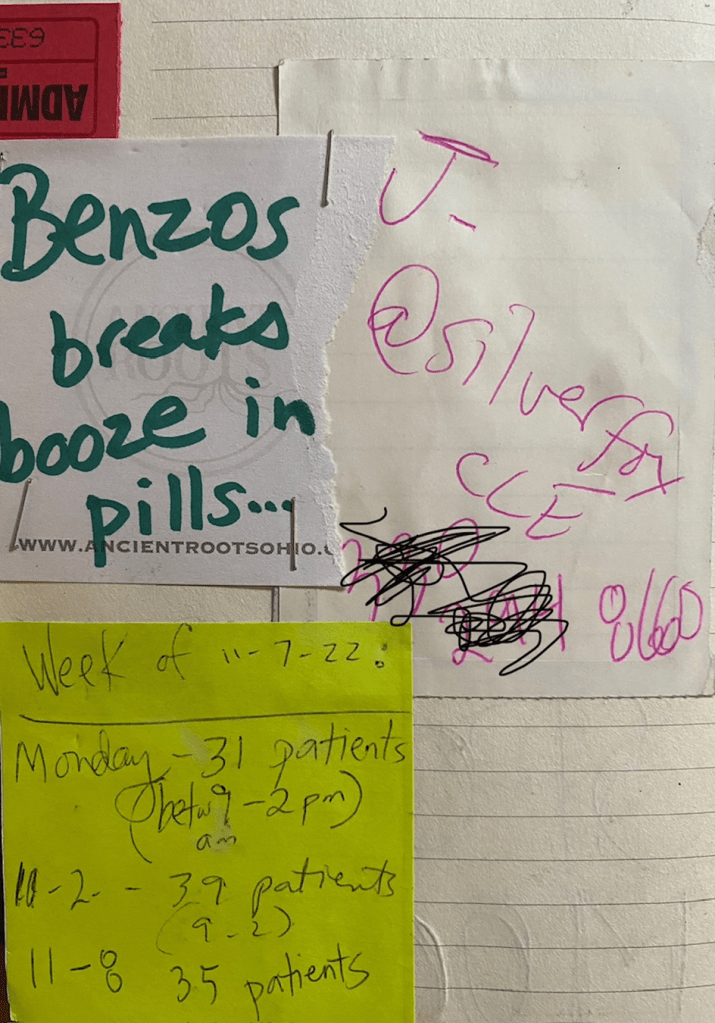
Chapter 8. Downtown (Forget all your troubles, forget all your cares)
On March 15-18, 2020 my friend Mya scheduled the two of us to lead a discussion with students at Marin Academy in San Rafael, California on the n-word in school communities and what it means when whites say it, or admit to saying it. She booked me the “family” ticket: non-stop on United from CLE to SFO, which, in retrospect, probably saved me from catching the virus, as my city’s massive class of medical professionals were already masking at the airport when I departed, and SFO airport’s mainline to San Fran’s downtown COVID outbreaks meant that masking was also not uncommon at my landing spot. Remember, the Bay Area saw some of the country’s earliest outbreak points, in terms of COVID case “spikes.”
This is how quickly life changed under COVID and the white man’s apocalypse, which was at its apex around race just two months after my departure from SFO. Indeed, the flight, which I’ve already described, was like the shift Dorothy must’ve felt during the tornado-dream sequence in Frank Baum’s The Wizard of Oz. But, unlike her, I left a bright, glorious spring CLE day (before COVID was really real to us)–full, technicolor, landed the same in San Rafael, but made a wrong turn at San Francisco for The Plant.
The black and white film ethos was dominant in San Fran, in the neighborhood of my dispensary, the one carefully chosen as my stop on the way back across the Bay to San Rafael, but don’t even care to remember right now. I took the train there from the airport, maybe. I don’t remember. I landed at a spot that allowed smoking on site and picked up a hybrid from Cultivators, a 3.5 gram jar.
I remember nothing about it the strain, even as the jar lays sideways right now on the table beside me (long empty, of course).
This is what trauma does to our brains.
WE DON’T REMEMBER.
For me it’s like being sexually and emotionally abused throughout middle school and high school. There are strange moments I remember. There are historical moments I remember. But most of it is a blur.
Recoverable, perhaps, but not necessary.
For those born after the global political-economic spectacle that was September 11, 2001, COVID, the racial injustices and crimes committed by predominantly white cops against an inordinate number of Black men, and the sexual abuses being uncovered at every imaginable level of society, are worse than 9/11.
Those born after 9/11—I’m here to tell you that this moment is History is worse than the towers falling.
What you are living is worse.
It’s 1917 World War I worse.
It’s “The War is Over’!” 1919 worse.
It’s trench warfare with faces blown off worse.
Understand.
So when people came downtown after the worst of COVID:
They craved.
They demanded.
Tried to take whatever they wanted.
Around the corner at a locally-owned restaurant that appears to care about its employees, a hateful white man brandishing a gun showed up in a tirade over some culture wars issue. Google it; it was in April of 2023. One of the employees working that day shewed him away, locking the doors between the breakfast diners and his weapon as he banged all the while. Like Karen, maybe it was: “Fucking transgenders!”
It’s all the same.
Divide and conquer.
We’d learn from our A Rose! patient friend Salman, who works the tamer morning shift at local chain diner that the owner decided to hire an armed guard, starting the next morning. “Yes, only in America would we need an armed officer to feel safe eating your eggs or avocado toast,” he says, raising an eyebrow in judgment. “I agree, Salman,” I tell him as I pass the innocuous brown paper bag–stapled, of course, of 14 ounces of Buckeye Relief’s Sour Diesel. Then I say, “I’m sorry you have to deal with this at work.” He’s a calm elder man who grew up in London in poverty with his mother after migrating from Pakistan with her to the U.K. as a teenager.
He’s a little queer, too, I’m guessing and he shows it more than ever this afternoon; he pauses almost dramatically and leans in–the plexi long gone, he can whisper right into my face and I love it.
“Darling. Don’t you worry your beautiful face about that! The customers are tipping like never before!” Salman sends a sly grin my way, waves, and exits the steel door between the sales floor and the waiting area.
Unlike the restaurant owner, who responded openly and honestly to the media, her employees, and her customers when the right-wing lunatic tried to wield a gun over the tourists, college students, and early business lunch lover crowd, when confronted with a threat toward the establishment for which she operates, A Rose! corporate skirted responsibility for the wellbeing of employees and it was Estevan the security guard who told us just how gross they were in the aftermath of Joie getting grabbed outside of the parking garage.
Always the activist, I took photos of the filth people were forced to live in in the garage that A Rose! provided for us on Bellaire, but a block west, towards the sports arena. For a time the garage owners cleaned up after the evening parking winnings. Plump white people and their corn-fed children parked there, trustfully scanning the barcode and sending their hard earned dollars to one of the two corporations dominating the downtown Cleveland parking lot swindle.
After waddling down the ramp toward the cemetery behind the lot, they might stop and peer into the pay-booth that–before cell phones and “scan to pay,” someone had to sit at the entrance and take people’s paper money as they entered. The booth was now home to the main resident of the parking garage, who ate, slept, and shot up there, making it so much his own place that when he was changing from one set of clothes to another, he would do so regardless of what was happening and who was around. I only witnessed his naked butt once, and he might’ve been pissing into a cup, because it was quickly covered by the same jeans he always wore.
By the hot depressing summer of 2022, one of the mega corporations sold to another company, who planned to demolish the ancient structure to put up high rise housing. With an absent “landlord,” Resident #1 of the parking booth started hustling a sort of homeless housing security firm.
We learn this because A Rose!’s first Zach, the slighter, more intense one, decided to explore his own side hustle in the “abandoned” garage.
“Lyz, get this,” he tells me on the same day he explains FTPs as art to me and I’m ready to punch him and we’re just 30 minutes into the shift, “I’m going to put on an official ‘parking attendant’ shirt and collect $20 per car from these suburban Motherfuckers.”
“Do it, Zach,” I say, cheering on any effort to undermine capitalism in the apocalypse, always.
“Well.” He pauses.
“I was going to do it until some elder gangster Motherfucker told me to mind my own hustle.”
I “sigh.”
“Zach. The man in the booth is making money off of whitey from Strongsville and North Royalton?! We’re all for it, c’mon.”
Zach is adopted like my kid. He’s another in the chain of adoptees who would work there while I was at A Rose! There’s some quiet bond among those of us who’ve adopted babies from people from as near as Parma, Ohio, as was the case with Zach 1, or Jalapa, Santa Rosa, Guatemala, in my youngest kid’s case.
“I know, right?” He responds and slaps my arm like we all sometimes do.
“But Dude scared the shit out of me the other night.”
He goes on: “I was just there scoping it out, like, maybe I would take two $20 for a 2.83 [gram] of Orange Slushee, tomorrow, then he comes out and know whats-wha real quickly, ya know?”
“That’s why I told you to leave Ramona out of the plan, Zach,” I parent him for a second, which I sometimes do there, I can’t help it. Zach is closer to my youngest kid’s age than my eldest and I don’t want him missing his white masculine privilege in this situation.
“I know. Argh. I know,” he says, recognizing the dynamic and not playing into it…too much.
What Zach’s entrepreneurial endeavor revealed was a system whereby the Dude of the parking garage took various payments from homeless “residents” for keeping their belongings safe throughout the day.
After the first Zach left and was replaced with Zach 2, the latter also became the expert on the inner workings of the parking garage. Once, while we walked from the exit of the garage towards A Rose!, 2 pointed up toward the second level that we had just left: “Look at the suitcases up there,” he gestures.
Sure enough, at each concrete column–perhaps 20 in all, there was a suitcase. On top of each, a thin white, but stained, sheet-like blanket, and, if one was lucky, maybe a flattish white pillow.
In my world–at least the one I lived in before COVID, they looked like the pillows they give you on eight-hour overnight flights, while the blankets, flimsy and stained and disposable, made those thin blue blankets of the airplanes luxurious in comparison.
By early September when Mya was giving garage Dude the unicorn, his empire was crumbling. Water for drinking, bathing, much less cleaning the shit and garage off of the stairs, door wells, and dank corners, is scarce for homeless people. In the late summer heat, the piss and shit that soaked into cracks of concrete made the smell and safety of living there unhealthy. In the cold, rainy autumn season looming in the CLE, Zach 2 and I learned that 100s of homeless people were camping on the mostly unused third floor, which was partially covered.
This was after we demanded that Otis get us a new lot immediately, mostly because of the incident Joie navigated, and because the parking-garage hustler got off his day-storage game, resulting in people’s belongings being scattered about the 2nd floor garage area. Pillows carefully kept off the floor during the day were soaked in the piss, beer, and oil stains of last night’s CAVS game. A Rose!’s morning shift workers would come to know the residents of the garage, I knew that the man and son who slept in the second floor stairwell if I chose to get out of my car and wait at the door for the rest of the team to arrive for the day. I knew the boy’s routine; he was awake, but would peer through squinted eyes when I walked by, a silent guard as his father snored next to him. I pretended not to see them in the stairwell platform between the garage’s second and third floors so to spare the boy embarrassment.
We were not reporting them to the police, I told A Rose! Corporate, via email. We needed a new lot, however. Even the suburban part time pharmacist from Hudson, Ohio agreed: “Otis, this is not about the homeless people. This company can relocate us to the open lot across the street.”
Our pressure worked, but in the two weeks it took us to get our parking passes and actually move into the open lot, it became clear that A Rose! would not be responsible if one of us was hurt in the garage. This news is what Estevan, the security guard from the outside firm A Rose! hired to keep everyone “safe and compliant with Ohio Board of Pharmacy laws and regulations.”
“Yeah, so, I’m not allowed to walk you to your cars anymore,” he says in the gossipy way he does when he has juicy news about “corporate.”
“Wait,” I say. “So things have been unsafe for Joie outside of the garage, shit–literally, Estevan, is out of hand inside the garage and you are no longer ‘allowed’ to walk us out anymore?!”
“That’s right.” He shrugs, disappointed at the state of the world and resigned to it being as it is.
Again, like the abuse we took from Karen, I’m surprised, at least in theory.
I hate capitalism; it’s greedy, evil, patriarchal, ignorance, privilege, pillaging. But in practice I didn’t know it would be so blatantly obvious in its cruelty.
They simply did not want to be liable if one of us was hurt in the garage. Lawsuits cut into the profit margin and Bim and his cronies at A Rose! Corporate put a lot of capital into this business. Hudson Pharmacist’s messages on the leadership Teams chat and my “Dr. Bly” emails only alerted them to the horrible conditions in the garage, to the reality of homelessness in the American cities, and if one of us was murdered, or slipped on a fresh pile of human excrement and broke a leg, they needed to cover their asses.
*************************
Jorge, the savior of the toddlers in the burning car at the Lakewood location, and his son Estevan took their jobs very seriously. While I sometimes walked, stealth-like past Estevan’s unmarked dark blue security vehicle unnoticed, it wasn’t because he was asleep. Instead, it was due to the latest school shooting, which he would obsessively study and discuss with whomever was willing to listen.
After the Uvalde, Texas shooting, where a man who I will never name (shooters long for fame, they won’t get it from me) killed 19 children and 2 adults Estevan was particularly obsessed. We’d talked about “second amendment rights” before, he knew I was a historian, a teacher outside of A Rose! and he often used me as his “official” sounding board for his points on the matter.
“I’m not a big gun enthusiast,” he tells me, “but I think teachers should be trained and armed, and–” he goes on, “maybe trained on the AR-15.”
I grew up around guns, my retired police officer father collects them. I’ve helped build a Civil War era muzzle-loader, which I also got to fire–it nearly knocked me to the ground, by the way, but the logistics of where to keep the guns on a day-to-day basis, who’s going to hand out ammunition…”
“Estevan, the absurdity of this conversation… We are talking in school, where I want to teach history and gender studies and art history–not be forced to learn how to load an AR-15!”
“I know, I know…” he’s a kind, sweet soul and I see pain in his eyes, the Uvalde massacre is closely connected to his father saving the toddler from the car. I watch his face as he remembers the child who burned to death, not to mention his father’s wounds, which required plastic surgery. Doctors removed skin from his thigh to mend the burn hole on his right arm, as he used his elbow to break the window at the passenger back seat to reach the five year old, who had burns all over their body, but would live. The other child died.
Not all of the guards hired by the renta-cop firm A Rose! hired to keep us secure were as courageous and honest as this father and son team. In fact, some of the most egregious instances of sexism and misogyny came from Maurice, Bob’s–now, as you might remember, deceased, replacement. same body type, same age, same smoking habits, with the added baggage of being one of those men who needs everyone in the house to not only care for his needs, but anticipate them.
On 4/20, if you remember, the day staff IDs were locked safe, Brydon gets a window into the sexism I have to endure before 8:00 a.m. on days Maurice works.
I pull into the lot where we’re assigned spaces next to the Armory Building, Brydon is there waiting. There’s only two of us, so I shuffle us along once we get out of the car. Because staff was “stealing time” by clocking in in the parking lot before they walked with the security guard to the door, we got a time clock installed. Unsurprisingly, they will get their time back, as it’s in the basement, near the bathrooms. I make a spectacle out of this whenever I’m with Bryon, the general manager and, by 4/20, just one of three people left on the leadership team.
On 4/20 Maurice brings the fireworks. I peer at him from the lot as Brydon and I cross over the building’s official lot, where patients can park. He is standing in the rain also peering, but over the shoulder of the cop who’s been assigned to document the six cars in front of our building who had their windshields smashed in by thieves after the CAVS home opener. “Fucking mansplainer,” I say out loud, then, sort of to Brydon, “He has no umbrella and it’s 45 degrees out. He’s going to be miserable all day.”
Before the words fully fumble out of my mouth, Maurice is upon us–and, as if we can read the obvious situation from the windshields on the sidewalk and the fat Cleveland PD officer on the street, he says, “I called them as soon as I got here,” pregnant, heroic pause, “the owner of the black VW had an infant in her arms when she found the broken glass.”
I want to laugh out loud, but quell it because Brydon feigns a distracted, “Good work, Maurice,” as he congratulates himself to us that “YES! My fingerprint works–I am a human key!”
By the time we’re standing in the stink–even on 4/20, of the vestibule, I notice Maurice has a Styrofoam container in his hand. By the time we make it to security, he’s asking Brydon if he can microwave the breakfast sandwich because it’s cold. “Uh, hold on Maurice,” he says as pops open the security booth with his ID card, “Whaa–?” as if on cue, the former says, straight-faced to Brydon as if this is normal behavior among dudes, “Well, I was planning on having Lyz do it for me anyway.”
“Whaa–?!!” I breathe fire in his direction. “No Maurice–” I’m starting to rant at him, but that’s when Brydon clears it all up with the discovery that the safe is inaccessible and he’s fine.
When I tell him, I am limited to one area unless he follows me everywhere, he suggests we regroup at 9:00 a.m. to hang the balloons.
I turn on my heels to follow Brydon down to the time clock, but not before looking at Maurice; I say, “Stop making me your bitch.”
You might think I was being a bitch, but you have to understand it’s like Christmas at Macy’s on the day after Thanksgiving, after the “Macy’s Thanksgiving Day Parade” ends. Last 4/20 when Laura was still running the show and when we had more staff, there were four budtenders, one pharmacist, one shift supervisor, Moy in security, Ramona at the intake desk, with Laura leading the chaos. Just one year later, it’s Brydon, who’s new, Maurice, who’s soaking wet from micromanaging something out of his rent-a-cop jurisdiction, Alice in as pharmacist at 10 a.m., Moy in at 11, in security.
It’s on 4/20 that Maurice decides to work his own hustle in the lot adjacent to our building. He was to keep an eye on the spaces marked “A ROSE!” during downtown events, as the other spaces in the lot were owned by an individual named Ury, who drove an enormous black GMC truck with shiny rims and tinted windows. I’m in Security the morning after the holiday and Ury shows up at 9:05 a.m.
I let him in, he worriedly leaned toward me, behind the thick glass of the security booth. Again, there’s only three of us running the Dispensary and his request is absolutely out of hand. “I own the big black truck outside and the lot,” he tells me in that order, “and someone was stealing money from my cash dispenser, can you check the cameras between 6:30 to 10:30 p.m. last night to see if someone broke into somehow?”
“Uh, Ury, I’m sorry to hear about this, but I can’t promise you that anyone here is going to have time to watch four hours of camera footage to see if someone broke into the pay box,” I say, irritated. “Give me your number, though, I’ll see if Moy has time tonight, but there’s already a line outside, I have to start letting patients in.”
Ury wrote his phone number, name, and “Black Truck” on the pink post-it I gave him and thanked me. Moy scoffs at the request at shift change, but says they’ll take a look to see if they notice anything strange at the beginning of Ury’s request.
The next day Moy tells me that it’s Maurice who’s taking people’s cash as they enter the lot. He then directs them to a spot, goes to the side of the car facing away from the camera, and–though you can barely see it on video, puts their $40 in his pocket. There went Ury’s Black Truck payment, as Moy sees the same pattern for each of the 12 spaces in the lot, including those supposedly dedicated to A Rose!’s patients.
This, coupled with my sexist interaction with this man, got him booted from all three of the Cleveland-area A Rose! locations. Pre-COVID, pre-labor crisis, he would’ve been fired, but we learn that he’s sent to a Save A Lot on Kinsman. He works the day Moy and I discover his parking lot hustle, his second-to-last. I have to act like everything’s normal, so let’s say goodbye to him, as usual, waving as I walk past his car, where he sits, usually talking on the phone with people about nothing, all day long.
He opens the door: “Hey, bring me some vegetarian lunch tomorrow!”
“What?”
“Yeah, I see you eating good food and looking fine.”
“Maurice,” I pause, really just wanting to go home, “Stop objectifying me.”
“Ah baby–”
I look at him sternly and wave, raising my eyebrow.
“Good-bye Maurice,” I say.
He laughs my attitude off, and gets back in his car.
By 4/22 he was gone.
On April 29, 2023, I spent my last day, a Saturday, in Security.
They would shut down my email and all of my accounts at 5 p.m.
I was scheduled to work until 8:30 p.m.
Capitalism makes it clear that I am disposable. Privileged, white collar, educated, I knew this only in theory before working at A Rose! My 18 months there, at a place where I gave my heart, with its emotional intelligence, my sweat and badass GenX elder strength and professional and life experiences, I lived it in Truth.
Chapter 9. Arose! A Reprise (Autumn 2023)
It took six months before I could enter the building again. For one thing, I needed to write the book—get it out of my body and mind. I know myself, if I visited while writing, I’d get nostalgic, which weakens the critical thinking muscles.
I also needed to heal from the experience of working in the nascent and—to put kindly, ignorantly greedy Medical Cannabis Industry. I lived the 2023 feminist backlash while at A Rose!, witnessing an entirely female leadership team be replaced with all men and two compliant white females. I witnessed the 27-year-old District Manager Otis fail desperately as a leader, with Akronite Brydon as general manager, always nodding in equally desperate agreement, even when he was asked to write Ramona up for insubordination over Otis’ mishandling of the company’s transition to the entirely new Point-of-Sale system, Dutchie.[1]
The women, females, queers, and people of color (essentially everyone who was not white nor white passing with a penis) knew the slap was aimed at all of us. This was not the first time Ramona was punished for being “an angry black woman,” nor was it the first time I’d seen a person in power punish or outright ignore a forthright, intelligent Black woman.
The phenomenon is so ubiquitous that in Gender Studies we’ve given the white supremacist-misogynist trope a name so that we can identify and critique it in analyses of literature and popular culture. The angry, “back-talking” Black woman is a Sapphire, scholars Sue Jewell and Debra Grey-White identified for us back in the 1990s. [2]
In reality, as disheartened as I was over the demise of the work culture we created under Lauren and Jody, I felt equally saddened over having to leave the new women that Otis and Brydon hired. I’d grown friendships with Bethany and Katy and learned from both of them. Bethany had a secret crush on me, one of queer admiration, Katy once put a Band-Aid on my back when the acne was so bad it burned, and her kind spirit helped calm me.
It was Katy who inspired me to look at the A Rose! online menu on a Thursday afternoon, late October.
“Hi, Lyz, it’s Katy Roth!”
I remember that I know another Katy Roth from a different work context, so I scan my brain to identify the texter then scroll up to see the selfie I took with her, Bethany, and Manny sitting together in the A Rose! waiting area on my last day.
On the menu I see I can get ½ ounce of Galenas’ Electric Peanut Butter Cookies for $59, so I place an order and head downtown, mindlessly taking the same route I took four or five days a week when I was working there. In the six months since I left the job, I’ve driven down Carnegie Avenue, towards the Terminal Tower many times, watching old buildings fall as demolition crews take down historic structures like the Modern Sears building, which housed MOYCA Cleveland, and the domed Roman-like ceiling of The Cleveland Playhouse, added to the Sears space as recently as the 1980s, as well as entire neighborhoods of decrepit Victorian mansions, and sturdily beautiful brownstone apartments. I’d driven by the A Rose! building once or twice, feeling at home in the neighborhood, missing the pace and energy of downtown, even though it was overwhelming and annoying on sports days, or when there was a children’s matinee at Playhouse Square, the theater district.
I pulled in the lot adjacent to the rectangle, the one the security guard parks next to, to find a new sign, jankily printed, laminated, and taped onto an orange cone: “A Rose! Patient Parking ONLY.”
This is telling, as the November election is less than two weeks away and Issue 2 is on the ballot, which, if passed, would make cannabis recreationally legal in Ohio. When I worked there, all signs were pointing to “Yes,” with the unwillingness to hire, the lag in securing a general manager after Lauren, the tentativeness in which Otis showed in rebranding the space to match the other Ohio locations—all this told me that it was going to pass. The fact that A Rose! purchased or committed to renting the parking lot (at an exorbitant cost at the center of the city in the shadow of the basketball and baseball arenas) further confirms this.
As I enter, Carolyn’s at security and she gushes over my great training of her. “I think of you every day, Lyz, and I’ve never had a dispensing error thanks to you!”
I laugh, “Well I had two during my time here, so you’ve improved on me,” as I enter the waiting room. It’s 70 degrees outside and it hasn’t rained so the place smells fine and there’s a buoyant person of color in the waiting area: “I’m Jada,” they say as I enter, “Great to meet you, you used to work here…”
“Yeah,” I’m humble, then I notice their holding an iPad—“what is this new system, Jada?”
“Oh, I’m floater today,” I sit out here and help people with their order if they haven’t made a preorder.”
“Wow, the place must be better staffed,” I say, as a nondescript budtender whose face is entirely covered by a mask and a pair of enormous shapeless glasses calls my name, “Lyz, c’mon back.”
Bethany is waiting for me at reg three.
“Lyz!!! You look great, I miss you soooooooooo much!!”
We hug over the counter and I gush at how good she looks, too, because she does. Gone is the pancake makeup that covered her pallid skin, and she beamingly tells me in one breath, “I just moved into a house that I bought down the street from my apartment—they do not appreciate me here, I’m not staying much longer.”
As I’m congratulating her on the house, grateful that she’s used the A Rose! job to buy real estate (a major feat for anyone in 2023), she counts out $1.73 in change, which I dump into my frayed wallet, and say,
“Wow, we do coins now. A Rose! is grabbing every penny to afford that parking lot.” I note.
We hug again and I walk back through the big metal security door between the dispensary and the waiting area, wave to Jada, and wait for a patient to be checked in so that I can chat with Moy for a bit.
I pass a plastic tin of the sour candies we used to boringly consume on Sunday afternoons through the rainbow shaped hole cut in the Plexiglas separating us. Moy dumps a few in their hand and drops the container back toward me.
“It was fun hanging out with you and Ramona last week,” I say. “I feel really grounded and connected when I’m with you two.”
Moy smiles, widely, empathetically.
“Let’s do it again soon,” I say and Moy nods and I blow them a kiss through the smeared Plexiglas, calling them “Jesus,” as Ramona and I recently saw them perform in a queer interpretation of Jesus Christ Superstar, my all-time favorite musical.
Ramona and I mused over the magical truth that Moy was Jesus.
On the cold September night of the musical, which took place in a church around the block from my house, we snuggled up in the more comfortable than usual church chairs, wrapped in layers of sweaters, jackets, hats, Ramona’s eyes hidden behind black a pair of classic Ray-Ban Wayfarers, the ones with the black frame and green lenses.
We both tear up when Moy defends Mary Magdalen over Judas’ critique of her line of [sex] work.
Moy let go of their hat after the show was over, opting for the curls to frame their now clear eyes (gone are the dark circles I saw in my last week’s at A Rose!), their complexion is brighter, too. As Jesus, Moy wore flowers in their hair, the costume designer opting to weave them through Moy’s curls to make the crown. Ramona and I note that the hat was absent, knowing that Moy would make it a part of their interpretation of Jesus if they so wished.
I am wondering if Moy will have the hat on when I pick them up at their new apartment on the way to Ramona’s new-ish house that she shares with her brother, both on the west side. As they bound toward my car and peek through the four inch space I’ve created through the passenger-side tinted window, I except to see the flowers again.
After we chat, mostly about the musical—with me singing Judas’ lines against Mary:
It seems to me a strange thing, mystifying
That a man like you can waste his time on women of her kind.
Yes I can understand that she amuses
But to let her stroke you, kiss your hair, is hardly in your line
It’s not that I object to her profession, but she doesn’t fit in well with what you teach and say
It doesn’t help us if you’re inconsistent; they only need a small excuse to put us all away—
On stage Jesus-Moy behaves just as regular Moy would, expresses just like them:
Who are you to criticize her? Who are you to despise her?
Leave her—leave her, she’s with me now
If your slate is clean—then you can throw stones
If you slate is not, then leave her alone.[3]
We shed tears because we know Moy and it feels like they’ve always been Jesus.
I also suspect we shed tears because Jesus’s undoing began to come apart around a woman’s body. It’s too close to home after June of 2023, when the white man backlashed his way to the Supreme Court and made abortion illegal nationally.
It’s too close to home after being backlashed at A Rose! After Ramona and I’s brilliant empathetic spirits were dashed in a job connected with The Plant, one that, for a time anyway, was fun, interesting, even exciting on some days.
On the day we’re together at Ramona’s, I bring up the scene: “I never realized it until now, but Jesus’ downfall with his dearest Judas comes over Mary being a sex worker—again, some man makes uses the ‘dangers’ of the female body as a religious-political weapon,” I say.
Moy nods, having felt the anger on stage over and over again. “It was cathartic and those emotions were real.”
“I know, I think your performance is the first time I understood this—in Jesus Christ Superstar and in the stories of Jesus’ life. Maybe it also took the undoing of the white man’s abortion law for me to see it, too…” I trail off.
“Yeah, that’s where I kinda lost it,” Ramona says, “watching Moy be Moy—but as Jesus. You were in it.”
We’re 15 minutes into the visit before A Rose! comes up in the conversation.
“I was working at A Rose! the entire time, going to work all day, then showing up for rehearsals and performances—it was flow and I wasn’t ‘acting’ through any of it, even the final performances.”
They continue:
“I got so many traumas out and ‘Arose’—as in Arisen, or rise! is always around me, like I’d show up to my work shirt—the black long-sleeved with the neon green lettering and the message matched whatever I’m doing on stage.”
We still don’t talk about A Rose! I tell them both about the book, clearing their fictional names, and Ramona reminds us that her EP, I Lost My Hard Drive Twice In One Year, “Drops today.” The three of us are not people who suffer emotional traumas in silence.
Indeed, Ramona recorded part of the EP in Paris, jetting off after quitting A Rose! and before starting a job at the competition up the hill in the Heights. I am in awe over Ramona’s ability to take an international trip a budtender’s wage. Even in my middle-class life it took a hefty tax refund, enough credit on a card to cover daily expenses, and a travel partner with whom I could share lodging costs.
Ramona’s spring Paris trip was business, too, as Ramona went to work with French beat-makers and artists. The trippy Euro beats on the EP were created there; we French love plays with language, and the single “I Dance On You Heaux,” makes me laugh and dance—with just the right amount of ennui.
The Plant brought the three of us together. We learned more then we knew before working at A Rose! about cannabis as medicine. We survived ghosts and demons in the building, the neighborhood—it’s history; we survived the white men of A Rose!—those who were patients and those who became our bosses after June 2022. Only now do I understand just how traumatized I was the summer that Roe was overturned; the patriarchy was in full backlash force in politics and popular culture, and in my everyday life at A rose!
My last month–April 2023, brought with it the Depp v. Heard trial-spectacle. At the time I was too busy to watch it, much less digest the toxicity it unleashed on social media. It wasn’t until after it was over, after I was recovering from the A Rose! that I would come to understand the ways in which Heard would be villainized, Depp would use social media engineering tools developed by the same white supremacist groups to fuel revolutionary hatred among the lemmings who showed up at the Capitol on January 6, 2021.[4]
I dismissed the toxic celebrity trial as fodder for 20-somethings like Judi, rolling my eyes when the latter filled me in on Nights of the Caribbean fan culture. I still don’t care nor know why there were Depp fans with live llamas cheering him on along the parade route to the courthouse in Fairfax County, Virginia. The entire affair will be remembered for the vile behavior of both actors, the elder, more powerful and a man of my Generation X, would win in in court and in the court of popular appeal. Not only would he manipulate it to be so, he would gloat, as if Johnny Depp’s alternate-ass was righting the “chaos” #Metoo created for the eldest of the X men such as Quentin Tarantino, and his elder Boomer leaches like Woody Allen and abusers like Harvey Weinstein. The lawyer representing Depp even says, “In the wake of the #Metoo Movement, Amber Heard accused her spouse of domestic abuse.”[6]
As for the corporate men, after abortion was made federally illegal in summer 2022, A Rose! CEO announced that employees seeking abortions would be supported by the company with promises of funding available to cover transportation and lodging for employees seeking to go out of state for the procedure. This is sound business judgment given that most of the cannabis workforce is in their 20s and 30s—in their prime of their reproductive lives. Given the path the pandemic-inspired labor crises was taking, given A Rose!’s “plan” for labor-saving skeleton crews at its locations throughout the country, a slew of pregnant employees and/or partners of pregnant employees needing time off for pregnancy well-care visits, then taking federally mandated parental leave and eventually needing unplanned days off due to sick infants—[Bim] and his A Rose! team did the math. The cost of female workers missing days of work in pursuit of a safe, legal abortion was a small price to pay compared to the other option. Six weeks off for parental leave, increased health insurance costs, labor shortages even worse than what they were running on before cannabis would become recreational.
Still, I relished being able to flaunt the CEO’s emails to Mona after she quelled discussion of the end of Roe during that traumatic week of June 22, 2023. The Friday after the decision came down I stood at the vape shelves in order fulfillment, making one final attempt at connecting with the female people, especially [Judi], who’s constant obsession with her phone seemed to be fueling her anxiety. The day before, as we cross paths at the intake desk, I hear her TikTok playing and someone dressed up in a cat furry suit is telling her—“Next—birth control will be banned!”
While the fear the furry shared was real; even my own kid, asked, “Are they going to take the pill away?”
“No,” I say to my youngest kid, a lifetime of fertility ahead of her, “I promise that won’t happen.”
But Judi’s distaste for white females is blatant, her mother a white single nurse who adopted her just a few years before the ex and me decided to adopt internationally.
On this Friday morning I want to say something profound to Judi and Joie, the latter just a bit older, and also shook, but (unlike Judi) more resilient. Instead I take a stand, doing so even though I know Mona’s an anti-choicer.
“I want to say this to everyone in the room this morning,” along with the 20-somethings and Mona, Ramona has her earbuds in, keeping to herself, “Abortion is not ending. It has always existed, females and their care-givers will always find a way. We are all broken over this, but focusing on ‘how worse things will get’ does nothing.”
I continue: “Now is not the time to have your face in your phone 24×7.”
No one says anything. This makes me hate Judi even more.
“Well, we probably shouldn’t be talking about abortion at work anyway,” I say, finally, as passive-aggressively as possible.” I’m guessing this makes Judi hate me most.
“Yeah,” Mona says.
A half hour later we’re logging into the POS system, the OARRS medical marijuana registry system, Teams, email, and the A Rose! menu. I open email and find the CEO’s abortion letter. I poke my head through the slots between the dispensary floor and order fulfillment, where Mona is seated, also behind her computer.
“Mona, I guess I was wrong, [Bim] wants us to be ‘supported during these difficult times’ and to ‘reach out to our supervisors, as needed’.” I use the air quotes and spin back around toward register one, not caring what her reply is; the CEO’s email is a tiny win, even though his veil of concern is most financial.
Out loud, toward Ramona, I say, finally: “The white man’s political system is being undone by capitalism. If we can kill fetuses in Ohio, Bum’s going to pay to send to another state to have the procedure—brilliant!”
Ramona chuckles a little as she scrolls through the Clear the Vault menu, which has a few strains of Galenas flower on it—as shake, but worth it for the $10 we’ll pay with our employee discount.
She understands that my comment is not for her, but a jab at Mona. s current state of disarray-limbo, in the white suburban bubble from which she commutes, making us wait for her in the cold isolated parking garage, with its piss and shit stained floors, arriving–Starbucks overflowing, in time for us to clock in at 8:07 a.m., rush inside and move 500 or more pounds of cannabis products from the locked basement vault to the first floor order fulfillment area.
Then, remember, for $16.32 an hour, we were supposed to conduct inventory of the State-regulated product/medicine by 9:00 a.m. Her supervision of all of this work that pharmacists are required to do, grossed her and her white elite cisgender heteronormative family of five $7,200 per month.
At $16.32 an hour, we grossed $2,611, as Otis and Mona’s “off record” mantra was “Make the PCSs do it; they’re hungry for experience in this business.” While we were expected to go above and beyond for our wages, when I went to Mona with concerns over ageism, sexism, and queerphobia I experienced in her presence every morning when all of the work I describe above is being conducted, she blatantly told me she couldn’t do anymore for “us.”
Meanwhile, I watched Judi and Joie brown-nose-stroke Mona’s ego and get plenty of support. They treated her like the mother they loved, me like the white-lady professor/woke-parent they hated. This was permitted and reinforced across the hierarchy at A Rose!
*****************
November 7, 2023
Election Day in Ohio and Issues 1 & 2 are up for the vote. The first is “A Self-Executing Amendment Relating to Abortion and Other Reproductive Decisions,” the second, an issue to “To Commercialize, Regulate, Legalize, and Tax the Adult Use of Cannabis.”
As if on cue, Bethany texts on the eve of election day. She’s walked out of A Rose! and forwards me the slew of screenshots she’s sent to Otis on Teams. She blatantly expresses the truth around this moment at A Rose!, this moment in American Labor History:

Amid the power Otis and Brydon feel at this moment, the texts are blocked.
Bethany pulls herself together enough in the employee parking lot to remember she’s left $100 worth of essential oils at the intake desk, after Brydon came up behind her and yelled: “Turned the fucking Sonos down!” his skeleton frame lurches over her, a mist of spit spews out of his mouth-hole.
With Brydon, it’s always been about the music. He nearly yelled at me once, too, over my controlling the speaker with my iPhone, walking away and having it sputter loud sounds, beats, static, “Lyz, we all need to have access to the sound system.”
His neuro-divergences are those that make him sensitive to sound and light, I have them, too. On a bad day a sound might be so fucking dumb I want to explode into whomever is in front of me—as in, Billy Joel, Eric Clapton, and any song by Rush, “Lay down, Sally, and rest here in my arms,” by Clapton:
“Why is this white man telling Sally what to do?????????!!!!!!!!!!!!!!!!!!!!!!!!!!!!!!!!!!!!! Everyone RAVES about Clapton and thank the universe he can play guitar because his lyrics are banal, unimaginative.”
These statements are made as an attempt to disconnect with the sound, the lyrics, the white men, their music, their lack of imagination.. I get manic.
Light is an art and those too ignorant to understand how a well-lit room inspires greatness and creativity; bright light might inspire headaches and sunburn. I am CLE to the core, from its grey-white-rust-colored skies to its brown-yellow-red fall foliage.
Unlike Brydon, I must learn to quell my manias.
But he has a penis; he can scream at 20-something Bethany, who’s arrived to her shift on the day before cannabis will go recreational in Ohio in big dark glasses and a faux fur coat.
“My hair was long and powerful and flowing and I was the first ‘free’ thing he’d seen all day so he went in on me—I was just putting the essential oil I just bought with my own money into the humidifier so it didn’t smell like ass in there—as usual,” she tells me over the phone the next day.
“Dude, I have di-ag-nos-ed PTSD, he fucking freaked me out,” she says, and, “I’m not even in Ohio right now, I’m in West Virginia on my [deceased] husband’s property with a great dude.”
Several pictures flood my phone, all punctuated with—
“I’m pregnant, I care about my family, that’s why I had to quit.”
Then, “I gotta see you when I get back as I’m going to be a cannabis lawyer.”
If our conversation was in person, or even on the phone, she would’ve heard me–
“GASP–breeding the in apocalypse!?!?”
But I text back, “Congrats, rest now and let’s get together when you are back in CLE.”
It’s her choice to bear a fetus; when confronted with a surprise pregnancy in the early 1990s I did the same. But I made the choice knowing I had full access to abortion; I didn’t have to make it within six weeks as Ohio law dictated. I was around Bethany’s age during my first and only pregnancy, but in graduate school, working on a Master’s degree in art history, living with the father, who was finishing an undergraduate degree. Broke at the time, too, I was not poor. I didn’t have to use my body for my work as a student or teaching assistant.
I am grateful to have had full access to abortion, birth control, and parental leave/rights; these basic human rights were possible for GenX. By the time I was of the age to “use drugs,” the social-class circles in which I grew up kept me safe from being caught, much less convicted of possession. By the time I was a freshman in college in 1984, Reagan-era reform created a class-based safeguard against white elite youth being charged for possession of cannabis and cocaine, both of which were all around me in my undergraduate years, 1984-1989.
We know that Reagan’s drug policies were racist and classist and that crack cocaine would destroy millions of people’s lives, and feed a prison industrial complex to punish crack users, incarcerate Black men for possession or dealing.. Likewise, where wage gaps around race and gender make earning a living wage even harder for men of color, underground economies based on selling cannabis, crack, cocaine, and/or the latest recreational drug du jour offer a bit of spending money, or enough extra income to cover the gas bill in the winter, a decent birthday present for a child or partner.
I know several people whose side hustles will suffer over cannabis becoming recreational in Ohio. I’m hopeful that they will get even more creative and find new ways to earn money while sharing the medicinal and unifying Benefits of cannabis. We need more research, which can happen if cannabis becomes legal nationally.
In my 18 months at A Rose! I learned a great deal more about medicinal properties of the plant, but I know of its magic–and its dangers–from growing it from seed to harvest and curing, doing so on my own property, indoors, outdoors, on every level of house. Before it became legal in the state of Ohio, I sought to grow it because I didn’t want to contribute to the violence and corruption connected with the illegal supply chain. As a parent of a young person when I began using cannabis in 2016, I wanted full control of the drug. When you are a single parent you can’t die of a fentanyl overdose.
I was teaching at a private school, writing curricula centered on local farming, permaculture, and soil building. I applied it to my small “crop” of five to six plants, and the learning became part of my growing process; cannabis grown in your yard, down the street is the best for you. The plant adapts to local conditions and this is reflected in the flowers, the sugar leaves, the stems, and fan leaves that synthesize the light and make the best tasting blunt you can imagine.
A survivor of PTSD from years of domestic and sexual abuse–issues that continue to infect my white supremacist patriarchal family from the Midwest even as I write; the family secrets that were buried for centuries began to surface after trump took office in 2017. On my most cynical days, I believe that those in power members “gave” us access to cannabis at a time when we could have been revolting. This is not a stretch in logic, or a conspiracy theory, if you know your history. The Acid Tests of the 1960s and 70s helped release LSD into counter culture circles in Haight-Ashbury were funded and perpetuated by FBI scientists, who connected with Timothy Leary and promoted “Tuning in… and dropping out.”
Under your 45th leader, I did neither. If you weren’t a white man of class privilege–like my sibling, who I became estranged to in the last five years, you might tune out, but “dropping out” in recent years–certainly from 2016-present, is not a possibility for anyone without a bona-fide dick.
Forgive us if we sought respite from the white man’s apocalypse in cannabis and alcohol.[6]
The take away here is that I’m a degreed white elite female. I’m attractive in a feminine way, even at 59 years old. I’m fit, physically healthy.
I get interviews for higher paying jobs. They see me, then see my resume and I imagine them saying, “Ah, hellll no,” especially in the cannabis industry, where I also see them high fiving and chest bumping, across race, age, and veteran’s status.
At least they can say that they interviewed an elder female, queer–the one with the Ph.D. But they don’t want me in the room, with the younger white cis-het men running things.
The plant quells my wounds–those that have to do with time, generation [X].
It feels like Generation X got left out of the Boomer-to-Millennial marketing niches. In so many ways, those of us born between 1960 and 1980 were barely a big enough demographic to bother marketing to; indeed, X is the first generation defined by marketing agency research. They determined that those of us born in the 1960s were too savvy, brought up as we were on television.
We were going to be a difficult group to sell.
In the wake of the Boomers (the elders who went to Woodstock, hitchhiked to Haight Ashbury from the East, or took LSD in the late 1960s), our demographic was tiny. Yet among millennials we’re expected to comply as “elders with wisdom” without any of the Monetary Benefits of the Boomers.
I loathed cannabis for long periods of my past because I saw those just a bit older than me checking out on it. Weed’s hippie ethos was one for my punk-goth-riot grrrl spirit worth crushing.
Yet when I was in utter trauma of the death of my family, the jubilance in the White House under these white men, with their blatant misogyny and racism and queer-phobia, the plant helped me to see more of my gifts, strengths, and–more recently, in helping me come to terms with my shadow side. It helped me bond with a cousin who needed me around after the death of her brother, a beloved physician, which led her to divorce her spouse. Cannabis let us speak to authority, laugh over family stories, characters, and secrets.
When you have PTSD, there’s no drug except for cannabis that I’ve found gives me a break from the incessant thoughts and phobias that used to come, triggered as I was by a childhood of sexual abuse at the hands of a stepfather, and the psychological abandonment I was dealt after my youngest child’s father left me to be a single parent, and my sibling sat by to watch his family abuse me verbally and on social media.
Today when I’m triggered, the worst thing that happens is I say “Fuck” a lot to my 82-year-old mother, who hates the word–it triggers her; “I just want to say it hurts me when you say the ‘F word’, I would’ve never said that to my mother.”
My reply: “Well, if I had a penis the F-bombs might be real bombs–or bullets; the data still shows that white men with PTSD are most likely to be mass shooters.”[3]
This quiets her; we move on in the conversation. Her silence reminds me she understands the disease. I can’t always control my mouth, but as she’s learned to control hers, I’m better.
***********************
So I’ll grow again, taking all that I learned at A Rose! to have a side-hustle in recreational cannabis. Learning how the white man plans on running things, learning from a family who’s made fortunes already on liquor after prohibition, was necessary.
Work around cannabis must be joyfully serious, because the plant is medicine, no matter how you use it. The white elites will do to it what they’ve done to our food. But only if we let them. May this account wage labor in the cannabis industry compel you to work to keep it sacred. May it compel you to be kind to the budtenders who will serve you recreationally in Ohio, for the first time, but also to those in Colorado, who have been serving you your cannabis recreationally since 2000.
[1]Dutchie became the preferred point-of-sale cannabis system for many medical cannabis industries. The name–like so many monikers appropriated by market capitalism to sell weed (literally, in this case), it is stolen from the 1982 hit “Pass the Dutchie,” by Musical Youth from Kingston Jamaica (see https://en.wikipedia.org/wiki/Pass_the_Dutchie, accessed November 17, 2023).
[2]K. Sue Jewell, From Mammy to Miss America and Beyond: Cultural Images and the Shaping of US Social Policy. Routledge: London, 1993); Deborah Gray White, Ar’n’t I a Woman? Female slaves in the plantation South (WW. Norton: New York, 1999).
[3]Andrew Lloyd Webber and Tim Rice, Jesus Christ Superstar: A rock opera (Decca Records, New York, 1970).
[4]Emma Cooper (director) and Netflix, Depp v. Heard (August 16, 2023 release) (see https://www.netflix.com/title/81644798, accessed November 17, 2023).
[5]Ibid.
[6]National Institute on Drug Addiction, “COVID-19 & Substance Usage,” https://nida.nih.gov/research-topics/coMoyrbidity/covid-19-substance-use#:~:text=Researchers%20have%20observed%20increases%20in,disorders%20and%20those%20in%20recovery, accessed November 18, 2023.

 Eradicate the Patriarchy
Leave a comment